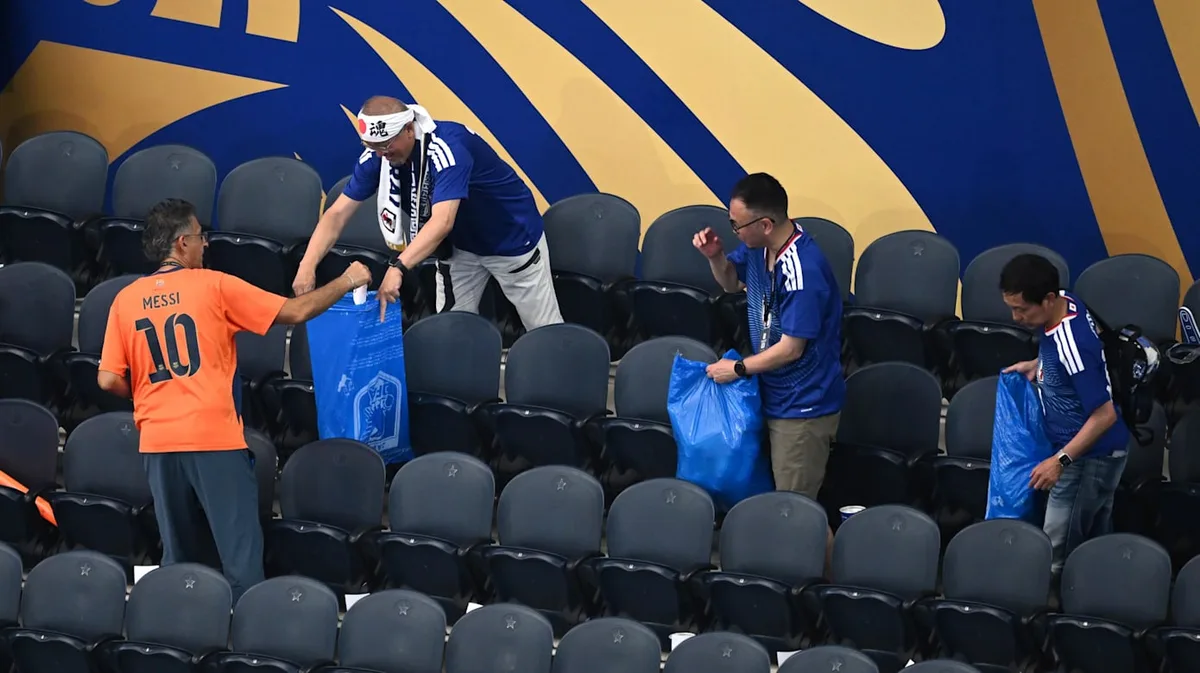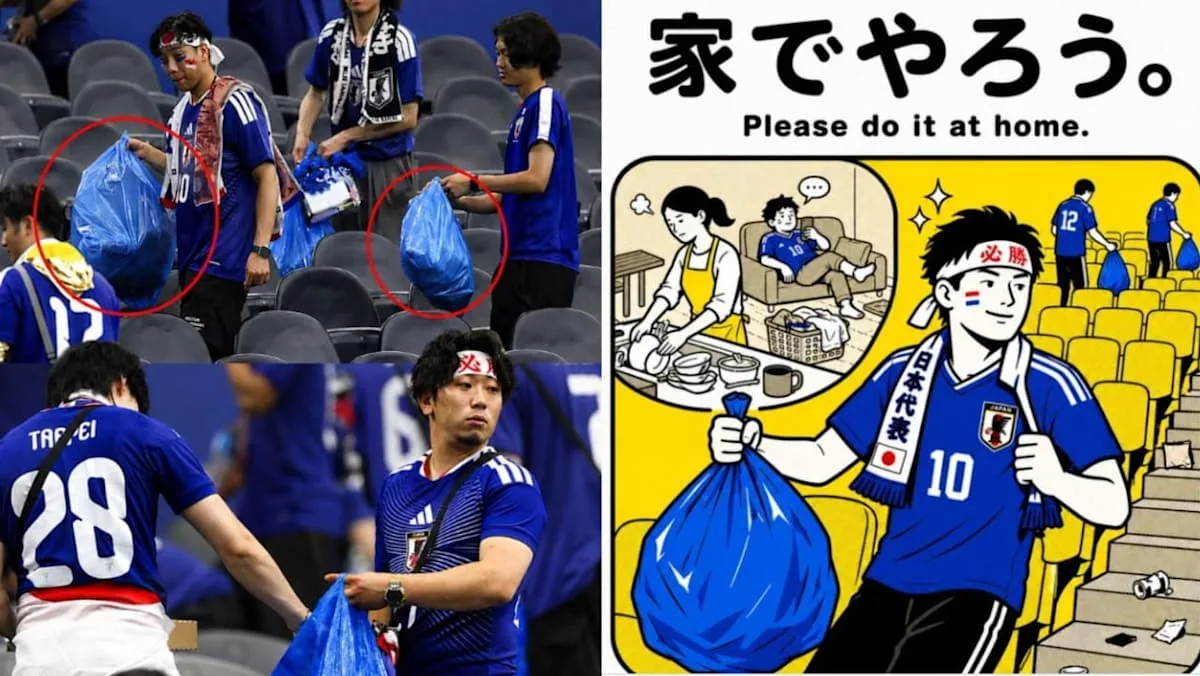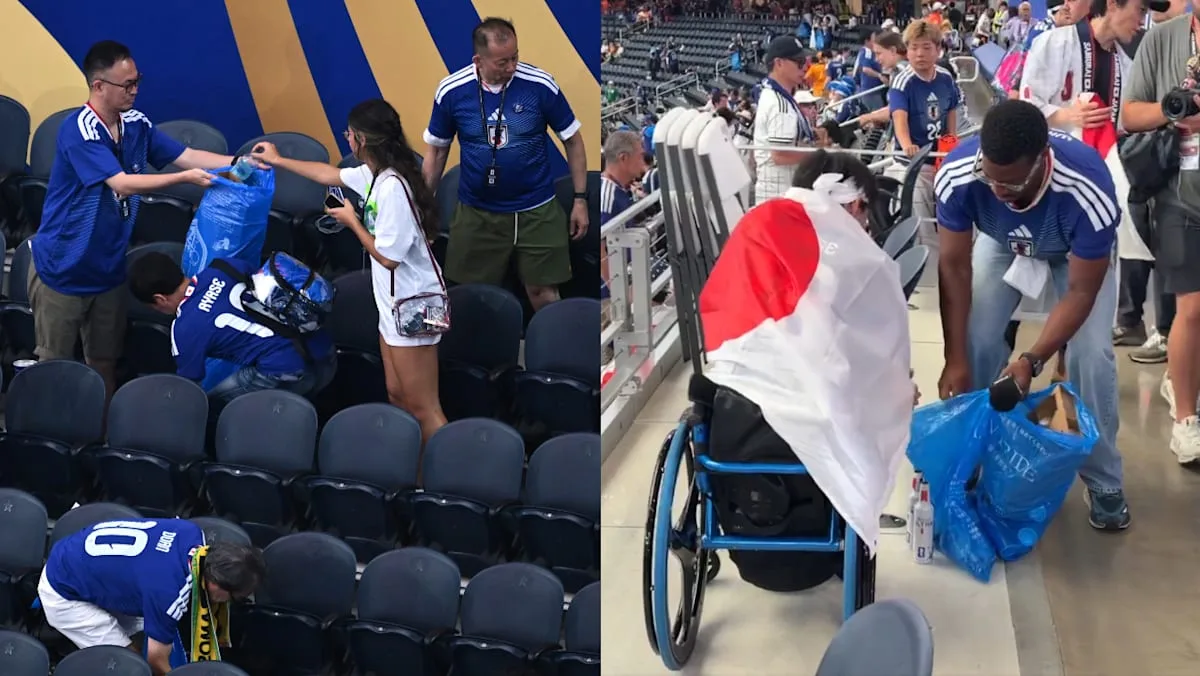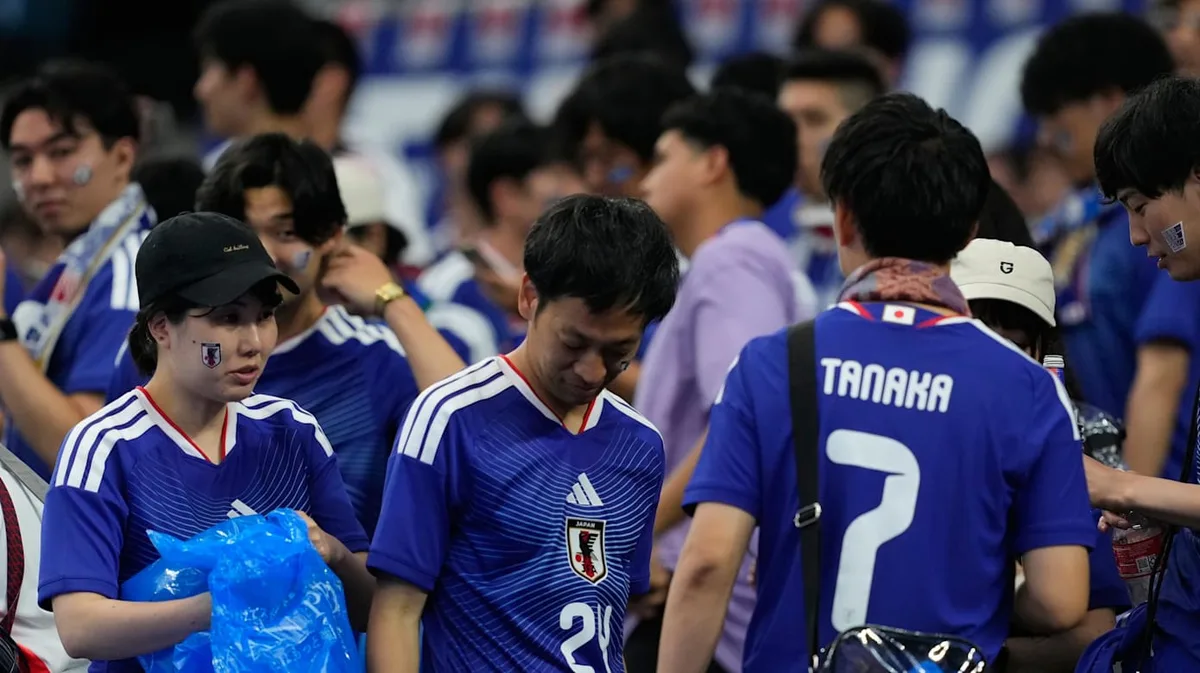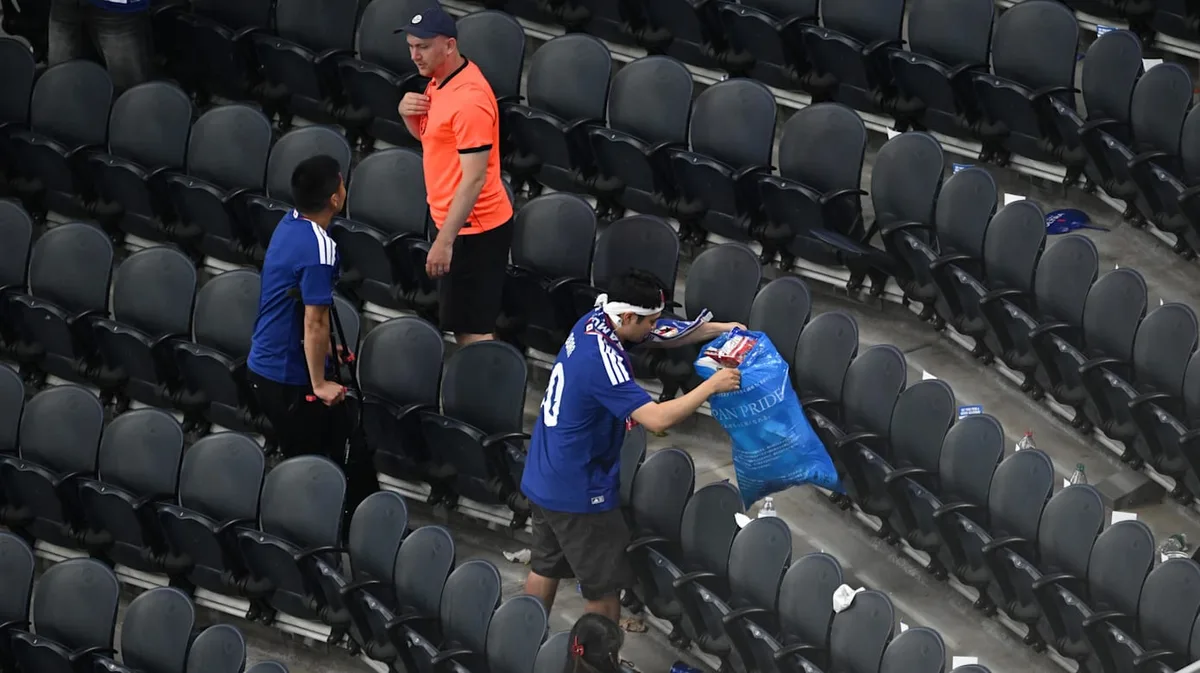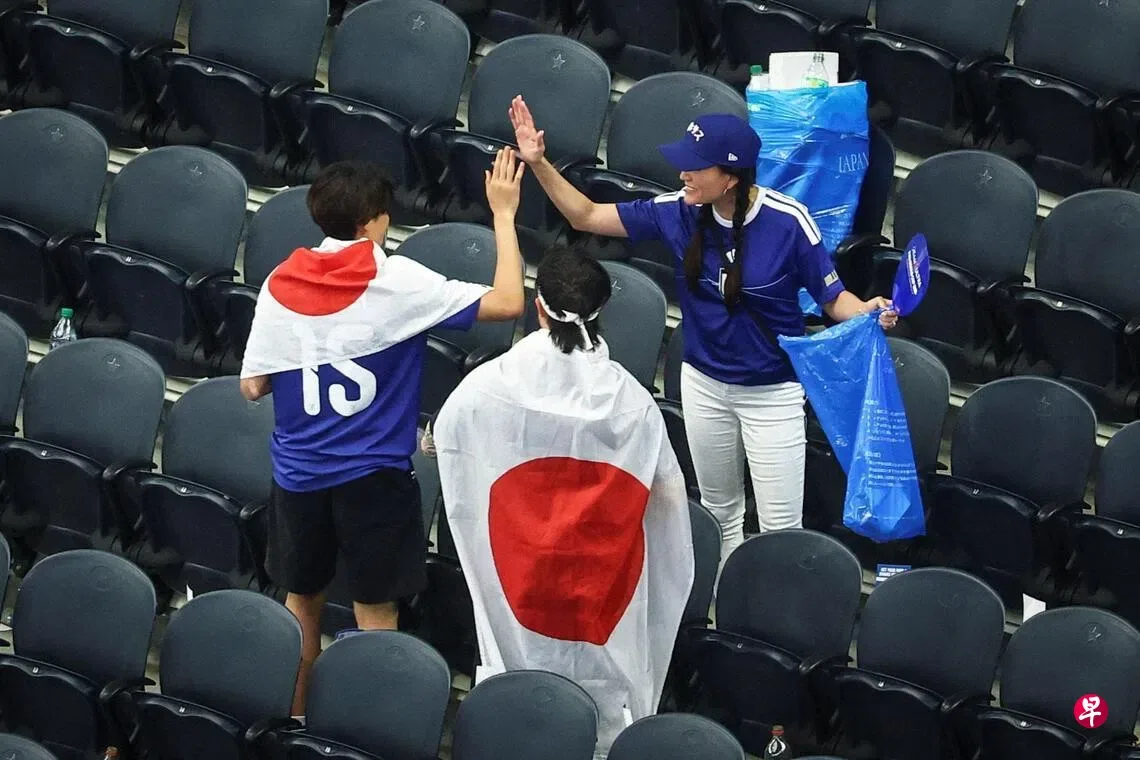
Japanese football fans stayed behind after their team’s 2-2 draw with the Netherlands on June 14 at the 2026 World Cup to clean up stadium trash in blue plastic bags, leaving sections spotless [1, 2, 3, 4, 5, 6]. The cleanup caught international attention, with NFL player Jameis Winston joining fans to pick up litter [3, 4, 5, 6].
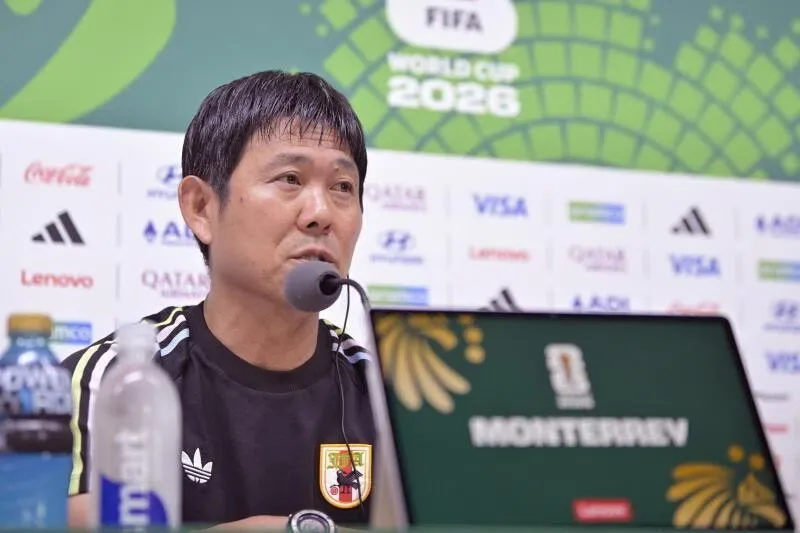
Japan coach Hajime Moriyasu said he was proud of the fans’ tidiness and also praised players for leaving their dressing rooms clean before the June 20 group match versus Tunisia. He called it “one part of the Japanese culture that we can be proud of in the world” while acknowledging some questioned whether the fans were taking work from stadium cleaners [1, 2].
The cleanup is rooted in Japanese culture and education, where children are taught from elementary school to keep places clean. Japanese fans cited the saying "立つ鳥跡を濁さず," meaning to leave places cleaner when leaving. "We have to think about everyone. In Japan, when you use a place, you must leave it cleaner than when you arrived," said fan Tanaka Eita. Another fan, Futo Hagiwara, called it "our spirit and attitude" reflecting a cultural norm to clean up after oneself [4, 5].
Social scientist Masachi Ohsawa explained the behavior as driven by social responsibility, peer pressure, and the cultural concept of "reading the air" (読空気), where if one person starts cleaning, others follow to avoid being seen as irresponsible [5]. Public trash bins are scarce in Japan, so people bring their garbage home and rigorously sort it in accordance with social norms [5].
However, despite praise abroad, a viral social media post criticized many Japanese men for doing very little housework at home, igniting a domestic debate. Surveys show men spend about 41 to 51 minutes daily on unpaid household work, far less than women who spend three to four hours daily. Japan ranks among the lowest developed nations for men’s unpaid care work and ranks 116th in the gender equality index among G7 countries [1, 2, 7, 8, 9, 10, 11, 12]. An anonymous post urged: "Japanese men spend among the least time on housework internationally. Please do it at home" [1].
Japan’s next group game against Tunisia is scheduled for June 20, with fans expected to continue the cleanup tradition [1, 2, 5].