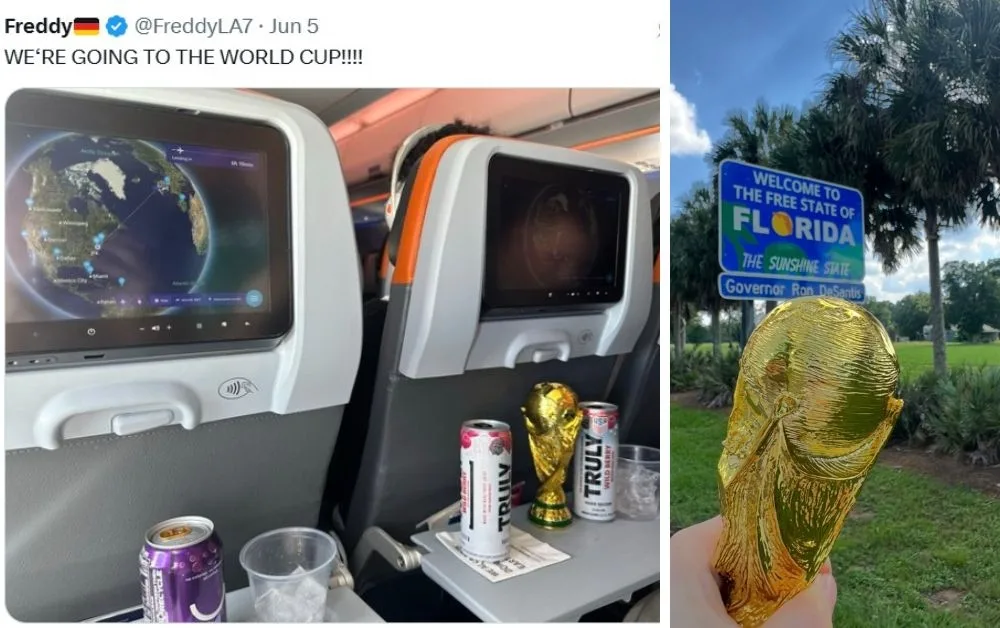
The 2026 World Cup, held in the United States, has officially started in June. Among the many visitors, a young German fan named Freddy has emerged as the biggest breakout star of the tournament by sharing his journey on social media from Atlanta to Houston to watch Germany play [1, 2, 3].
Freddy documented his road trip with two friends, posting videos and stories on X (formerly Twitter) about iconic Americana experiences. These included watching fireworks at Auburn University’s stadium, seeing the live War Eagle mascot, visiting a 24-hour Waffle House diner, attending a concert by country star Ella Langley, admiring Alabama sunsets, and marveling at a Buc-ees gas station with 100 fuel pumps [1, 2, 3].
One of Freddy’s posts about a "surreal" outdoor goods store featuring a shooting range was reshared by a White House social media account with the caption "WELCOME TO AMERICA!" [1, 2, 3]. Americans have responded warmly to Freddy’s posts with dining tips, offers of help, and widespread admiration. Retired NFL Houston Texans star JJ Watt even offered to support Freddy while he is in Houston [1, 2, 3].
Freddy told reporters, "This is the most ‘The European mind can’t comprehend this’ moment of my life. One of my friends said, ‘Punch me five times tomorrow and I’ll still think this isn’t real’" while describing the surreal atmosphere at an 88,000-seat Auburn University stadium to watch the Argentina-Iceland match [1, 2, 3].
Other World Cup visitors have shared their own impressions of American culture. A Scotsman praised chicken fried steak as evidence that Americans and Brits are kindred spirits. A Japanese fan enjoyed endless chips and salsa, while an English tourist said with delight, "It’s raining! But it’s hot! And I love it!" [1, 2, 3].
Spanish footballer Lamine Yamal was spotted pushing a full Walmart shopping cart, appearing unrecognized by shoppers, further highlighting contrasts in fame perceptions [1, 2].
The surge of social media attention around Freddy and other fans comes amid the United States facing internal struggles such as inflation, high gas prices, political divisions, and an unpopular war in Iran [1, 2, 3]. Yahoo Sports writer Dan Wolken commented on June 11 or 12 that the World Cup offers an opportunity to "show visitors that we are more than the scary headlines they read in their newspapers. We want to introduce them to the uniquely American things we enjoy because we hope they’ll enjoy them, too" [1, 2, 3].