The US Treasury Department announced sanctions on Lebanese officials and entities tied to Hezbollah on June 18, citing their roles in obstructing Lebanon’s peace process and delaying the militant group’s disarmament [1, 2, 3]. Among those sanctioned were Sleiman Antoine Frangie, leader of the Lebanese Marada Movement, and Mahmoud Qamati, deputy head of Hezbollah’s political council [1, 2, 3].
Sleiman Frangieh, who is closely allied with Hezbollah and has strong ties to Syria’s Assad family, accepted financial support from Hezbollah aimed at targeting reformist and independent parliamentary seats [1, 3]. Mahmoud Qamati coordinated cash smuggling from Iran to Hezbollah [1, 3].
The Treasury also targeted the Alaa Hamieh business network and related companies accused of operating front businesses to raise funds and carry out contracts for Hezbollah across Lebanon, Syria, Iraq, and Oman [1, 2, 3]. Hezbollah, designated a terrorist organization by the US since 1982, receives arms and financing from Iran [1, 2, 3].
US Treasury Secretary Scott Bessent stated, “Hezbollah must disarm for Lebanon to achieve a secure and prosperous future. Treasury will continue to target Hezbollah’s financial networks and hold accountable those who enable the group to undermine the Lebanese state and threaten prospects for lasting peace” [1].
The US State Department described Hezbollah as “the single biggest obstacle to Lebanon’s recovery and future, and holds the state hostage to a permanent state of conflict” [2]. Hezbollah has rejected calls to disarm and opposes direct US-mediated talks with Israel [3].
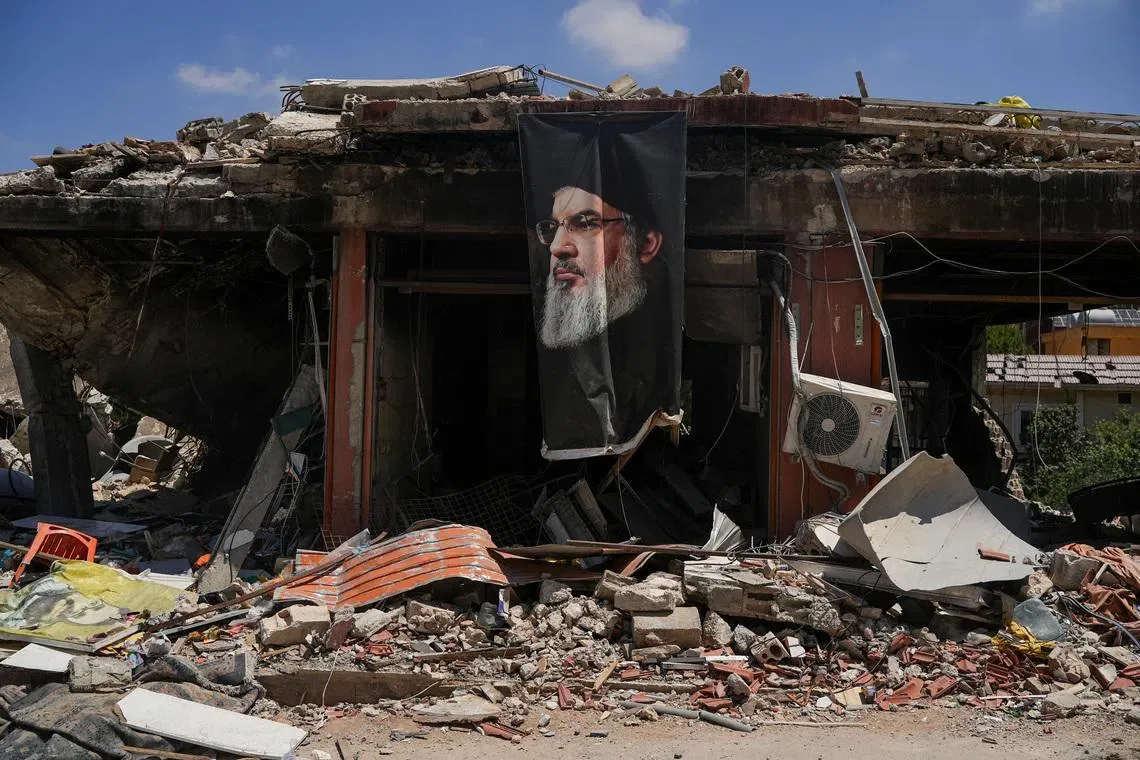
The sanctions come amid an ongoing Israeli military offensive in southern Lebanon that began March 2, 2026, after Hezbollah fired rockets into Israel. Israel has advanced more than 10 kilometers inside Lebanon during the conflict, which has resulted in 3,912 Israeli deaths, 11,873 injuries, and over one million displaced civilians [1, 2].
US President Donald Trump recently spoke with Syria’s leader about combating Hezbollah and expressed expectations for “a complete ceasefire on all fronts, including Lebanon, Hezbollah and Israel, following the signing of a US-Iran agreement aimed at ending the Middle East conflict” [1, 2]. The US and Iran signed an interim memorandum of understanding on June 17 aimed at ending regional hostilities [1, 2].