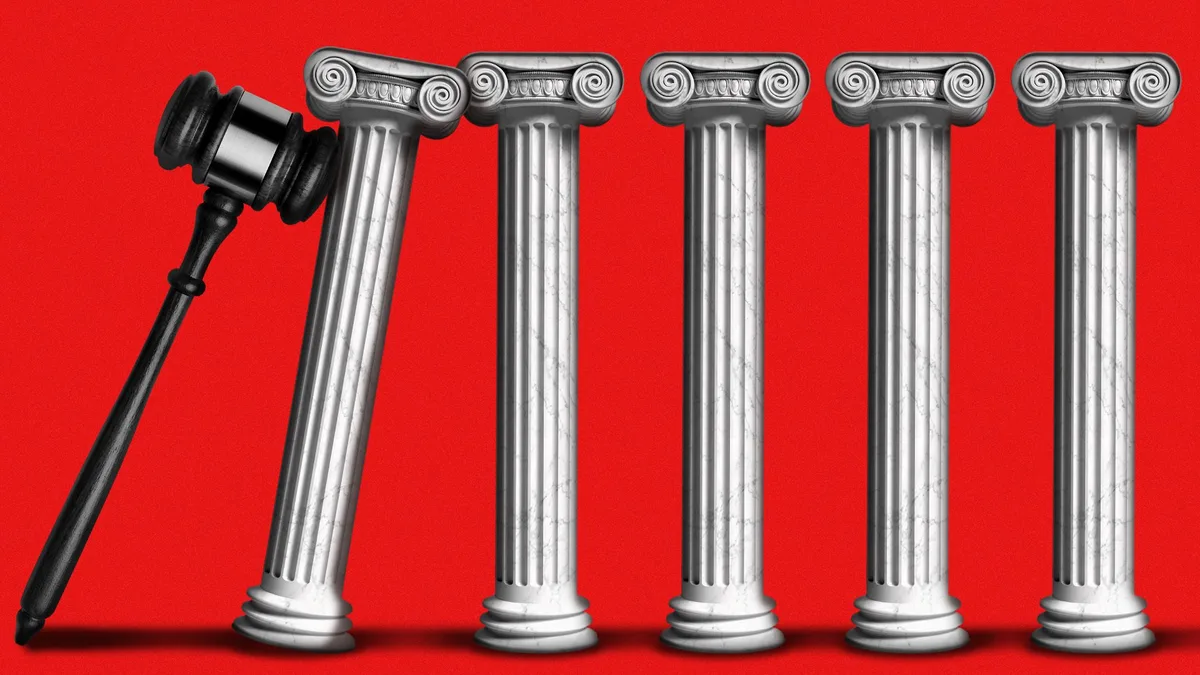
The U.S. Supreme Court issued a ruling on April 29 that significantly weakens Section 2 of the Voting Rights Act, making it harder for minority voters to contest election maps and rules that dilute their voting power [1]. Section 2 lawsuits have often targeted state and local governments, which control schools, police, and infrastructure decisions, to prevent discriminatory voting practices [1].
The ruling gives state and local authorities more latitude to draw election districts that protect incumbents or partisan interests, even if it harms minority voting strength [1]. Measures such as outlawing at-large elections that dilute minority votes, previously upheld under Section 2, may be reversed without federal enforcement [1].
Civil rights leaders and plaintiffs warn the decision could reduce the election of politicians representing communities of color at local and state levels. Charles Taylor, executive director of the Mississippi NAACP, called the ruling "a betrayal to Black voters" with consequences "up and down the ballot" [1]. Voting rights plaintiff Press Robinson said, "We'll be back where we were at the time that slavery was declared illegal in this country, but this country doesn't seem to want to advance beyond that time." [1]
Michael Li of the Brennan Center for Justice said the ruling will lead to "city council, county commission, school board maps being redrawn around the country, because people will say, 'Oh, now we're free to do what we want'" [1].
Mississippi lawmakers plan to revisit state Supreme Court district maps following the ruling. One such map was found by a federal judge to have violated the Voting Rights Act. The lawmakers will reconvene 21 days after April 29 to reassess the districts relevant to Voting Rights Act challenges [1].