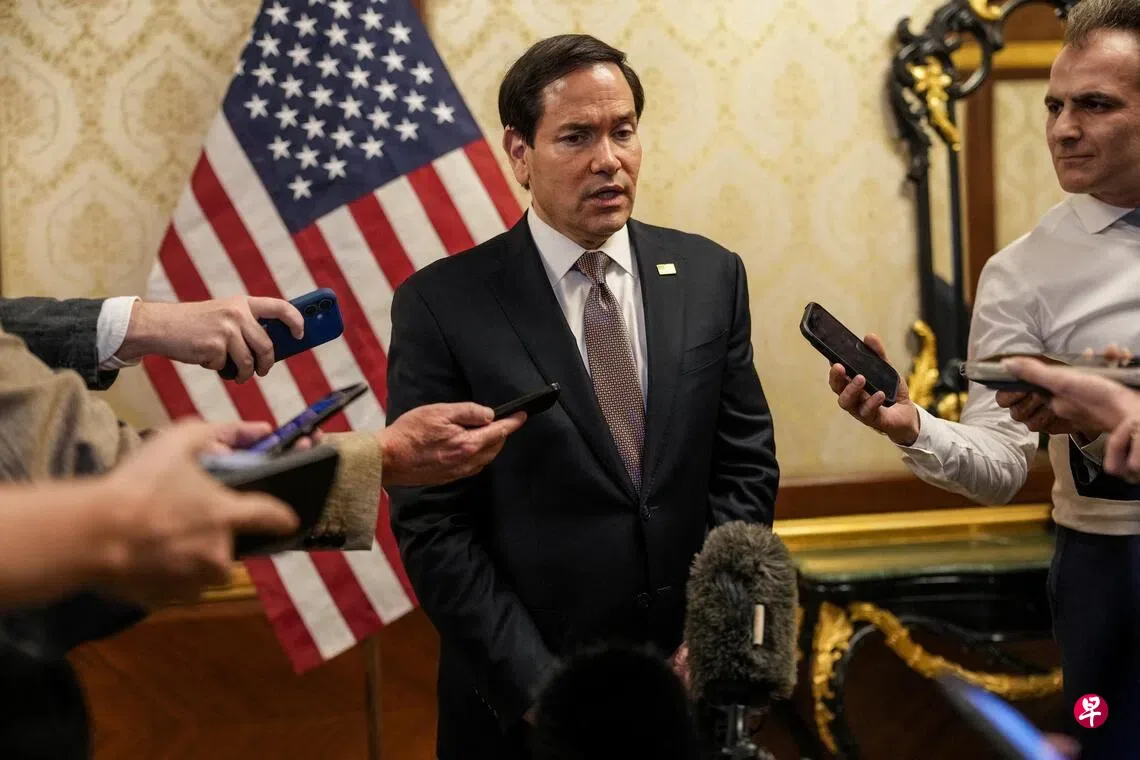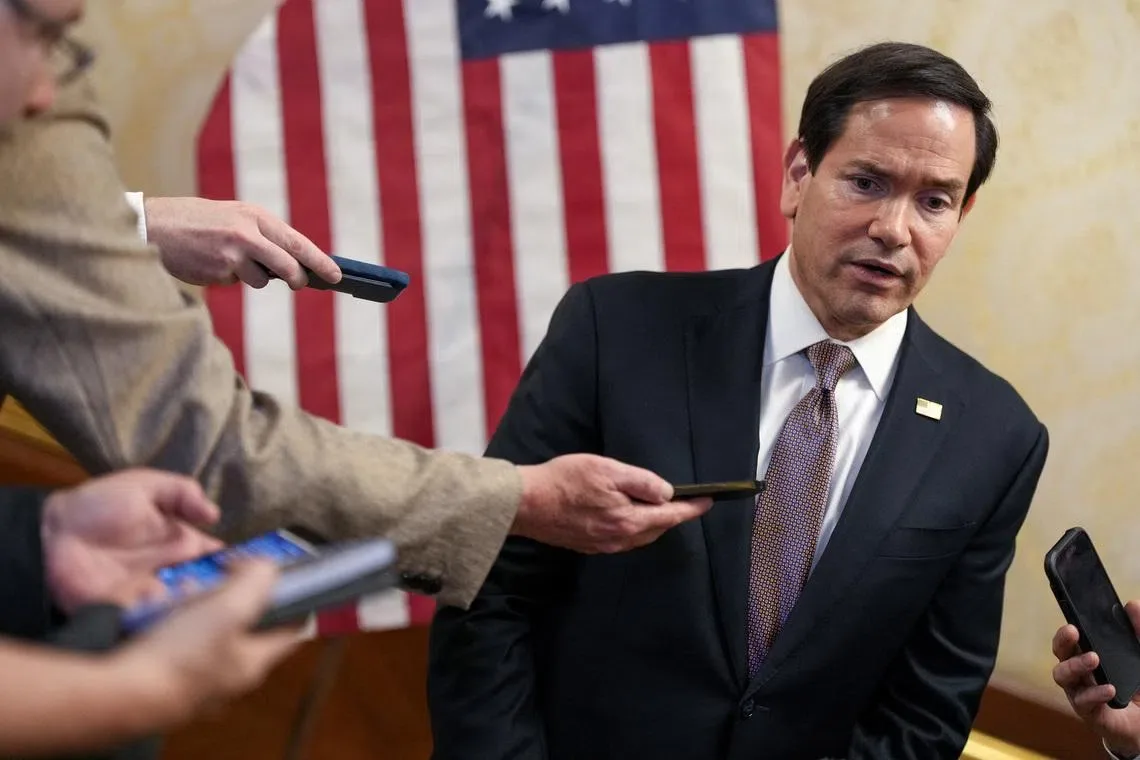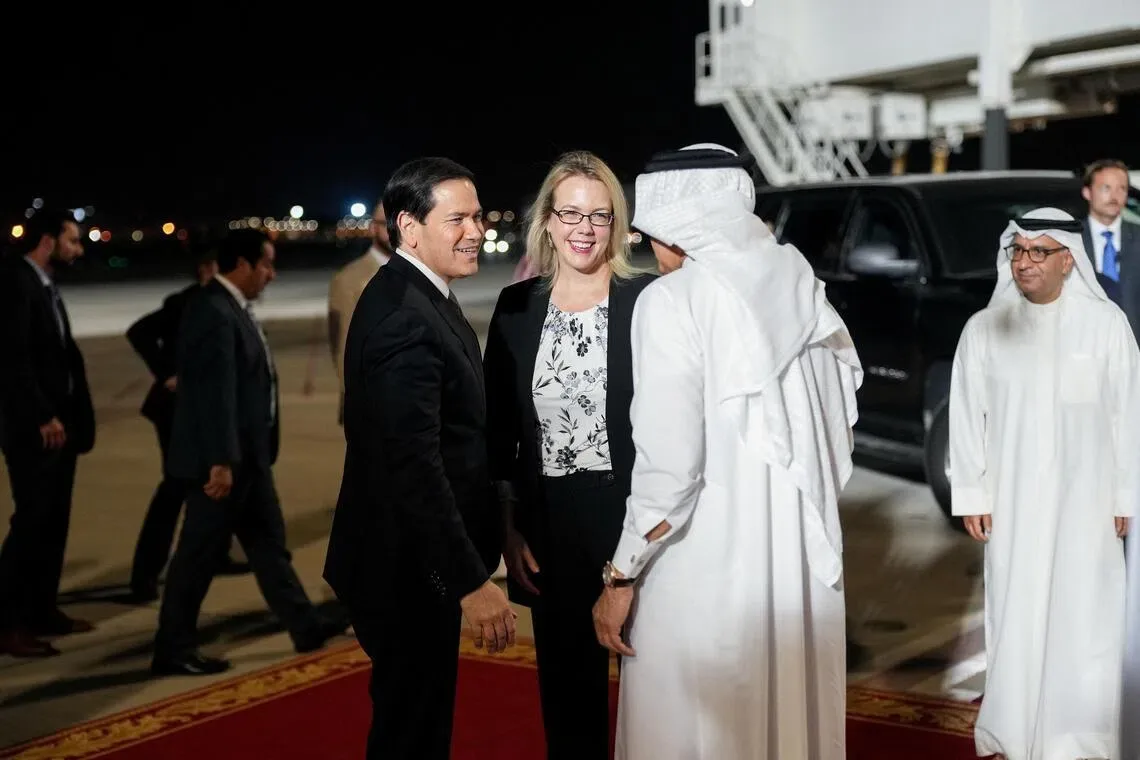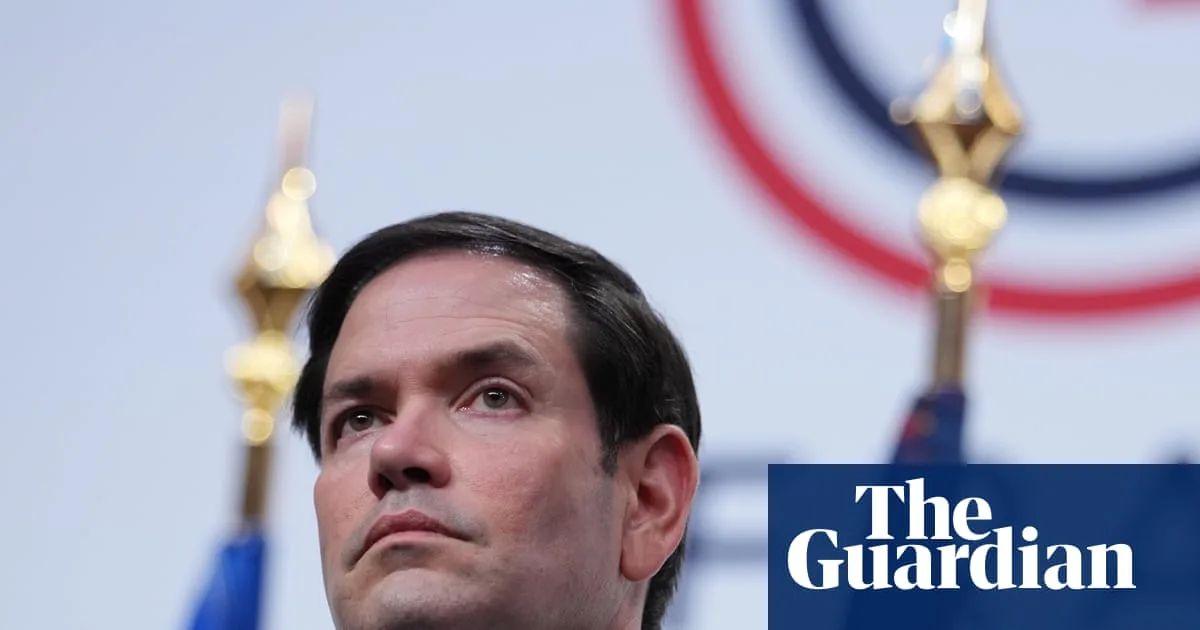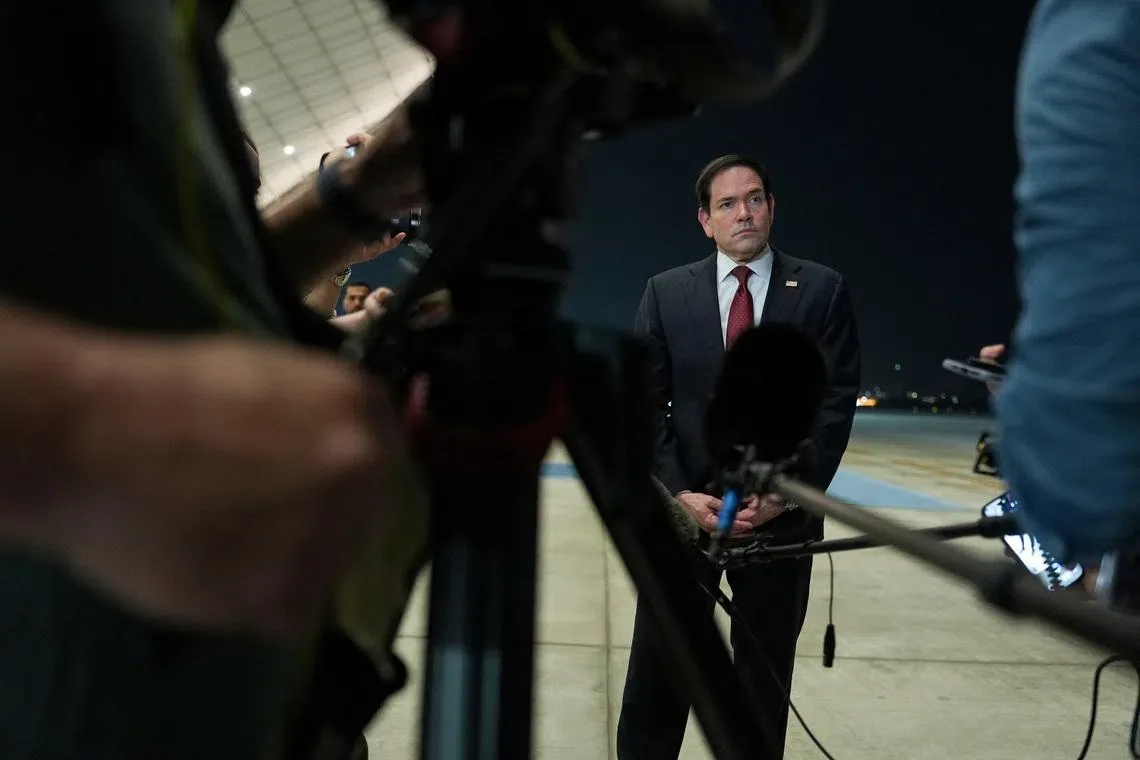
US Secretary of State Marco Rubio traveled from June 23 to June 25, 2026 to the United Arab Emirates, Kuwait, and Bahrain to discuss the US-Iran memorandum of understanding (MoU) aimed at ending hostilities and improving regional security [1, 2, 3, 4, 5, 6, 7, 8, 9, 10, 11, 12].
Rubio met with Gulf Cooperation Council (GCC) officials in Bahrain on June 25. The GCC includes Saudi Arabia, Qatar, Oman, UAE, Kuwait, and Bahrain [1, 2, 3, 4, 10, 11, 12]. He also held talks in Abu Dhabi and Kuwait, reaffirming US alignment with Gulf allies and pledging no actions to undermine their security. "We're going to be completely aligned with our partners in the Gulf," Rubio said, highlighting the rationale for the trip [6, 7, 8, 9].
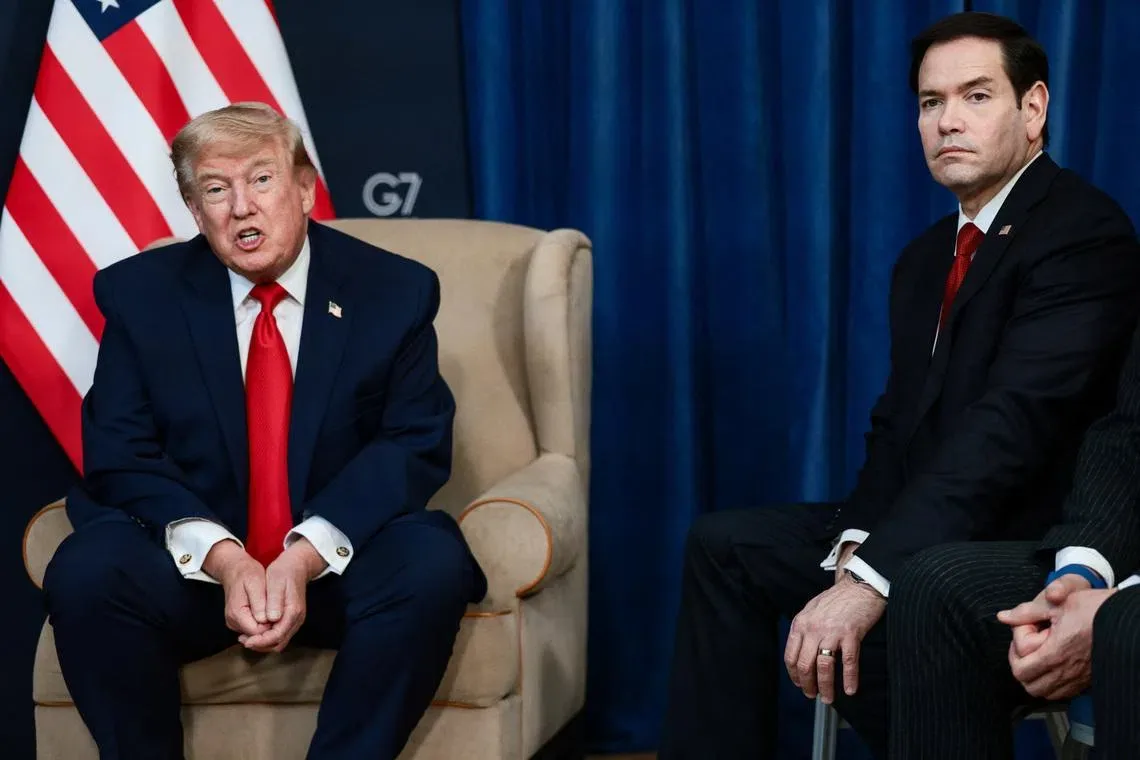
The US-Iran memorandum, signed by President Donald Trump on June 22, launches a 60-day negotiation period aimed at ending hostilities and reaching a comprehensive agreement [1, 4, 7, 8]. The interim deal includes a proposed $300 billion reconstruction fund for Iran [1, 3, 5], but does not address Iran's ballistic missile program, which remains a concern among Gulf states [1, 3, 5, 7, 8]. Rubio acknowledged that Iran's missile capabilities would be a topic in the discussions [5].
Gulf countries hosting US bases—UAE, Kuwait, Bahrain, Saudi Arabia, Qatar, and Oman—were previously targeted by Iranian missile and drone strikes during recent conflicts, intensifying their security concerns [1, 3, 4, 7, 10, 11]. The MoU aims to ensure full, free, and safe transit through the Strait of Hormuz, a critical oil shipping route [2, 9, 12]. However, some Gulf states worry the reconstruction funds and lack of missile restrictions could enable Iran to rebuild its military and expand its influence [1, 3, 4, 5].
Iranian officials interpret the agreement as a victory and a declaration of US defeat. Mohammad Bagher Ghalibaf, an Iranian negotiator, called it "a declaration of America’s defeat" [4, 7, 8, 9, 12]. Iran signaled it plans to maintain control over the Strait of Hormuz and possibly charge transit fees after the 60-day period [4, 7, 8, 9, 12]. The US maintains it is open to further negotiations if Iran is serious about a comprehensive deal. Rubio stated, "If Iran wants to make a good and real deal, the United States is open to that. If they're not, then of course the President has options" [6].
Qatar has acted as a mediator in the talks between the US, Iran, and Gulf states. A Gulf diplomat noted Qatar’s prime minister traveled to Oman to promote dialogue involving Gulf states, Iraq, and Iran [4, 9, 10, 11, 12]. Saudi Arabia is expected to host future reconciliation talks between Gulf states and Iran, although no date is set [9].
Data from analytics firm Kpler showed 71 vessels passed through the Strait of Hormuz over the weekend before June 22, below the pre-war daily average of 100 to 131 [12]. On June 24, President Trump requested nearly $88 billion in supplemental funding from Congress, mostly for Pentagon costs related to the Iran conflict [7, 8].
Technical negotiations to implement the MoU are ongoing and expected to resume by the end of June, likely in Switzerland [1, 6, 9].