The US Department of Defense announced on June 16, 2026, that it has renamed the Indo-Pacific Command (USINDOPACOM) back to the US Pacific Command (USPACOM), restoring the command’s original name used for over 70 years [1, 2, 3, 4, 5].
US Pacific Command was originally established on January 1, 1947, by President Harry S Truman, marking the start of the command’s historical legacy [3, 4, 5]. The geographic area of responsibility remains unchanged, covering the region from the US West Coast to the western border of India [1, 2, 3, 4, 5]. The command currently includes approximately 375,000 civilian and military personnel assigned within its area of responsibility [3, 4].
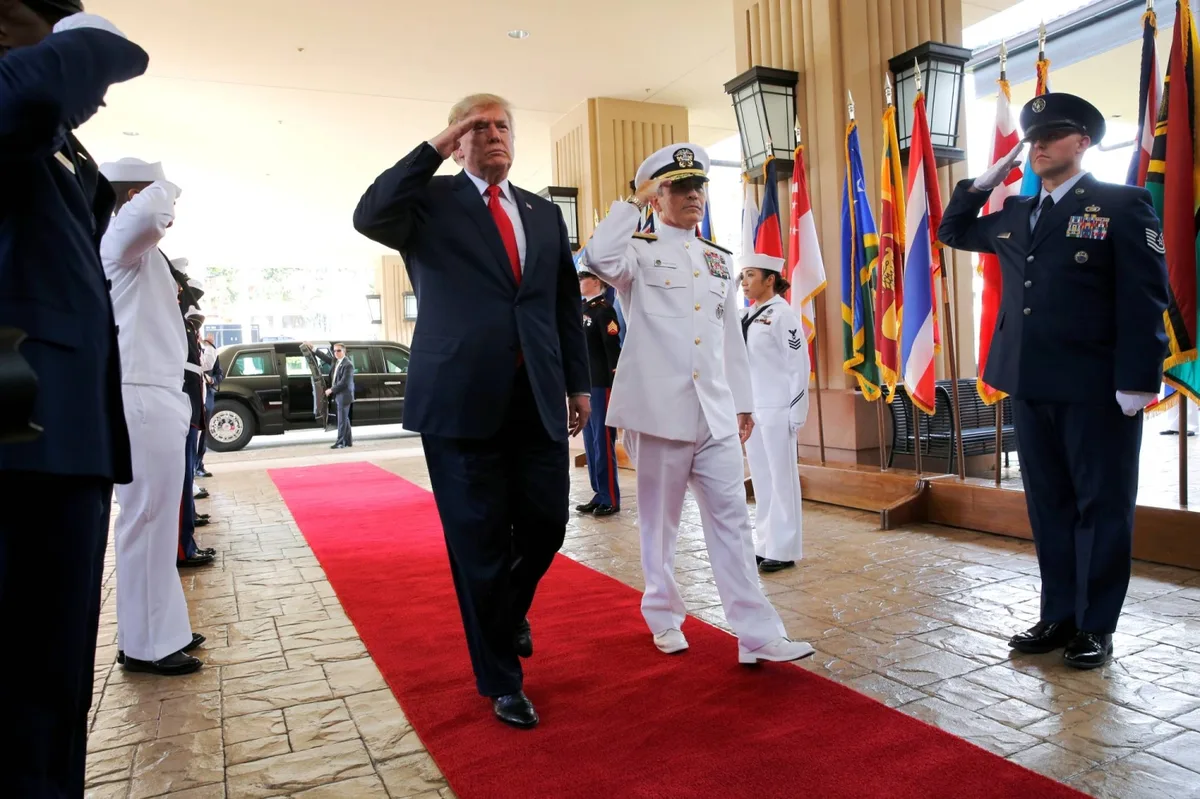
The fundamental mission and commitment to maintaining a free and open Indo-Pacific region alongside allies and partners remain intact despite the name change [1, 2, 3, 4, 5]. The 2018 renaming to Indo-Pacific Command under Defense Secretary Jim Mattis intended to reflect growing connectivity between the Indian and Pacific Oceans and recognize India’s increasing importance in US security strategy. Mattis said at the time, "Relationships with our Pacific and Indian Ocean allies and partners have proven critical to maintaining regional stability. In recognition of the increasing connectivity between the Indian and Pacific Oceans, today we rename the US Pacific Command to US Indo-Pacific Command" [2, 3, 4].
The recent 2026 reversion is seen as a symbolic move that restores the historical legacy and shifts emphasis back to US interests focused more directly on the Pacific region than on the broader Indian Ocean. Defense analyst Bryan Clark of the Hudson Institute said, "Removing 'Indo' from the command’s name places greater emphasis on US interests in the region, where Washington is a resident power, rather than the broader Indian Ocean" [1]. Derek Grossman, another defense analyst, suggested the name reversion signals a less hawkish approach toward China and greater US engagement [1].
The Department of Defense stated that "Restoring the legacy USPACOM designation honors the command’s deep historical roots, fostering a sense of pride and collective spirit among all who serve in the Pacific" [2]. The renaming effort is estimated to have cost the Department approximately US$50 million [1].