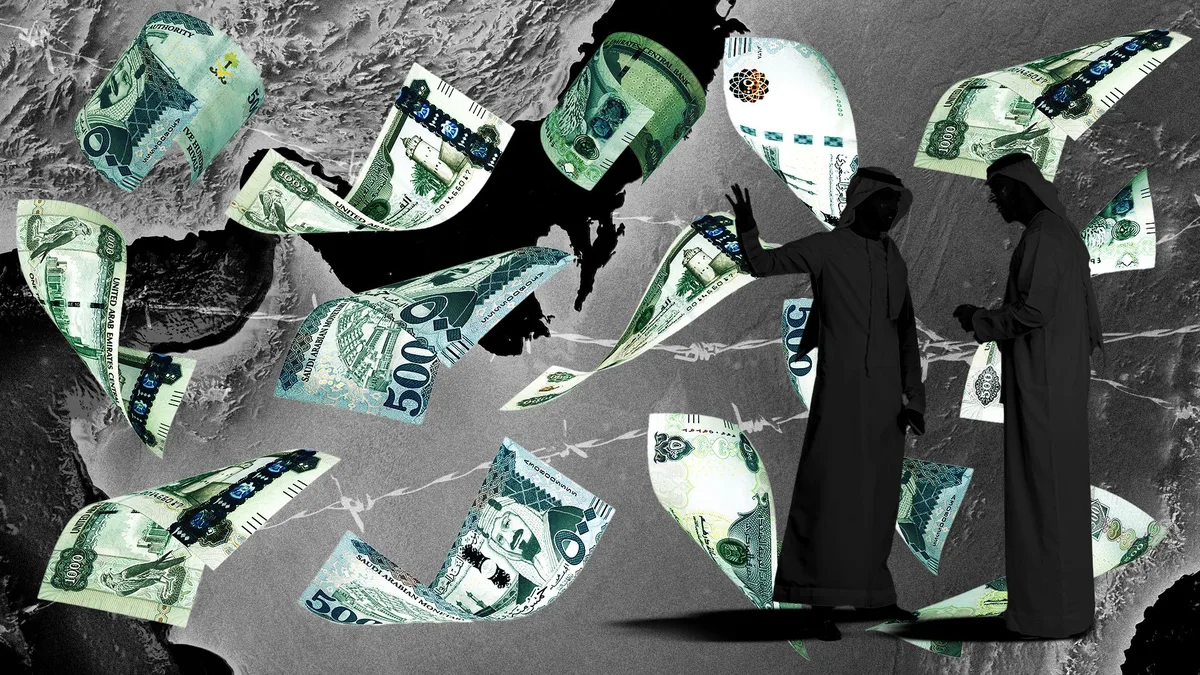
The United Arab Emirates announced it is leaving OPEC to pump oil independently on 2026-05-02, the same day Saudi Crown Prince Mohammed bin Salman convened a Gulf leaders summit in Jeddah. Saudi Arabia was reportedly blindsided and angry. [1]
The split comes as Gulf regional rivalry has sharpened over Yemen, Sudan, Palestine, personal animosity between UAE President Mohammed bin Zayed and Mohammed bin Salman, and the Iran war. [1] The conflict has also hurt Gulf plans for a stable post-oil future built on tourism, AI and foreign capital. [1]
Saudi Arabia's own ambitions are under strain. The kingdom is ending its major foreign sports bet by pulling out of LIV Golf after investing more than $5 billion since 2022, according to the facts provided. [1] It is also facing severe financial pressure as oil exports decline, putting lavish projects such as NEOM and the 2034 World Cup in a tighter fiscal box. [1]
The UAE had pledged $1.4 trillion in U.S. investments in spring 2025, but the regional climate has grown harsher since then. [1] Chevron-backed $20 billion data center projects in Saudi Arabia and the UAE have stalled after Iranian drone attacks exposed the region's vulnerability, Joe Dominguez, the CEO of Constellation, said there was "no one is rushing to build $20 billion data centers in Saudi Arabia or the UAE after Iran proved it can strike them with cheap drones." [1]
The UAE's exit adds to the pressure on a region trying to balance oil income, investment pledges and security risks. Saudi Arabia's next test comes as it tries to preserve capital for its biggest projects while the war and Gulf rivalries keep rattling investor confidence. [1]