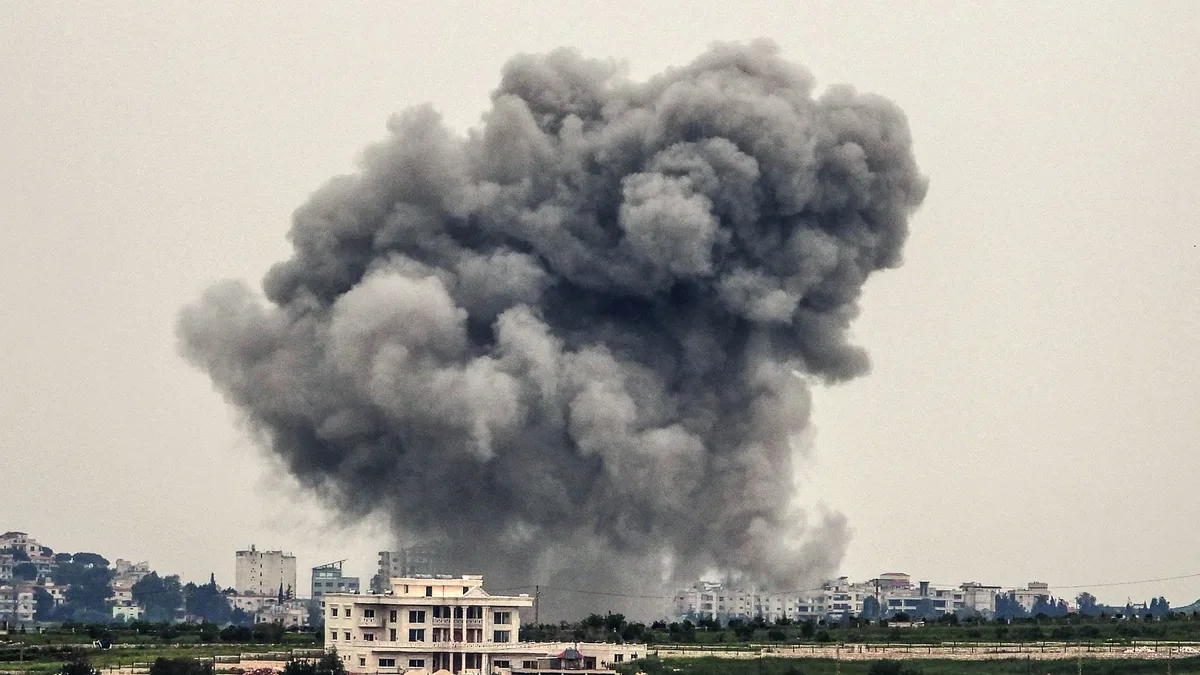
President Donald Trump advised Israeli Prime Minister Benjamin Netanyahu to limit military actions in Lebanon to surgical strikes and avoid a full-scale war. Trump emphasized that more precise operations were necessary, saying, "I told Netanyahu he has got to do it more surgically. Not knock down buildings. He can't do it. It is too terrible and makes Israel look bad" [1].
The ceasefire brokered by the Trump administration in Lebanon is only partially observed and faces potential collapse before its expiration in mid-May 2026 [1]. Despite the truce, Israeli forces continue their occupation of southern Lebanon, conducting house demolitions they claim target Hezbollah infrastructure [1].
Hezbollah has sustained attacks on Israeli forces and villages along the Lebanon-Israel border with rockets and drones [1]. Israel has expanded airstrikes in Lebanon but remains constrained by pressure from the Trump administration to keep attacks limited in scale [1].
Trump spoke daily with Netanyahu during the week before his April 29 interview with Axios, in which he discussed his advice and the ongoing conflict. Netanyahu told Trump Israel needed to increase its response to Hezbollah's attacks during their talks [1]. A US official said the administration asked Israel to show restraint to allow the diplomatic process with Lebanon to proceed [1].
The Trump administration denies that the ceasefire is collapsing. It states Hezbollah was never part of the ceasefire and is actively seeking to undermine it [1]. Trump blamed Iran and Hezbollah for Lebanon's destruction, declaring, "Iran ruined Lebanon. Their proxy [Hezbollah] ruined Lebanon. When Iran gets taken out, Hezbollah automatically gets taken out" [1].
The ceasefire brokered by the Trump administration is due to expire in mid-May 2026, a deadline that heightens tensions as both sides maintain military activity along the border [1].