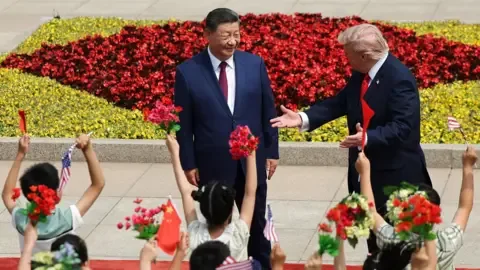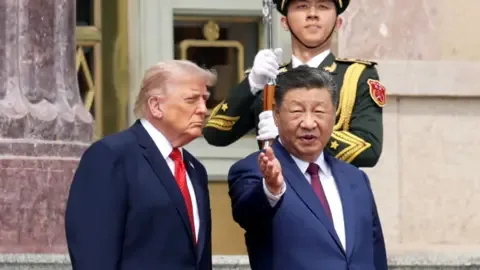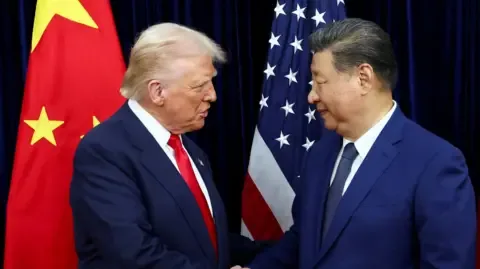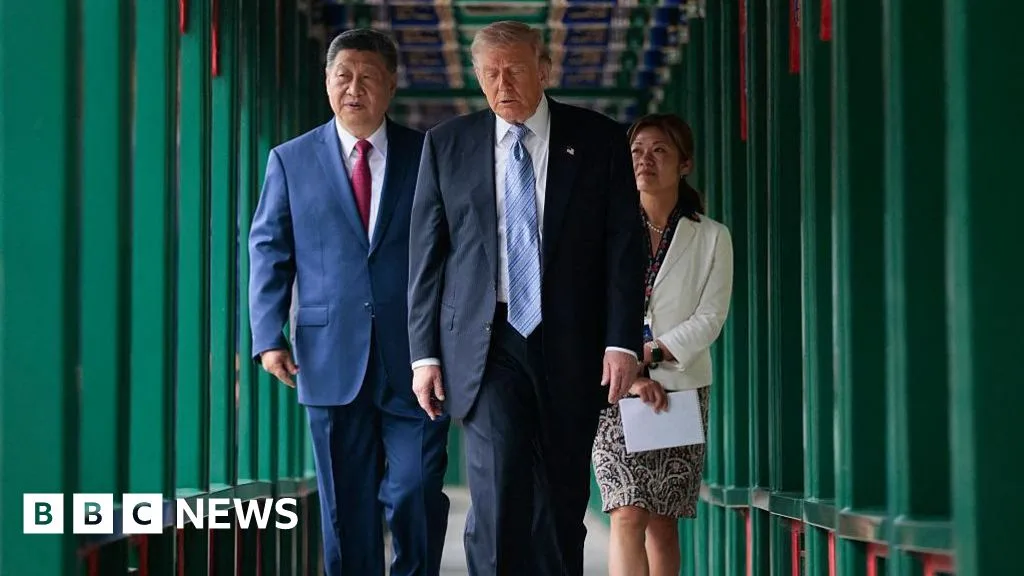
US President Donald Trump conducted a state visit to China from May 13 to 15, 2026, accompanied by a delegation of 17 leading US business executives from sectors such as technology, finance, aerospace, and agriculture [1, 2, 3, 4, 5, 6, 7]. Trump met with Chinese President Xi Jinping, calling the economic relationship "the world's most consequential economic relationship" and describing the visit as "very successful." Xi Jinping termed it a "historic and landmark" occasion [1, 7].
Despite optimistic rhetoric and ceremonial events, no major trade agreements or sweeping structural deals were announced during the visit [1, 7]. Trump claimed China agreed to purchase 200 Boeing commercial jets—its first US-made plane order in nearly a decade—but Beijing did not confirm the order, and analysts noted the quantity was lower than expected [1, 7]. Incremental commitments to increase US agricultural and energy product purchases over 2026 were expected, though no large-scale agricultural purchase agreements were disclosed [1, 7].
The US delegation included high-profile CEOs such as Elon Musk (Tesla), Tim Cook (Apple), Kelly Ortberg (Boeing), Larry Fink (BlackRock), Stephen Schwarzman (Blackstone), Jane Fraser (Citibank), Dina Powell McCormick (Meta), and others from major companies in aerospace, finance, and semiconductors [2, 3, 4, 5, 6]. Nvidia CEO Jensen Huang was not initially listed but joined the trip at the last minute, boarding Air Force One during a refueling stop in Alaska [4, 5, 8, 6, 9, 7]. Huang said he hoped the meeting would be "very successful" and praised the good relationship between Trump and Xi while expressing hopes to improve US-China relations [10, 9]. Trump publicly denied reports Huang was not invited and called such reports "fake news" [6, 9, 7].
A trade truce signed in October 2025 remains intact, with suspended tariff increases by the US and China easing rare earth export restrictions [1, 7]. Both sides agreed to create a "Board of Trade" to manage trade relations and avoid reopening tariff negotiations [1, 7]. Discussions also included establishing trade and investment committees focused on non-sensitive goods [1, 2, 4, 7].
Sensitive topics such as US export restrictions on advanced AI chips and geopolitical tensions, including issues around Taiwan, continue to pose challenges for bilateral relations [4, 8, 6, 7]. The late inclusion of Nvidia’s CEO highlights the sensitive nature of AI technology trade [4, 8, 6, 10, 9]. During the visit, US officials voiced concerns over Chinese companies negotiating with Iran for weapons transfers via third countries, increasing pressure on Trump’s administration [11].
Trump’s son attracted media attention in Beijing by wearing new traditional Chinese-style clothes [12].
At a state banquet on May 15, Trump invited Xi Jinping to visit the United States on September 24, 2026 [7]. This will be the next high-profile diplomatic engagement following the visit.