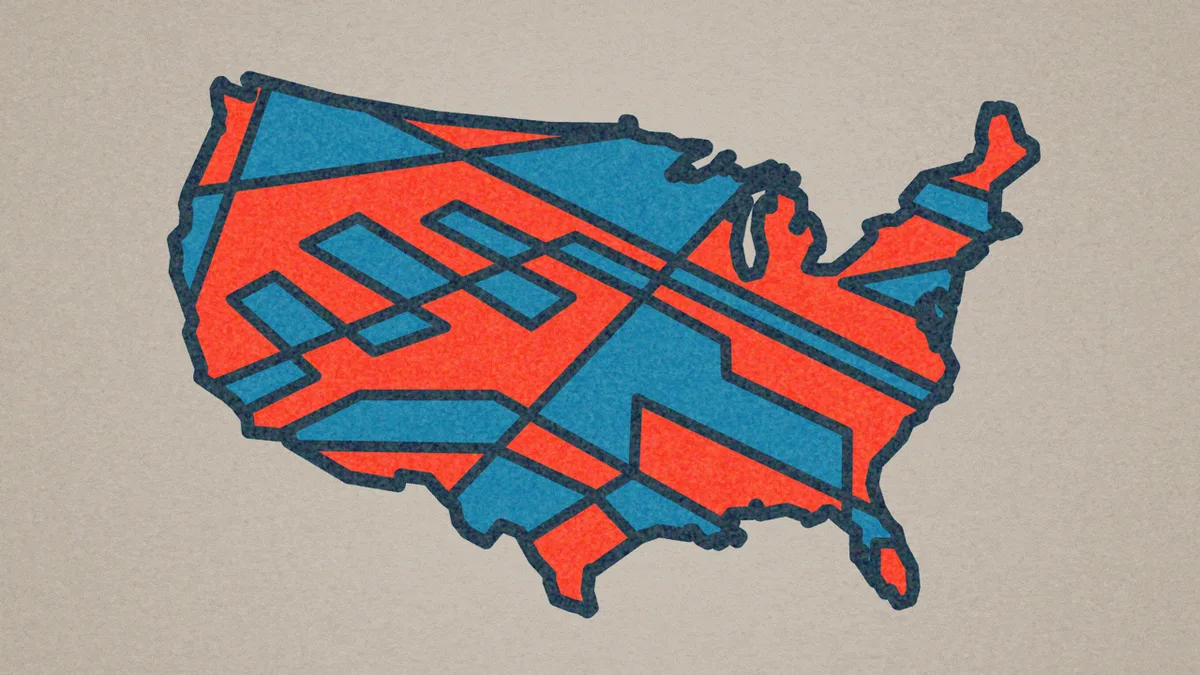
The Supreme Court weakened the Voting Rights Act on April 29, removing constraints on Democratic-led states pursuing aggressive redistricting for the 2028 elections [1]. More than 20 Democratic federal and state lawmakers told Axios they are energized and willing to target new blue and purple states for redistricting after the ruling [1]. Some Democrats who opposed such efforts in past cycles are reconsidering their stance, according to the lawmakers [1].
House Minority Leader Hakeem Jeffries identified New York, Illinois, Colorado, and Maryland as possible redistricting targets in 2028 [1]. California may also attempt another redistricting after drawing a new map for 2026, House Democratic caucus chair Pete Aguilar said. Aguilar said, “We’ll see what Southern states do leading into 2028, when California will respond just like we responded to Texas. We’re not going to back away from a fight” [1].
Maryland’s state House passed a bill in February that could have redrawn its map from an 8-1 Democratic advantage to a 9-0 advantage but the State Senate President did not bring the bill to a vote [1]. Rep. Glenn Ivey said, “The vast majority of people in Maryland wanted to move forward. The folks that did not hopefully got the message from the Supreme Court Wednesday about the urgency of this” [1]. Rep. Jamie Raskin expects Maryland to join Virginia and California in redistricting efforts, saying “There is going to be overwhelming sentiment now for Maryland to join Virginia and California” [1].
Maryland State Senate President Bill Ferguson was seen by some insiders as the main obstacle blocking the legislation, which could threaten his reelection prospects [1]. Illinois state Rep. La Shawn Ford said, “All things should be considered at this point” as Democrats reassess their approach [1].
The Axios report on May 1 summarized Democratic responses and plans following the Supreme Court ruling [1]. The coming months will show which states pursue new maps ahead of the 2028 elections.