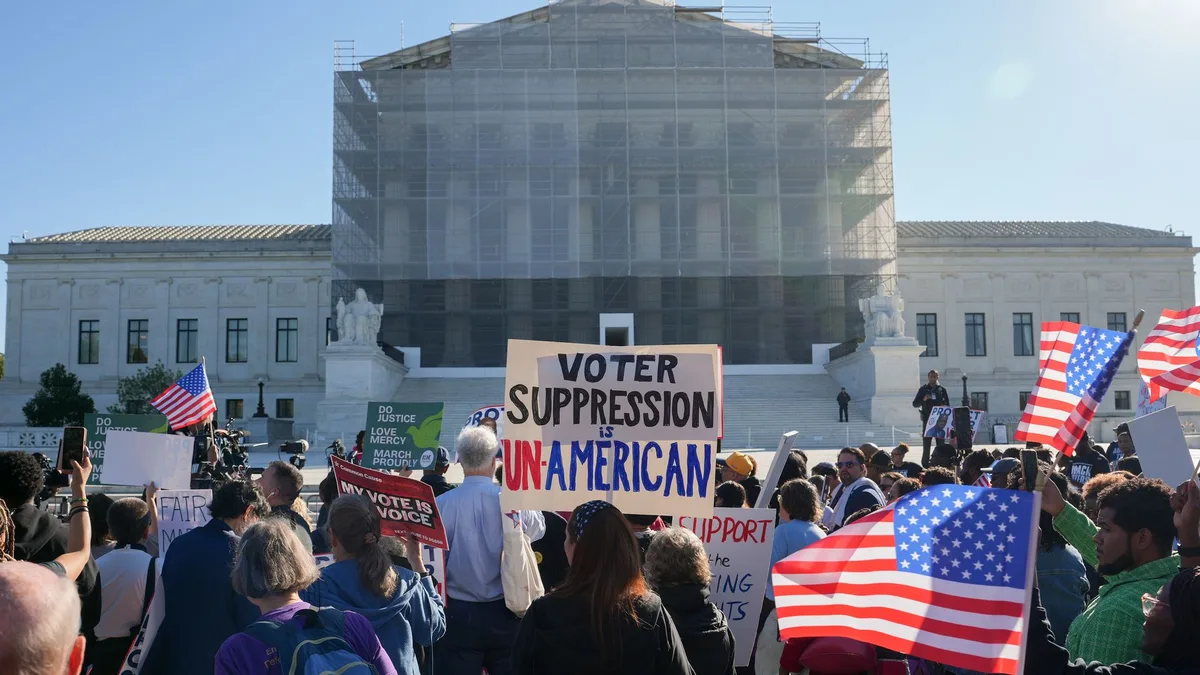
The Supreme Court on Wednesday limited a key provision of the Voting Rights Act in Louisiana v. Callais, a ruling described as a setback for civil rights groups that could affect voting across the South. [1]
The court did not erase Section 2 of the 1965 law, but the decision effectively narrowed it. Justice Samuel Alito wrote that “because the Voting Rights Act did not require Louisiana to create an additional majority-minority district, no compelling interest justified the State's use of race in creating SB8, and that map is an unconstitutional racial gerrymander.” He added that “Section 2 of the Voting Rights Act of 1965 was designed to enforce the Constitution — not collide with it.” [1]
Louisiana has been in court over its congressional maps since 2020. Black voters, who the report said make up roughly 30% of the state’s population, sued in 2022 to add a second majority-Black district. Lawmakers then updated the maps, and non-Black voters later challenged the revised plan, saying race played too large a role in how it was drawn. [1]
A three-judge panel sided with the challengers in 2024, setting up the Supreme Court ruling. Axios said the decision could add as many as 19 Republican House seats compared with 2024 maps. [1]
The ruling leaves Louisiana’s map fight in a new phase, with the state and other Southern legislatures now facing a narrower path under Section 2 as redistricting battles continue. [1]