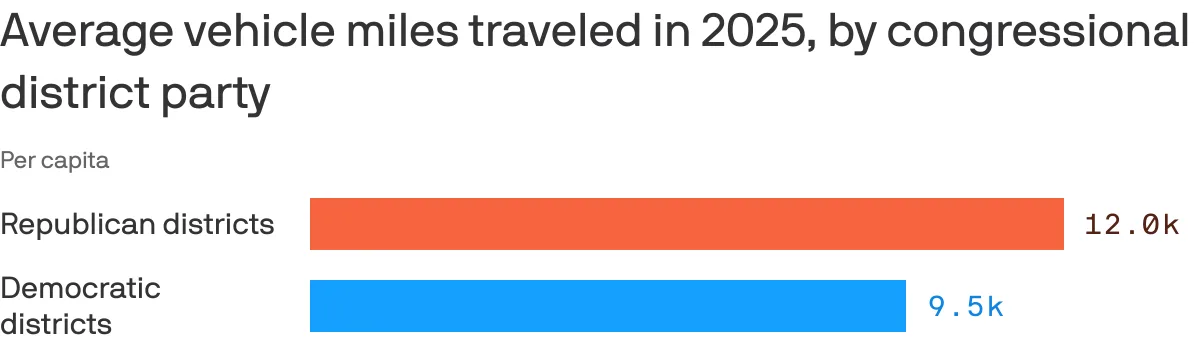
Gasoline prices could pose a political problem for Republicans heading into the midterms, because voters in GOP congressional districts drive 26% more miles on average than those in Democratic districts. [1]
As of 2026-04-29, the U.S. average price for regular gasoline stood at $4.23 per gallon, about $1.25 higher than before the war began. [1] A $1 increase in gas prices adds about $70 a month in fuel costs for the median two-driver household, which can bite harder in places where driving is a bigger part of daily life. [1]
That exposure is not evenly spread. Low- and moderate-income households spend a larger share of income on gasoline, and the lowest income quintile spent 10.3% of pre-tax income on fuel in 2024. [1] Even so, gasoline still takes a smaller share of consumer spending than at the peaks in 2008, 2011 and 2012. [1]
The squeeze could matter in battleground states where gas is already more expensive than the national average. Arizona, Michigan, Nevada and Pennsylvania all had prices above the U.S. average on 2026-04-29. [1]
Energy Secretary Chris Wright said gasoline remains cheaper than the Biden-era high, telling reporters that prices were “far below the Biden-era peak, when per AAA they reached $5.02 per gallon in mid-2022.” [1] That peak came in mid-2022, when fuel costs hit $5.02 a gallon. [1]
The next pressure point will be whether prices keep rising through the spring driving season, with voters in competitive states and fuel-heavy districts likely to feel the costs first. [1]