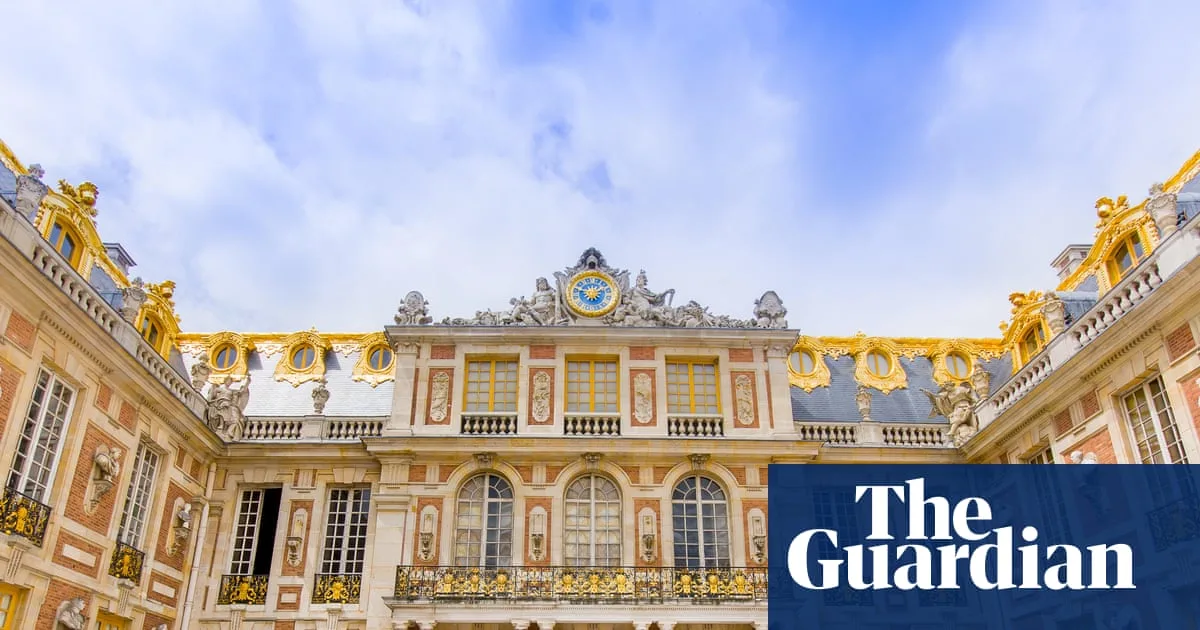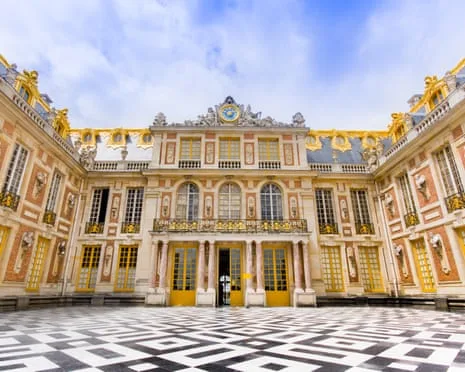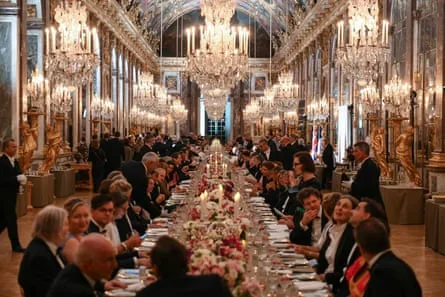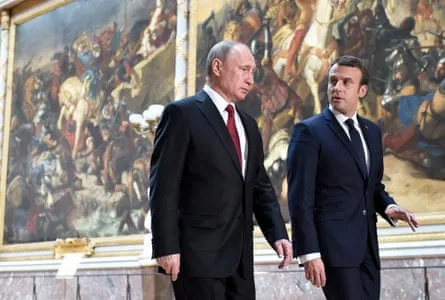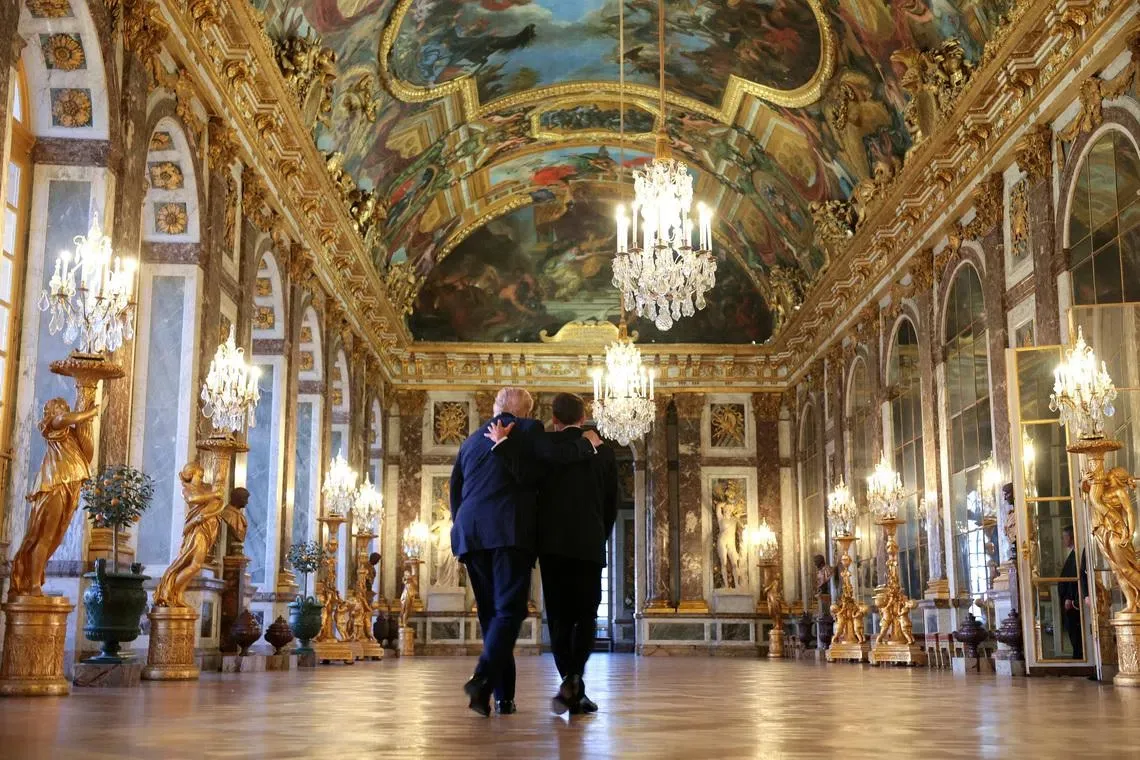
French President Emmanuel Macron and his wife Brigitte hosted U.S. President Donald Trump for a dinner at the Palace of Versailles on June 17, 2026, as part of the G7 summit taking place in Evian-les-Bains, France [1, 2, 3, 4]. The evening was held to celebrate the 250th anniversary of American independence and recognize France's historical role in the founding of the United States, said Macron, who called it "a moment to celebrate this friendship" [3, 5].
The Palace of Versailles, spanning 800 hectares and containing roughly 2,300 rooms, served as a grand setting fitting Trump's known preference for lavish surroundings [1]. Trump praised the venue, saying, "Versailles is not gold leaf. Versailles is the real deal," and described it as "beautiful" and "maybe the most beautiful of all" [1, 2]. Macron described Versailles as "an instrument for influence," emphasizing the symbolic weight it carries in diplomacy [4].
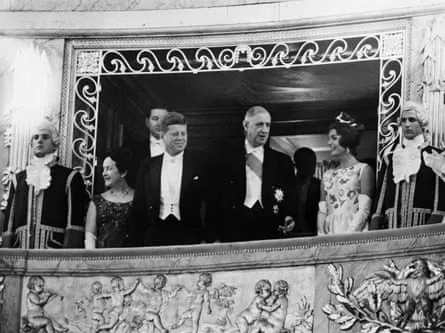
It is rare for a U.S. president to be hosted alone at Versailles without other foreign leaders present; a notable precedent was President John F. Kennedy in 1961 [1]. Macron invited Trump to stay for the entire G7 summit, contrasting last year's summit in Canada where Trump departed early [3, 4].
The Versailles dinner complemented broader efforts within the summit to ease tensions that had arisen over previous disagreements between Trump and European leaders on issues such as tariffs, the Iran nuclear deal, and the war in Ukraine [2, 4]. Jeffrey Hawkins, a former U.S. diplomat, said a key diplomatic tactic is to make the American president feel "well-received" and "important and respected," which the Versailles hospitality aimed to achieve [2].
The G7 summit remains ongoing, with Macron and other leaders continuing discussions in Evian-les-Bains. Trump's full participation through the summit is seen as a positive sign for transatlantic relations at this stage [2, 3].