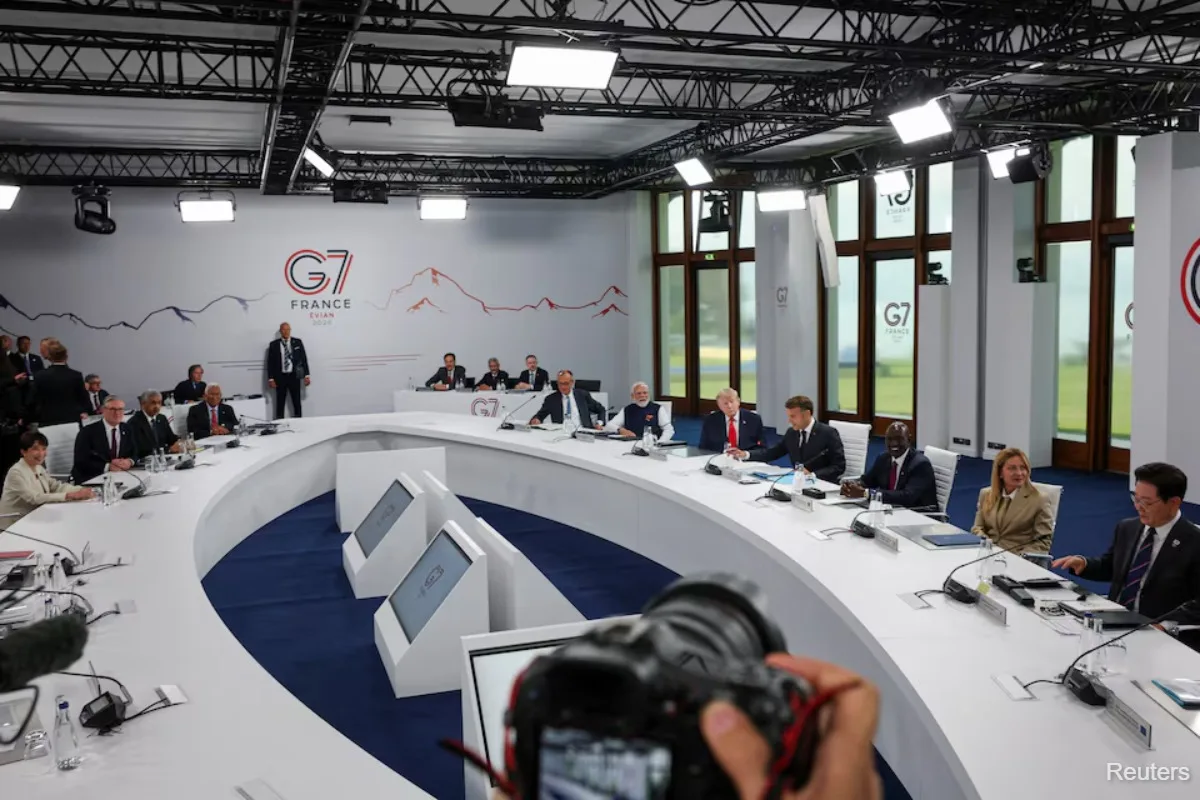
G7 leaders meeting June 16 in Evian-les-Bains, France, pledged to strengthen measures to address heavy debt burdens among developing countries and vulnerable middle-income countries excluded from the G20 Common Framework debt relief initiative [1, 2, 3, 4, 5, 6]. The joint declaration followed discussions involving guest countries Kenya, Egypt, India, Brazil and South Korea [1, 2, 3, 4, 5, 6].
Leaders stressed the need for increased international cooperation on development and urged reforms to traditional policies, which they said had limited impact on reducing reliance on external financial assistance [1, 2, 3, 4, 5, 6]. They highlighted the sharp decline in public development funding in recent years, led by cuts from the United States and other advanced economies [1, 2, 3, 4, 5, 6]. OECD data showed official development assistance dropped 23.1% in real terms in 2025, falling to US$174.3 billion, with U.S. aid down nearly 57% and smaller decreases from Germany, France, Britain and Japan [1, 2, 3, 4, 5, 6].
The leaders called for a common approach to pre-emptive debt restructuring for vulnerable middle-income countries not covered by the G20 framework. Eric LeCompte, executive director of Jubilee USA Network, welcomed the focus on early debt restructuring, saying, "Essentially what they're calling for is pre-emptive debt restructuring — dealing with debt before it becomes a crisis" [1, 2].
Kevin Gallagher, director of Boston University's Global Development Policy Center, said the declaration marked the G7's first official recognition of debt risks facing poorer middle-income countries outside the Common Framework, but he noted surprise that it did not address the impact of the war in the Middle East on developing nations [3, 4, 6]. Meanwhile, Oxfam International criticized the statement as inadequate and called on the G7 to fulfill their prior commitment to provide aid equal to 0.7% of gross national income. Joern Kalinski of Oxfam said, "The G7 has made the biggest collective cut in life-saving aid in its history, a move that is already causing millions of people to die" [1, 3].
The summit highlighted the growing gap left by waning public assistance, with leaders urging greater engagement from the private sector to mobilize resources for development [1, 2, 3, 4, 5, 6]. The G7 agreed to intensify efforts to cooperate globally on these debt issues and development reforms, aiming to prevent debt distress in vulnerable countries.