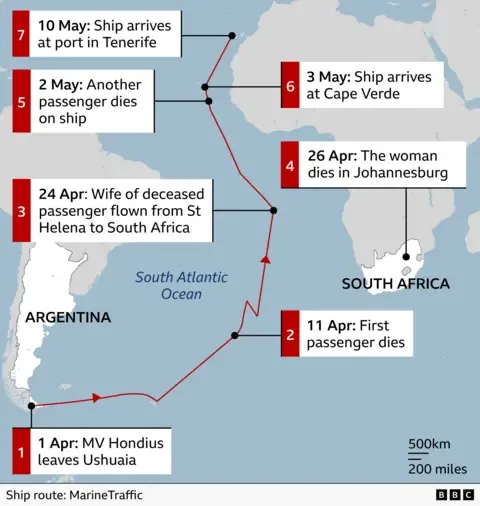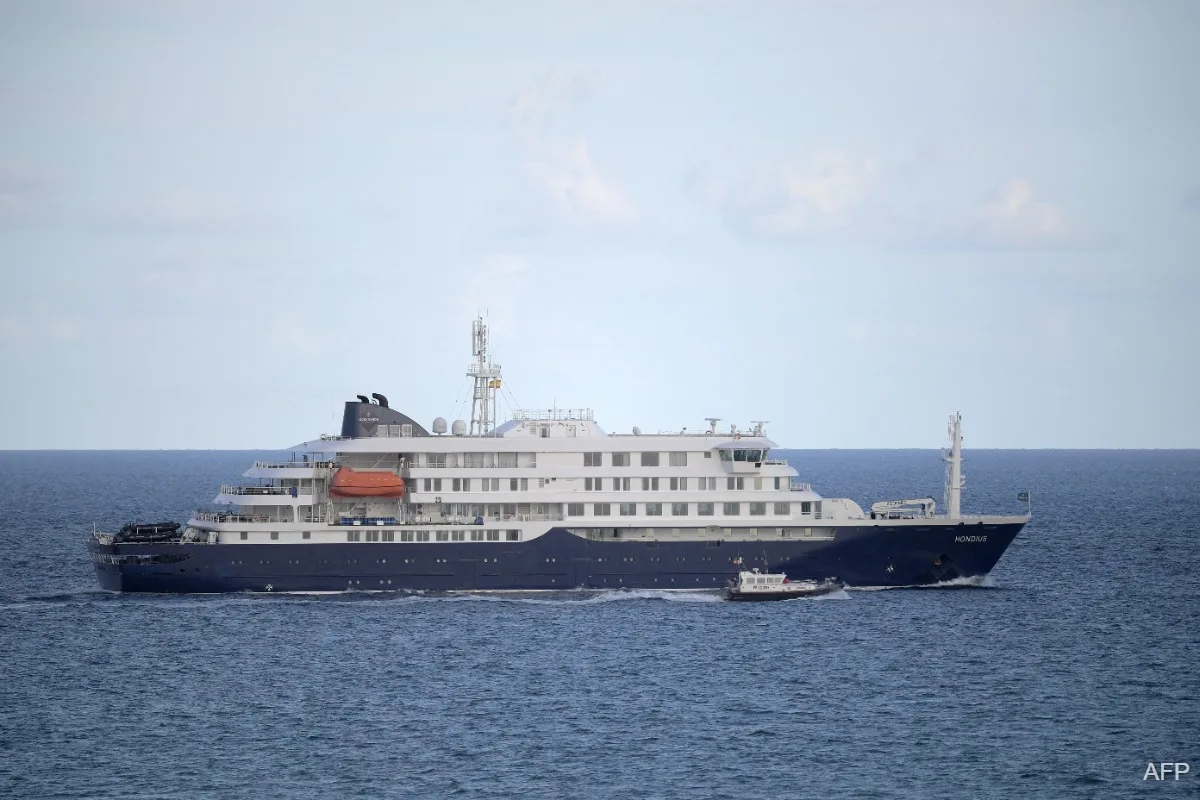
The hantavirus outbreak was traced to the Dutch-flagged MV Hondius cruise ship, which sailed from Ushuaia, Argentina, on April 1 with passengers from 23 countries aboard [1, 2, 3, 4]. At least 12 suspected and confirmed cases of hantavirus infection have been reported among passengers and crew, including three deaths of a Dutch couple and a German woman [1, 5, 2, 3, 4, 6].
The virus involved is the Andes virus strain, known as the only hantavirus capable of human-to-human transmission after prolonged close contact [1, 2, 3, 4]. Symptoms include fever, fatigue, muscle aches, vomiting, diarrhea, and shortness of breath [1, 5]. Despite the deaths and cases, health officials consider the risk of a wider outbreak very low [1, 7, 3, 4, 8, 6]. WHO Director-General Tedros Adhanom Ghebreyesus said, "The chance of further spread in the Netherlands remains very small" after a new case was confirmed among a crew member repatriated there on May 22 [3, 4].
The cruise ship docked in Tenerife, Canary Islands, in early May, where passengers disembarked for isolation, and later arrived at Rotterdam on May 18 with remaining crew quarantined on board and ashore [1, 2, 3, 4]. A crew member who disembarked in Spain tested positive and was hospitalized in isolation as a precaution [3, 4]. A Canadian passenger isolating in British Columbia tested presumptive positive with mild symptoms; confirmation is pending national testing [1, 5, 9]. A New Zealand passenger quarantined in Taiwan tested negative and remains asymptomatic [7].
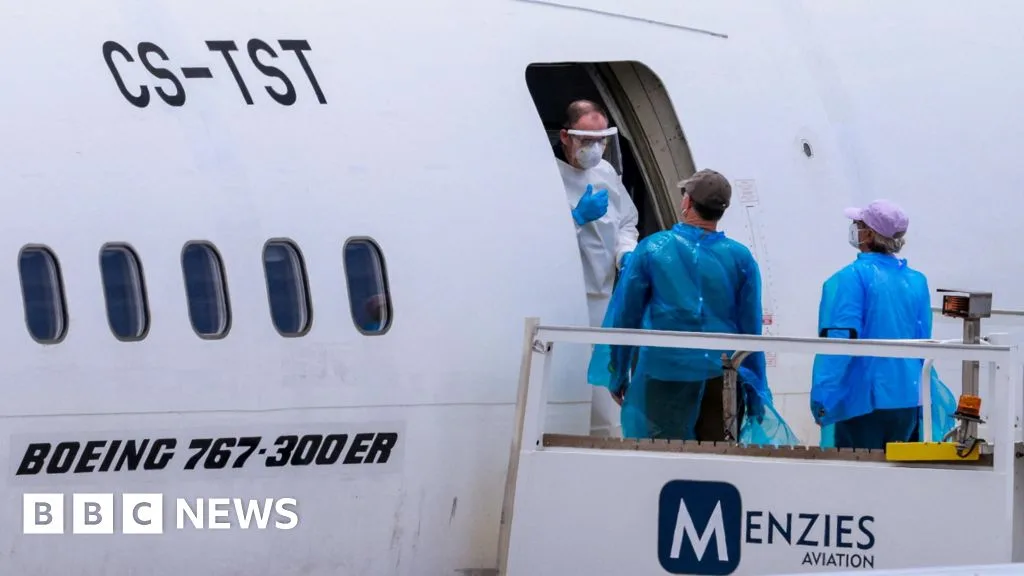
Twelve medical staff at Radboud University Hospital in the Netherlands were quarantined for six weeks after safety breaches during handling of a hantavirus-positive evacuee's samples [10, 11]. Dr Bertine Lahuis, chair of the hospital board, said, "Despite the fact that the chance of actual infection is very small, these measures have a significant impact on all those involved. We regret that this has happened at our university medical centre. We will carefully investigate and learn from this." [10]
WHO recommends a 42-day quarantine for exposed passengers and close contacts, although some countries have varied this period from 45 days to shorter or no quarantine [1, 2, 12, 8]. More than 600 contacts are being monitored across 30 countries, with some high-risk contacts still being located [3, 4]. Dr Bonnie Henry, British Columbia's health officer, commented, "Clearly, this is not what we hoped for, but it is what we planned for." [1]
The outbreak was first reported by WHO on May 2, and the virus continues to be closely monitored internationally [3, 4]. The next scheduled milestone is the completion of the WHO-recommended 42-day isolation period for exposed passengers and contacts.