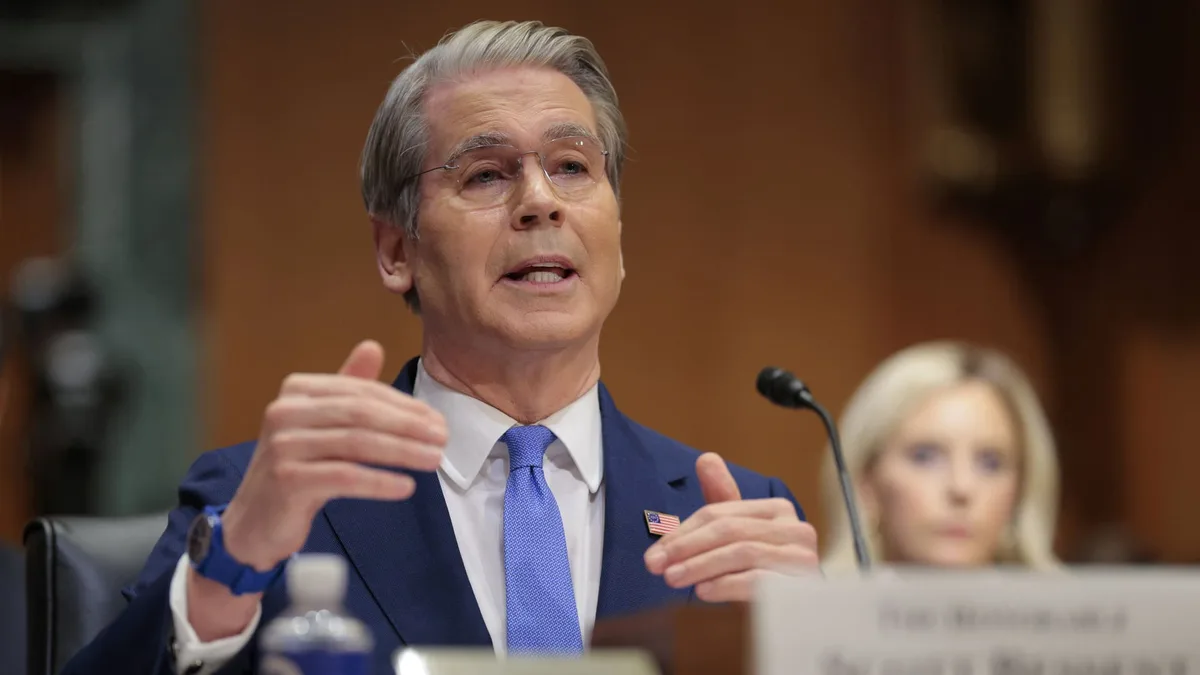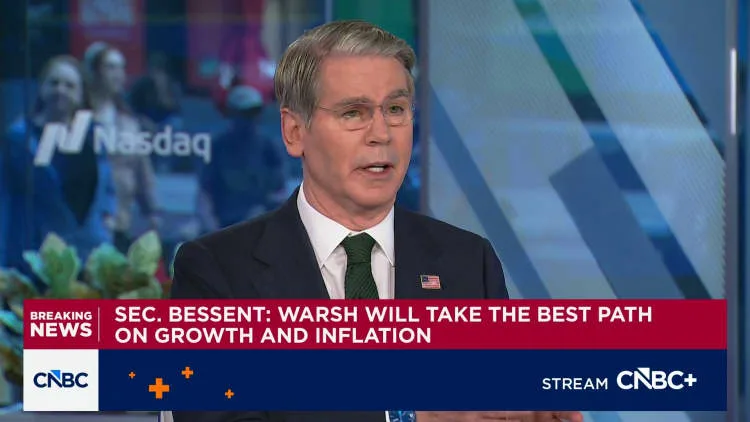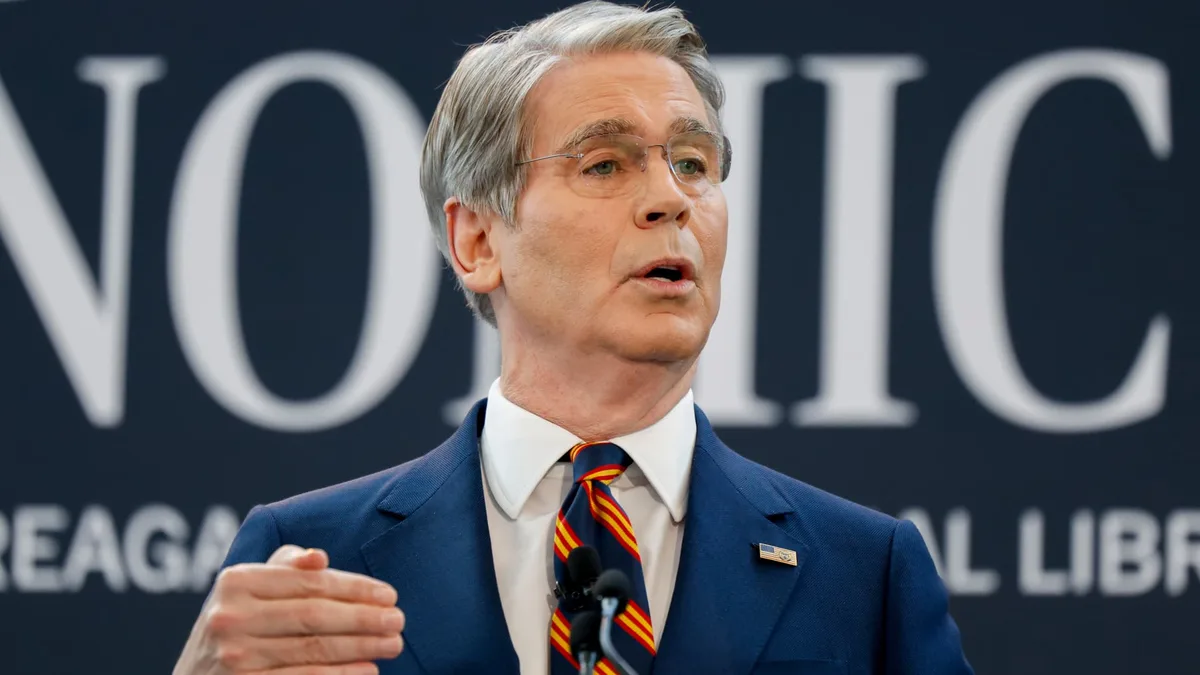
US Treasury Secretary Scott Bessent expressed strong confidence on June 24 that the US economy could achieve GDP growth of 3% or more in 2026. "We can have something with a three in front of it this year," Bessent said, highlighting what he called a "strong" underlying economy [1, 2, 3].
Bessent noted that the economy had been growing at about a 4% pace as recently as February, before the US and Israel launched attacks on Iran affected economic forecasts [2]. He said, "I think by the end of the president's term we can be at something that looks like it could have a three in front of it," linking growth to debt reduction as a share of the economy [1].
US GDP increased at an annualized rate of 1.6% in the first quarter of 2026, up from just 0.5% in the fourth quarter of 2025. Overall GDP growth in 2025 stood at 2.1% [1, 4, 2]. Bessent has outlined a "3-3-3" plan aiming for 3% GDP growth, a 3% federal deficit-to-GDP ratio, and a 3 million barrel per day rise in domestic oil production [1, 2].
The federal budget deficit was $1.25 trillion through the first eight months of fiscal 2026, down 9% from the prior year. The deficit-to-GDP ratio stood at 5.8% at the end of 2025, an improvement from above 6% in 2023 and 2024 [1, 2]. Bessent said tariff revenue would only decline slightly in fiscal 2026 if existing 301 tariffs are maintained [5].
Bessent also expressed support for new Federal Reserve Chair Kevin Warsh, saying President Trump has "every confidence" Warsh will guide monetary policy appropriately [1, 4, 2]. Despite Trump urging lower interest rates to ease the debt burden, the Fed has resisted cuts amid inflation pressures [1, 2].
However, not everyone shares Bessent's optimism. Kalshi traders assign only a 14.2% chance that GDP growth in 2026 will be between 2.6% and 3%, indicating skepticism about reaching the 3% mark [4].
The US Treasury plans to monitor economic performance throughout 2026 to track progress toward Bessent’s targets.