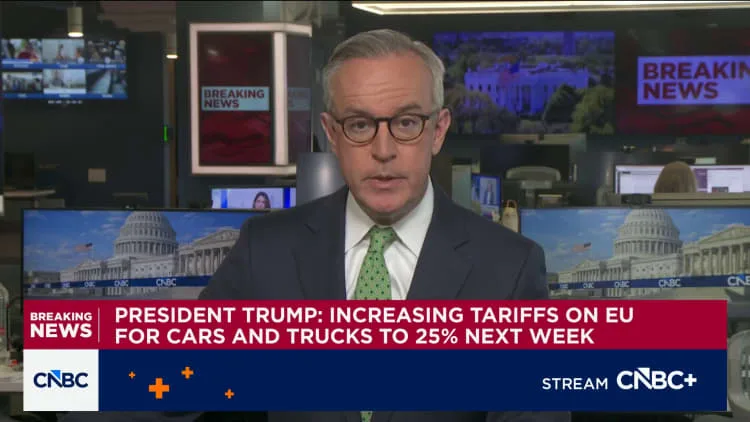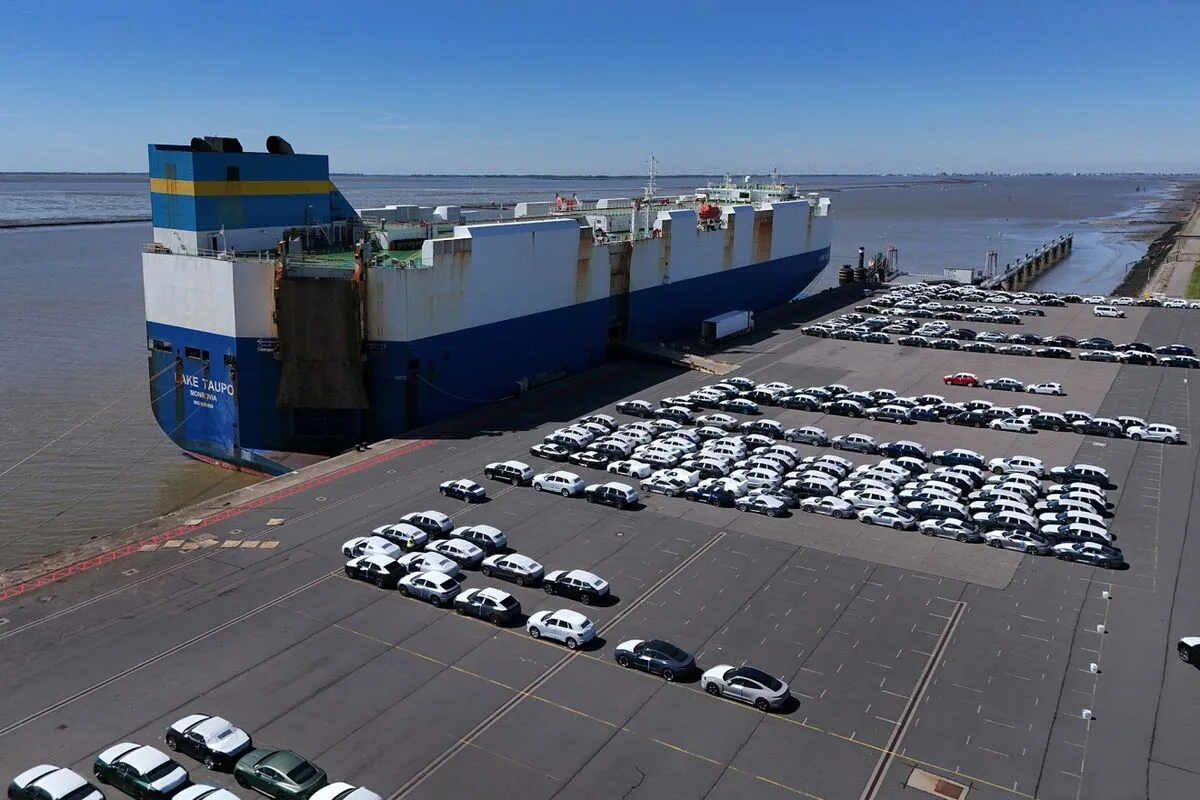
President Donald Trump announced plans to increase tariffs on cars and trucks imported from the European Union to 25% starting next week. He said vehicles produced in U.S. plants would be exempt from the tariffs. "Based on the fact the European Union is not complying with our fully agreed to Trade Deal, next week I will be increasing Tariffs charged to the European Union for Cars and Trucks coming into the United States. The Tariff will be increased to 25%. It is fully understood and agreed that, if they produce Cars and Trucks in U.S.A. Plants, there will be NO TARIFF," Trump said on Truth Social [1].
The White House stated the president reserves the right to adjust tariff rates if trade partners fail to meet their commitments. A White House official said, "The White House has always been clear that the President reserves the right to adjust tariff rates if our trade deal partners fail to abide by their commitments" [1].
The European Union responded with a warning of possible retaliation if the US follows through on the 25% tariff increase. An EU finance ministers' meeting on May 4 emphasized their preference to maintain the existing US-EU trade deal but said they would consider all retaliatory options. A European Commission spokesperson said, "We remain fully committed to a predictable, mutually beneficial transatlantic relationship. Should the US take measures inconsistent with the Joint Statement, we will keep our options open to protect EU interests" [2, 1].
The tariffs Trump plans build on existing 25% US tariffs on vehicles and auto parts imposed under Section 232 due to national security claims, which remain in place since last year [1]. Earlier this year in February, the US Supreme Court ruled that much of Trump’s prior tariff agenda was illegal under the International Emergency Economic Powers Act (IEEPA). Following that ruling, Trump signed an executive order imposing a 10% global tariff on imports, later raised to 15%, with a 150-day limit under the Trade Act of 1974 [1].
The EU postponed a vote on their trade agreement with the US in February after new tariff announcements and has been monitoring US moves closely [1].
Trump’s announcement on May 1 marks the latest escalation in transatlantic trade tensions as both sides prepare for possible retaliatory measures. The EU’s finance ministers vowed to consider responses following the US tariff increase declared on May 1, signalling ongoing negotiations could face significant obstacles [2].