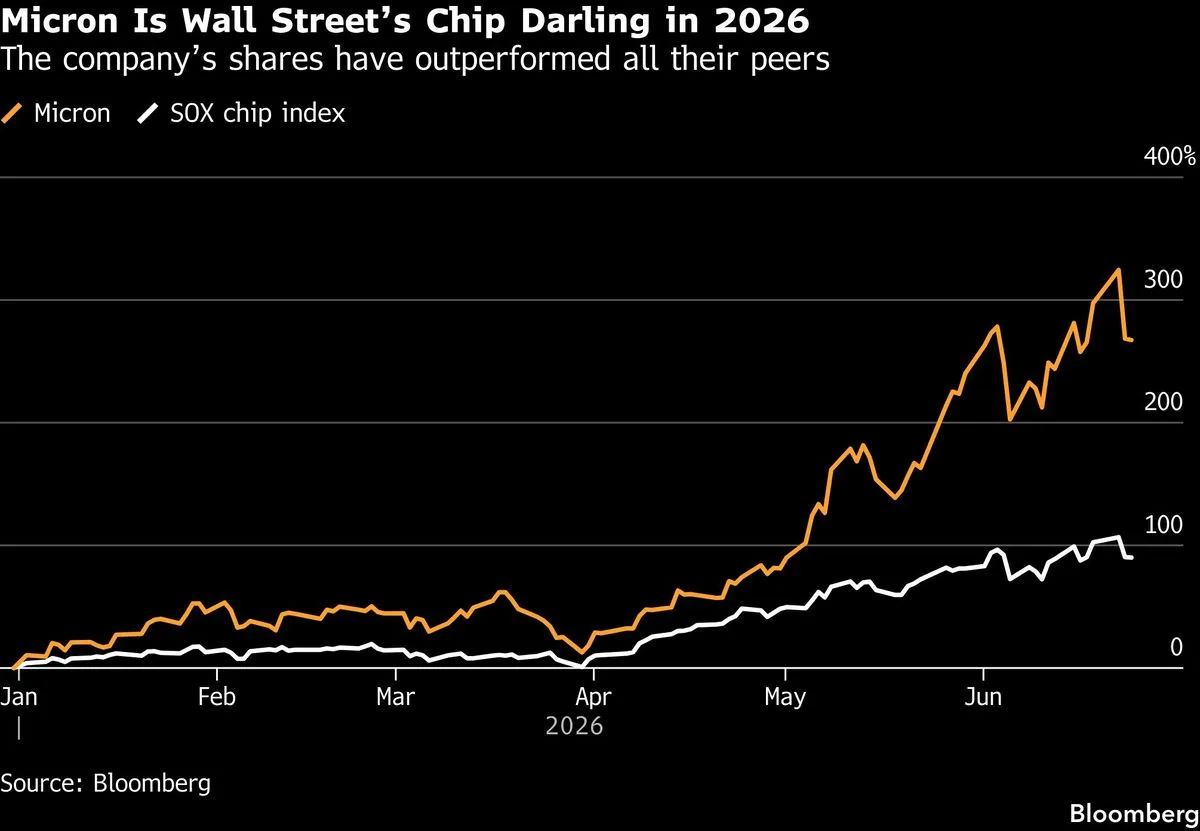
Micron Technology announced fiscal third-quarter 2026 revenue of approximately $41.4 billion to $41.5 billion, more than quadrupling from about $9.3 billion a year earlier [1, 2, 3, 4, 5]. Adjusted diluted earnings per share (EPS) rose sharply to $25.11 from $1.90 the previous year [1, 2, 3, 4, 5]. Net income jumped to approximately $28.2 billion from $1.89 billion [1, 3, 4, 5]. The company’s gross margin reached a record 84.9%, up from roughly 39% a year before, marking a historic quarter for profitability [2, 5].
For the fiscal fourth quarter ending August 2026, Micron forecast revenue around $50 billion, surpassing analyst estimates near $43.2-$43.6 billion [6, 1, 2, 3, 4]. It expects an adjusted EPS of about $31 per share [6, 2, 3, 4]. Following these stronger-than-expected results and outlook, Micron’s stock surged 14%-16% in after-hours trading today [6, 2, 3, 4, 5].
Micron CEO Sanjay Mehrotra told investors on the June 24 earnings call there is “no line of sight” to when supply will catch up with demand. He forecast tight memory supply conditions extending beyond calendar year 2027, with a gradual easing starting in 2028 [6, 2, 5]. Mehrotra highlighted that strategic customer agreements (SCAs) with price bands support robust gross margins above previous cycle peaks. The company has signed 16 SCAs averaging three years to smooth pricing and volatility [6, 5].
Strong demand from data center and AI infrastructure customers, including Nvidia, Google, and AMD, underpinned Micron’s record results [6, 1, 2, 5]. These trends also pressured memory prices for consumer devices like smartphones and PCs. Apple CEO Tim Cook recently said Apple will have to raise prices to manage the “unsustainable” memory shortage impacting components [5].
Despite the positive earnings, Micron plans capital expenditures of $10 billion in fiscal Q4 to sustain supply growth, which some investors view as a risk [3, 4]. Micron’s stock rose about 700% over the past year, pushing its market capitalization above $1 trillion [1, 7, 5]. This came after shares fell 13.3% Wednesday amid a chip sector selloff triggered by concerns about South Korean ETFs and investor caution ahead of earnings [7]. Lee Chan-jin, governor of South Korea’s Financial Supervisory Service, warned of risks tied to leveraged ETFs heavily held by retail investors [7].
Micron’s next report will follow the fiscal fourth-quarter period ending August 2026, when further insights on supply-demand balance and capital spending impacts are expected.