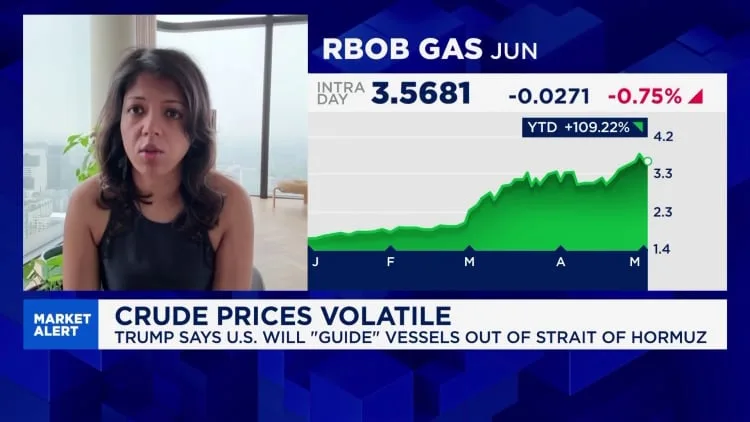
Global markets face growing recession risks due to a sharp rise in oil prices linked to the conflict between the U.S. and Iran that began February 28, 2026. Amrita Sen, a market intelligence executive, said investors are underestimating the impact of the ongoing energy shock and warned, "I think we're sleepwalking into potentially a pretty big recession" [1].
The conflict has pushed Brent crude to $111.23 per barrel and West Texas Intermediate crude to $104.16 per barrel as of Monday, May 4, marking an increase of more than 50% since the war began [1]. Sen called the situation "a massive, massive energy crisis" and noted the oil price floor is expected to remain in the $80 to $90 range for the foreseeable future [1].
Despite the surge in energy costs, the S&P 500 recently hit an all-time intraday high of 7,230.12 on May 1, reflecting some investor optimism in the short term [1]. However, Sen cautioned that prolonged high oil prices may ripple across commodity markets, liquefied natural gas, chemicals, fertilizers, and food prices, potentially straining the global economy [1].
OPEC has pledged to increase oil production, but Sen described the move as "largely symbolic" and inadequate to offset the supply shortfall caused by Middle East instability [1]. She emphasized that key to the market's trajectory will be "when Hormuz reopens, and at what capacity and what pace it reopens," referring to the Strait of Hormuz, a critical oil transit point [1].
Market watchers will closely monitor oil supply developments and geopolitical tensions as rising energy costs exert pressure on inflation and growth prospects worldwide. Investors and policymakers assess the risks while the conflict and its effects evolve.