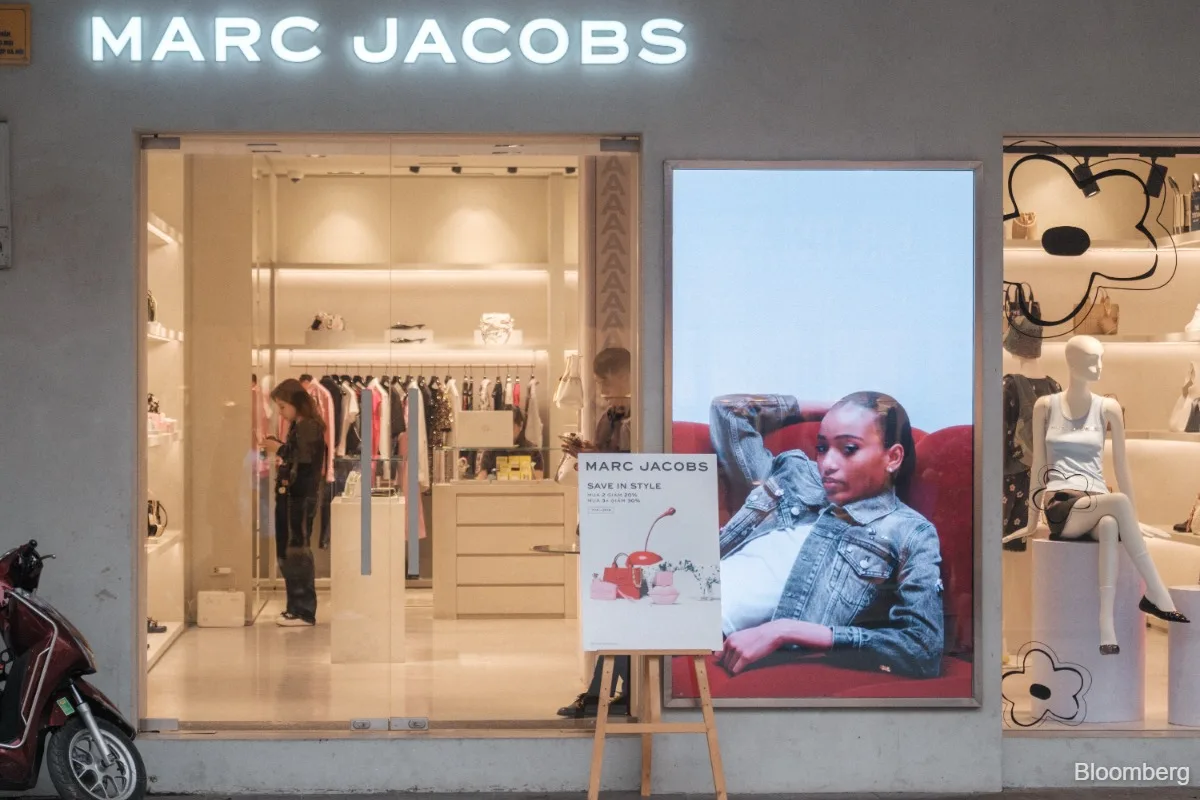
LVMH agreed to sell the Marc Jacobs fashion label to a joint venture between WHP Global and G-III Apparel Group, with the transaction announced on May 14, 2026 [1, 2, 3, 4]. The deal is valued at approximately US$850 million, with each partner investing around US$425 million to hold equal 50-50 ownership stakes in the brand [1, 3, 4, 5].
Marc Jacobs, the brand's founder, will continue as creative director after the sale [1, 2, 3, 4, 5, 6]. G-III Apparel Group will manage product development, sourcing, direct-to-consumer, and wholesale distribution for Marc Jacobs, while WHP Global will add the brand to its portfolio that includes Vera Wang and Rag & Bone [1, 3, 5, 6]. WHP Global’s portfolio is projected to generate more than US$9.5 billion in annual revenue following the acquisition [1, 3, 6].
LVMH has owned a majority stake in Marc Jacobs since 1997 but is divesting the label to focus on higher-end luxury brands amid recent challenges. The conglomerate’s fashion and leather goods division posted revenue declines in the first half of 2025, impacted by geopolitical uncertainty in the Middle East and softer consumer demand [1, 3, 4, 5]. LVMH’s total group revenue reached US$94 billion in 2025, with the fashion and leather goods segment accounting for US$44 billion [4].
LVMH Chief Financial Officer Cécile Cabanis said last year, "We will not keep brands if we believe they are not a good add-on or we are not the right operator to operate them," explaining the rationale for the sale [4]. The transaction allows LVMH to capitalize on Marc Jacobs’ brand turnaround while shedding an accessible luxury label.
Following the announcement, LVMH’s share price fell by up to 1.8% in Paris trading, partly due to geopolitical uncertainty [1, 3]. The sale is expected to close by the end of 2026 after regulatory approvals are secured [2, 5, 6].