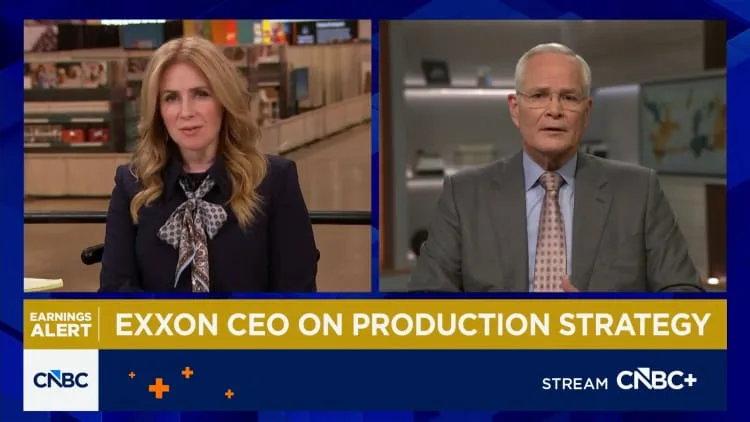
Exxon Mobil CEO Darren Woods said the oil market has not yet felt the full impact of supply disruptions caused by the Iran war and closure of the Strait of Hormuz. He warned there would be further effects if the strait stays closed through the second quarter of 2026 [1].
Woods explained that about 15% of Exxon's total production has been affected by the Hormuz closure. If the strait remains closed through Q2, Exxon expects its Middle East production to drop by 750,000 barrels per day compared with 2025 levels. Throughput to refiners worldwide would fall 3% versus Q4 2025 [1]. He said, "There's more to come if the strait remains closed" [1].
The disruption has been partially offset so far by large numbers of oil tankers already in transit, releases from strategic petroleum reserves, and draws on commercial inventories, according to Exxon. However, Woods cautioned the market has yet to see the full impact of this unprecedented supply interruption. "It's obvious to most that if you look at the unprecedented disruption in the world supply of oil and natural gas, the market hasn't seen the full impact of that yet," he said [1].
The supply squeeze has also hit Exxon's natural gas interests. Iranian attacks damaged two liquefied natural gas production lines in Qatar where Exxon has ownership stakes. These losses amount to about 3% of Exxon's upstream production [1].
Oil futures have fluctuated amid the tensions, with prices previously surging on escalation fears before retreating on hopes for peace. On a recent Friday, U.S. crude fell over 3% to $101.38 per barrel, while Brent crude dropped about 2% to $108 per barrel [1].
Woods projected normalized oil flows from the Persian Gulf would resume within one to two months of the strait reopening, allowing tanker repositioning and a supply backlog to clear. He also highlighted that governments and industry would need to refill strategic reserves and commercial inventories once supplies stabilize, which could push prices upward [1].
On May 1, during an earnings call, Woods updated investors with these warnings and production outlooks if the Strait of Hormuz stays closed through Q2 [1]. The situation remains closely watched as the conflict and related supply disruptions persist.