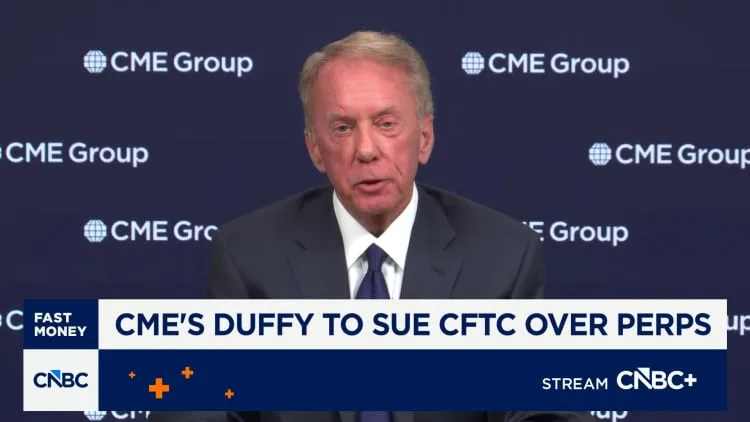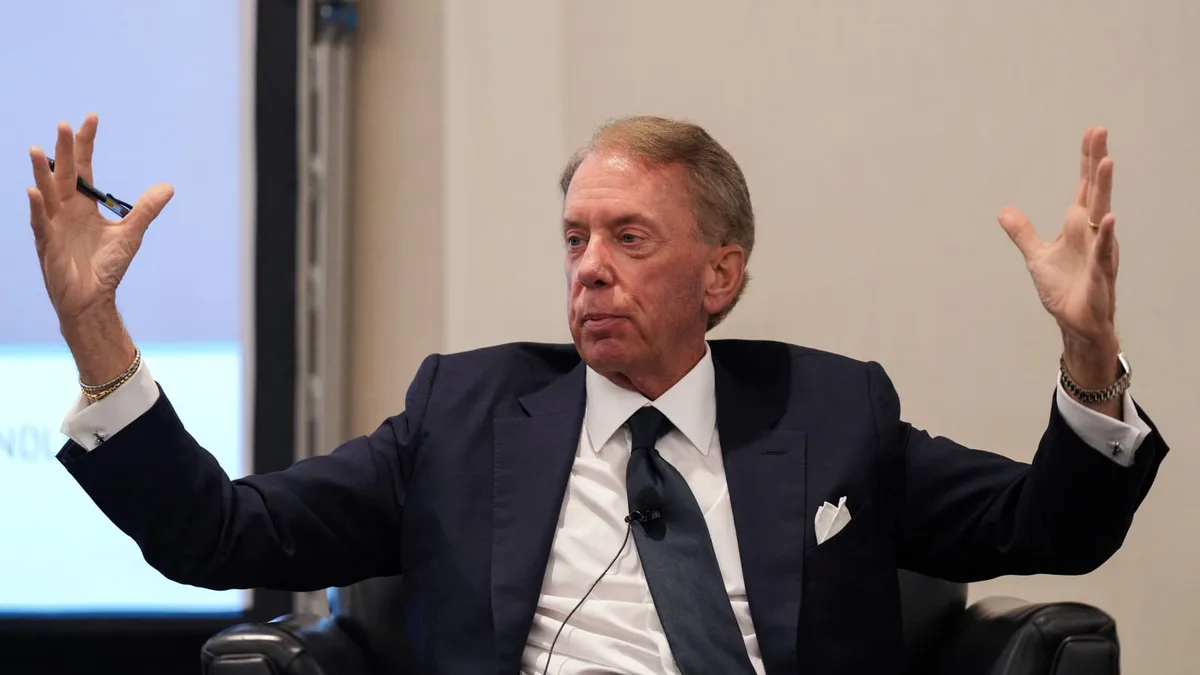
CME Group CEO Terrence Duffy announced on June 17, 2026, that CME will sue the Commodity Futures Trading Commission (CFTC) over its approval of perpetual futures contracts in the U.S. market [1, 2, 3]. The lawsuit challenges the agency's late May 2026 decision to approve Kalshi's bitcoin perpetual futures, the first approval of this asset class in the country [1, 3].
Perpetual futures are futures contracts without expiration dates that allow traders to hold positions indefinitely without rolling contracts [1, 2, 3]. CME contends these contracts should be regulated as swaps under the Dodd-Frank Act rather than overseen by the CFTC as futures, arguing they fall under exclusive CME licensing requirements for key benchmarks necessary to offer such products. "We have an exclusive license with every single provider of the benchmarks. So all of these would have to go through CME regardless of the perpetual," Duffy said [1].
Duffy criticized the CFTC’s approval process as rushed and warned the product poses significant risks to retail investors due to high leverage of up to 50 times and automatic liquidation mechanisms [3]. "I’ve never shied away from one, and I won’t shy away from this. I’m prepared, and I will be prepared to go through this," he said, confirming CME will file litigation soon [1].
CFTC Chair Michael Selig defended allowing regulated perpetual futures in the U.S., saying, "It’s time to approve regulated futures contracts that have no expiration date. We’re going to make sure the product’s available, but it’s well regulated here in the U.S." [1]. The CFTC plans to seek dismissal of CME’s lawsuit, calling it "unreasonable" [3].
Industry observers see the lawsuit as part of mounting competition between traditional derivatives exchanges like CME and crypto-focused trading platforms [3].
Duffy is scheduled to step down as CME CEO in March 2027. He will be replaced by Lynne Fitzpatrick, who will become CME’s first female CEO [3]. CME’s legal challenge marks a key test in the regulatory status of novel futures products in the rapidly evolving derivatives market.