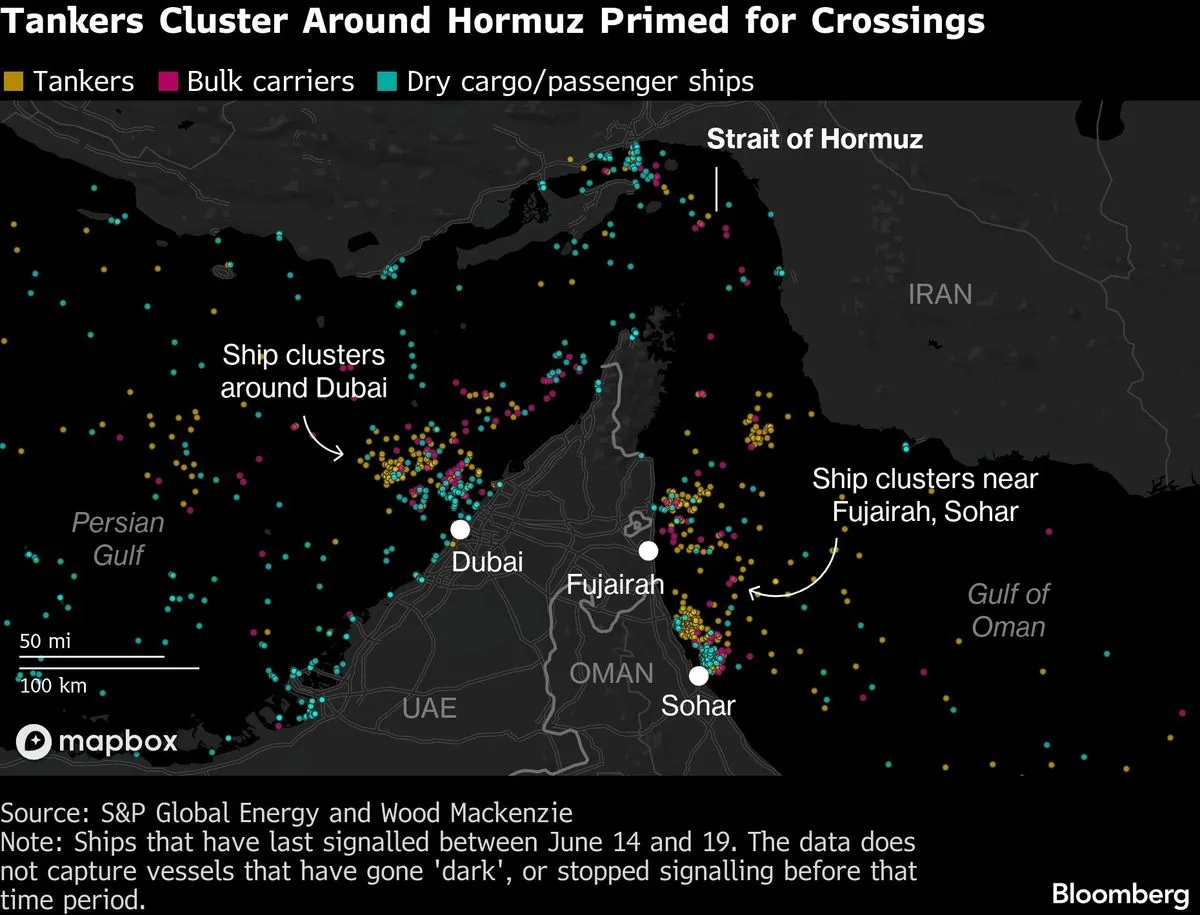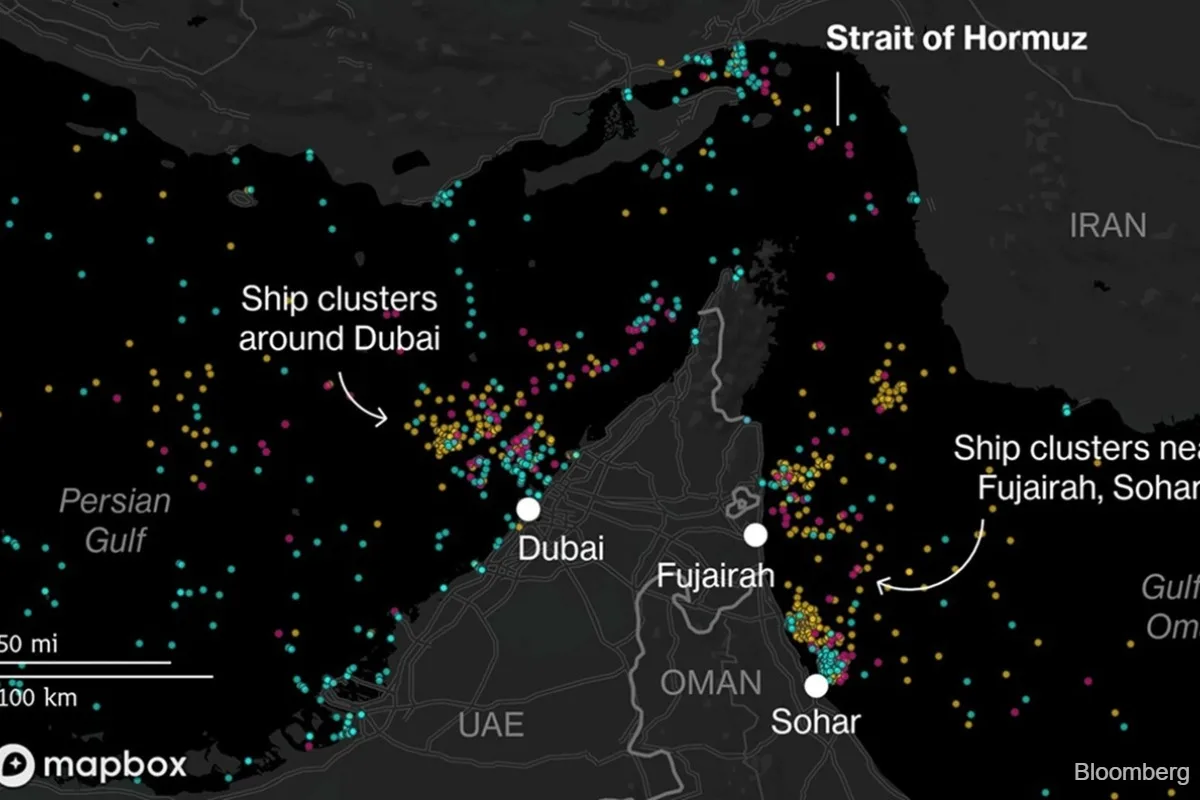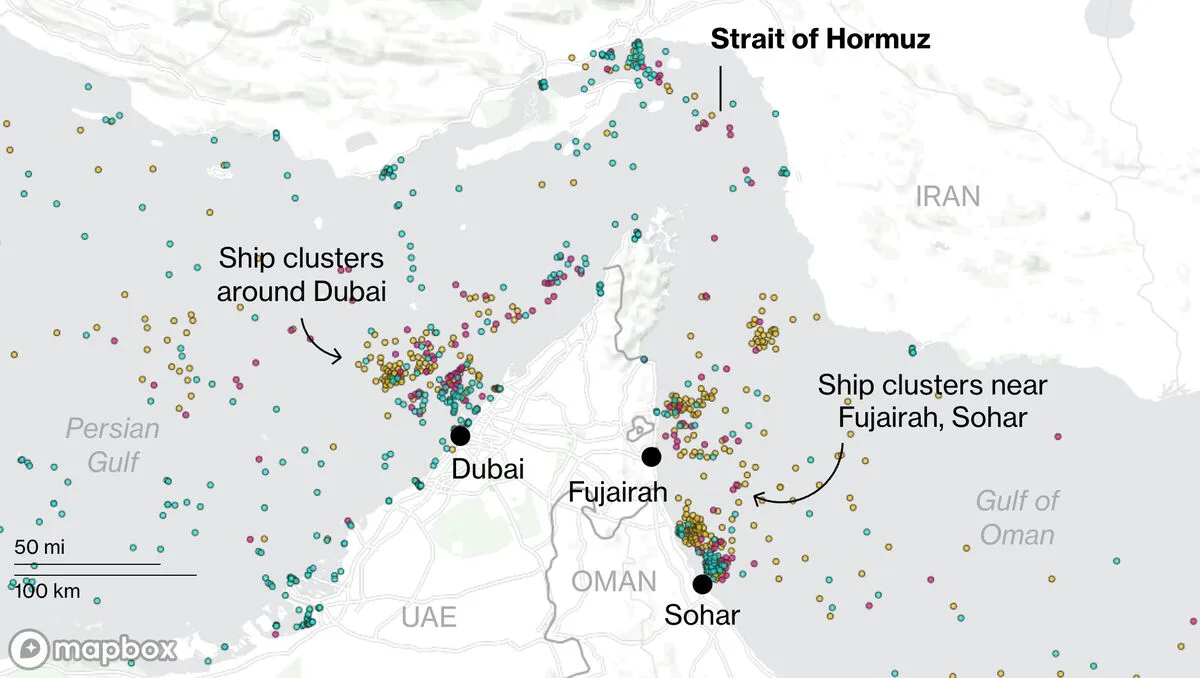
About 40 very large crude carriers carrying nearly 80 million barrels of non-sanctioned crude oil from Persian Gulf producers, excluding Iran, are anchored in the Persian Gulf ready to pass through the Strait of Hormuz if authorized by traders and shipowners [1, 2, 3, 4].
Of these supertankers, 21 are indicating destinations in Asia, with five bound for China and another five headed to transshipment hubs near Singapore and Malaysia [2, 3, 4]. Last year, Asia imported roughly 15 million barrels per day of oil from the Persian Gulf region [1, 2, 3, 4].
On June 18, ships carrying about 10 million barrels had either emerged from the Strait or were transiting through it, including very large crude carriers (VLCCs) owned by Saudi Arabia [2, 3, 4]. Three Saudi supertankers also appeared in the Gulf of Oman on June 18, suggesting vessel movements had resumed [2, 3, 4].
By the morning of June 19, at least three supertankers were reported traveling east toward the Strait of Hormuz at regular speeds [2, 3, 4]. One tanker, the Desh Vibhor, twice reversed its course in the Persian Gulf before continuing along a route closer to the Iranian coast rather than following the southern path recommended by the US [5].
Some vessels have turned off their transponders or experienced electronic interference, and ships may still change course or destinations for security reasons [2, 3, 4].
An interim deal between the United States and Iran was recently signed to allow maritime traffic through the Strait, but the maritime trade group BIMCO cautioned that “significant safety and security risks to shipping remained, despite the US-Iran agreement to permit transits” [2].
The supertankers’ clearance to transit and full resumption of oil exports through the Strait of Hormuz will be monitored closely as regional tensions persist and security remains a top concern.