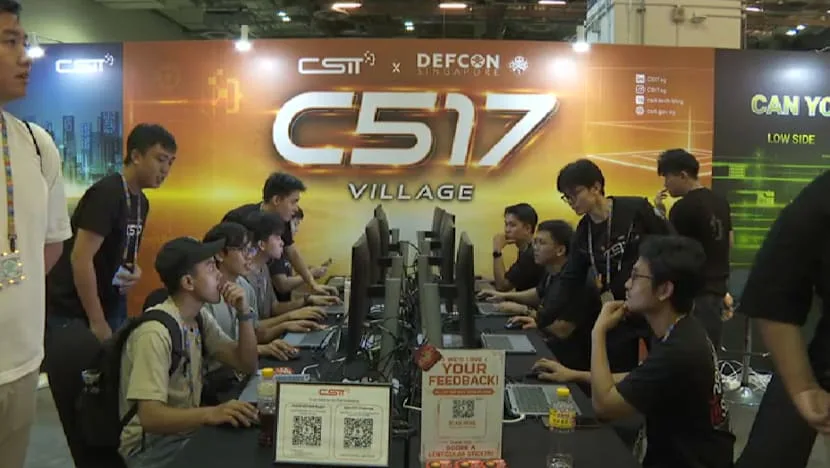
Artificial intelligence is rapidly changing the cybersecurity landscape in Singapore by accelerating cyberattacks while defenders struggle to keep pace. The Cyber Security Agency of Singapore (CSA) warned last month that the latest AI models can cut the time to identify vulnerabilities and engineer exploits from months to hours [1]. At the same time, AI is being deployed at the Cyber Security Institute of Technology (CSIT) to speed malware analysis, reducing work from hours to minutes or even seconds [1].
Experts say organisations must respond faster and build expertise to use AI effectively for cyber defence. "The question is not about whether we will use AI in cyber. The question would really be about who can master AI more, faster and at scale," said Dr Adrian Tang [1]. AI acts as a force multiplier, benefiting both attackers and defenders by boosting their capabilities [1].
The cybersecurity industry in Singapore continues to face a talent shortage that is worsened by the growing demand for AI skills in this field [1]. Last week, industry players gathered at the DEF CON hacking conference in Singapore to discuss challenges around cyber talent and AI adoption [1].
The CSA's warning and recent industry discussions highlight how AI is reshaping the threat landscape and the workforce needs in Singapore's cybersecurity sector. The next major event addressing these issues will be the upcoming cybersecurity summit scheduled later this year, where further strategies to develop AI-enabled cyber defence capabilities and talent pipelines are expected to be unveiled.