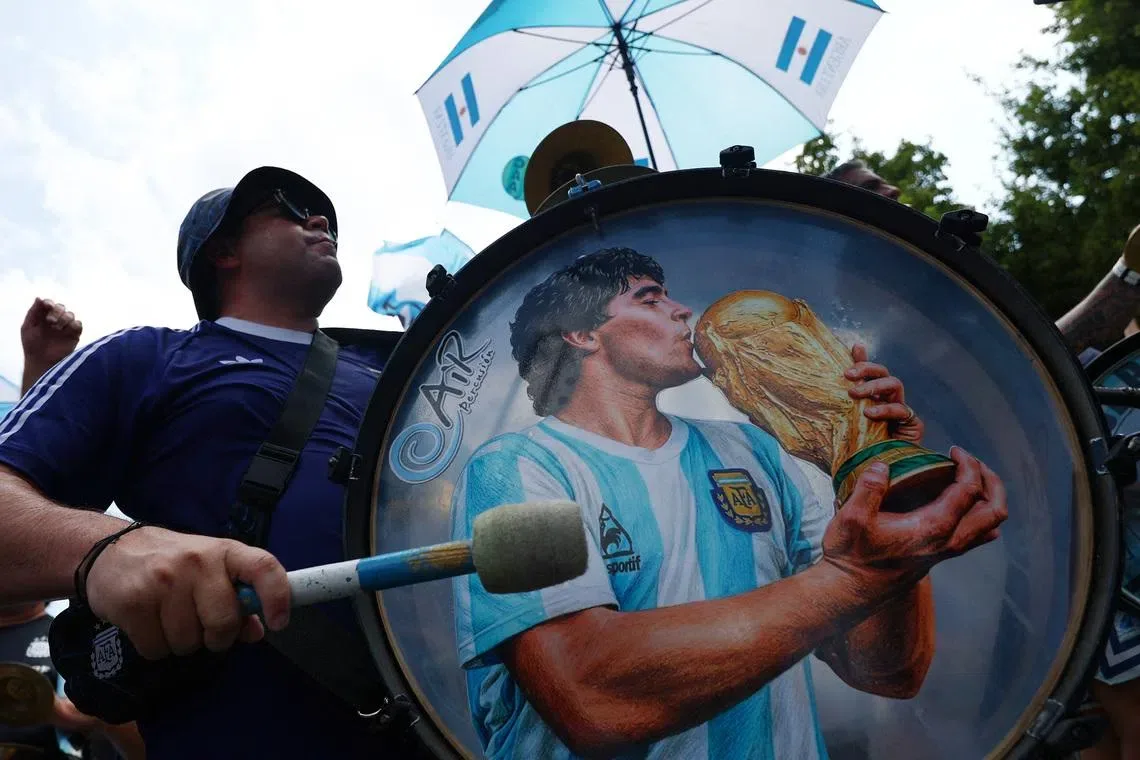
Diego Maradona's iconic blue shirt worn during the June 22, 1986 quarter-final against England was auctioned for $9.28 million [1, 2, 3]. After Argentina swapped shirts with Uruguay in their previous match, they urgently needed replacement blue shirts for the England game [1, 2, 3].
Filmmaker Phidel McCabe, who lives in Mexico City, created the documentary "El Diez: Made in Tepito" to investigate the shirt's origins [1, 2, 3]. The film follows the six days between Argentina's match against Uruguay in Puebla and the quarter-final at the Azteca Stadium in Mexico City [1, 2, 3].
The replacement shirts are believed to have come from Tepito, a large market district in Mexico City known for selling almost anything [1, 2, 3]. Former Argentina goalkeeper Hector Miguel Zelada, who played for Club America based in Mexico City at the time, also suggested Tepito as the source [1, 2, 3].
The shirts had badges hand-stitched on and numbers ironed in an American football style with a glittery look, reflecting a quick improvisation in the 1980s [1, 2, 3]. McCabe said, "They had to come up with something in two days. They stitched on their own badges. They ironed on American football numbers. That's why the numbers are glittery. The whole thing feels like it could only happen in the '80s." [2]
Despite the story's popularity, some locals in Mexico City express doubt and offer competing versions regarding where the shirt came from [1, 2, 3]. McCabe acknowledged, "Even here in Mexico City, people aren't sure whether this story is true. So it made me more enthusiastic to get to the bottom of the truth." [1]
McCabe also emphasized the cultural significance of the story: "When I came across this story, I thought it was important for Mexico to celebrate its part in those two goals, those two iconic moments. They are part of Tepito's culture and history, and I wanted to celebrate that." [3]
The documentary's promotion features a mural by Zapotec artist Ana Xhopa from Oaxaca, linking the film to local artistic traditions [1, 3].
Reports and the documentary release exploring these findings are scheduled between June 23 and June 25, 2026 [1, 2, 3].