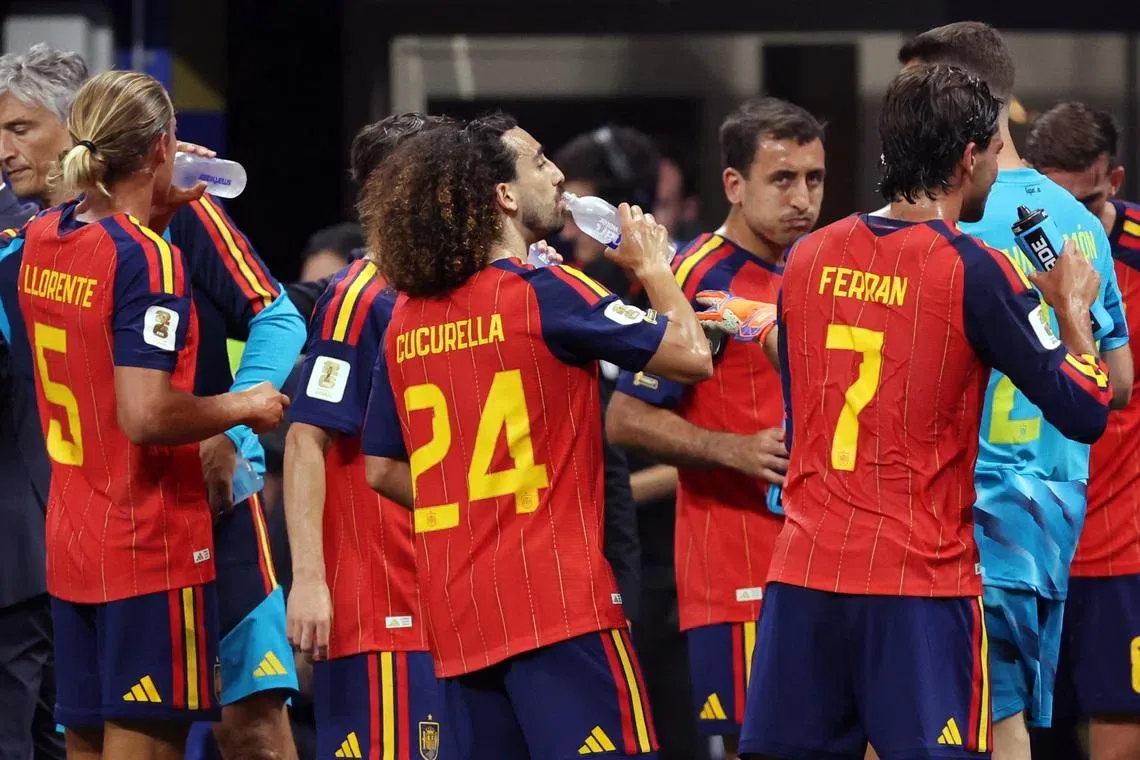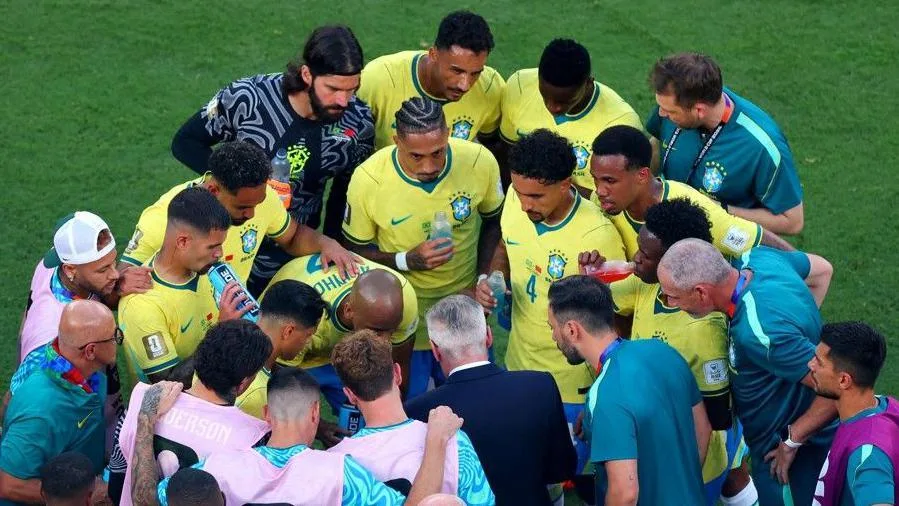
FIFA introduced mandatory hydration breaks around the 22nd minute of each half in all 104 matches of the 2026 World Cup hosted in Mexico, Canada, and the United States. Each break lasts three minutes, effectively dividing the game into four quarters with the clock running and stoppage time added accordingly [1, 2, 3, 4].
The hydration breaks were established primarily for player welfare to combat heat and humidity, following concerns raised at the 2025 Club World Cup in the United States [2, 5, 6, 3, 4]. However, FIFA mandated these breaks for every match regardless of actual weather conditions or stadium environment, including venues with retractable roofs and climate control [1, 3, 4].
Broadcasters were allowed to air commercials during the breaks, typically about two and a half minutes. This has drawn criticism as a commercial interruption rather than a pure health measure. ITV and Telemundo chose not to run commercials during the breaks to preserve the live experience [1, 2, 5, 6, 3, 4]. Fox Sports and Telemundo secured U.S. broadcasting rights valued at approximately $1.25 billion, with commercials during hydration breaks a negotiated part of their deal [3].
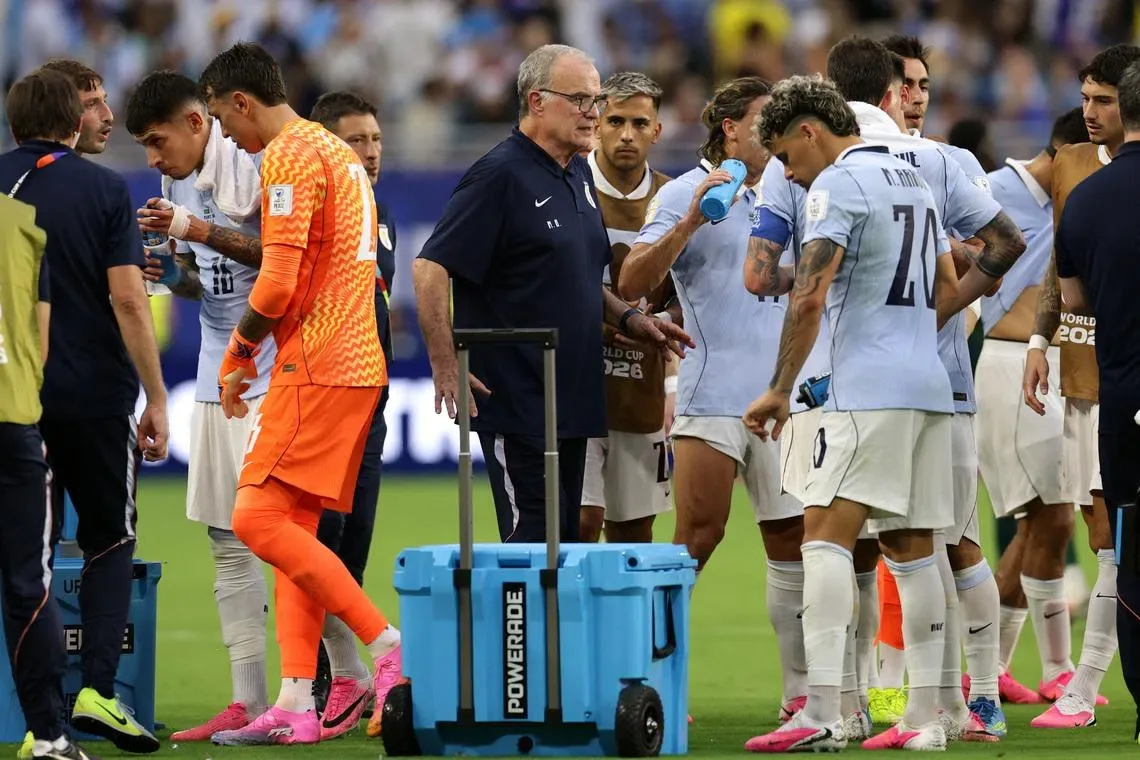
Players and coaches are sharply divided. Uruguay coach Marcelo Bielsa strongly criticized the breaks, saying they "add nothing and take away a lot from football’s cultural essence by breaking the game into four quarters instead of two halves." Bielsa added, "People fall in love with the game because of its characteristics," and sees the change as damaging [7, 8, 9].
Similarly, former England striker Alan Shearer said hydration breaks "killed momentum" for teams like Curacao, which had just scored before a break [10]. USMNT coach Mauricio Pochettino expressed limited support, stating, "I don't like it. I only like it when the conditions are extreme. But when the conditions are good, it is unnecessary" [1].
On the other hand, some see the breaks as tactical opportunities. France coach Rudi Garcia called them "a coaching break more than a cooling break," though he acknowledged they might interrupt good rhythm [2]. Switzerland coach Murat Yakin used the hydration break to time three substitutions that sparked a late 4-1 win over Bosnia-Herzegovina, saying, "Maybe that was the edge we had" [11]. Germany’s Julian Nagelsmann also used breaks to rally his team after an equalizer in a 7-1 win [2, 5, 6, 10].
Virgil van Dijk noted the commercial aspect, commenting, "Every time, going to commercial is a bit not really that I like it" and that it doesn’t feel great for neutral TV viewers [2]. Some managers and players believe the breaks kill momentum and disrupt flow, while others value the tactical timeouts they afford [1, 10, 4, 11].
The hydration breaks were first announced by FIFA in December 2025 at the World Broadcaster Meeting [3, 4]. The first match with mandatory breaks took place on June 10, 2026, between Mexico and South Africa. Multiple reports by June 15 showed the split opinions among players and coaches [2, 5, 6, 4]. Bielsa’s public criticism came ahead of Uruguay’s June 20 match against Cape Verde [7, 8, 9].
The hydration break schedule and mandatory commercial slots remain a key part of the World Cup format through the tournament's progression [3, 4].