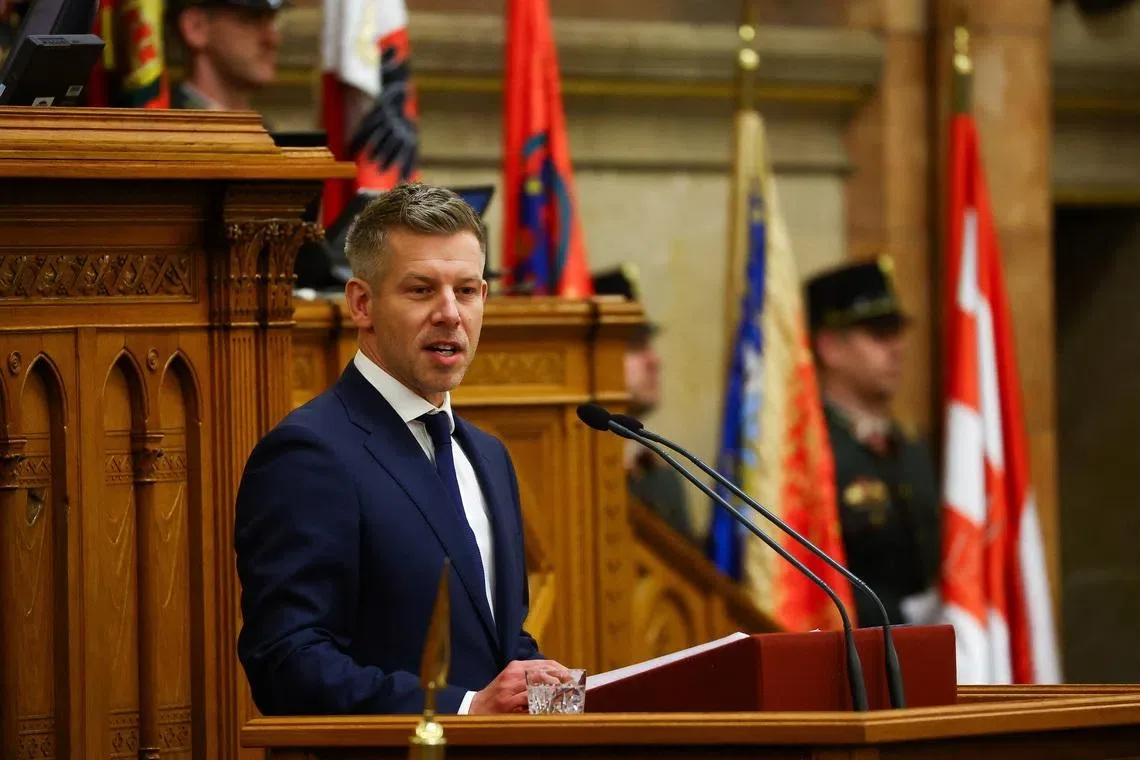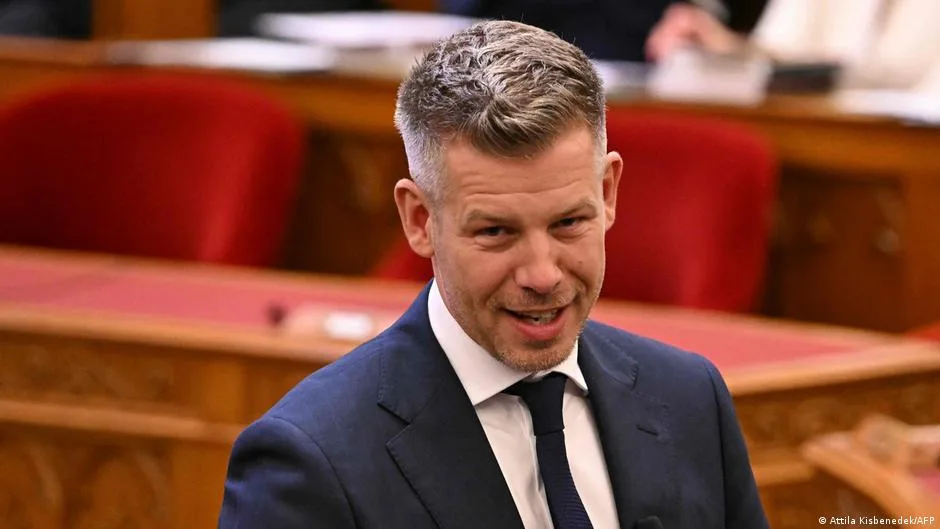
Peter Magyar won Hungary’s general election on April 12, ending Viktor Orban's 16-year government and was sworn in as prime minister on May 10, declaring it "regime change day" to signal a new political direction [1, 2, 3]. Magyar called for systemic political and moral change, saying, "Reconciling divided Hungarian society is my top priority" [3].
The new government granted veto power over legislation to four key ministers, including Finance Minister Andras Karman, as a check on Magyar’s authority [1]. Magyar said, "One of the most important tasks of the upcoming period will be to restore the moral and institutional framework of the rule of law" [1].
Hungary faces a budget deficit forecast at 6.8-7% of GDP for 2026, well above previous targets [1, 2]. Finance Minister Karman pledged to create policy predictability and outlined a four-year plan to reduce the deficit to the EU’s 3% limit by 2030 [1, 2]. He said the government aims to submit the 2027 budget by October [2].
Magyar’s government aims to shift Hungary’s economic model from reliance on cheap labor and corruption toward productivity, innovation, and technology investment [1, 2]. It plans to secure 6.4 billion euros in EU pandemic recovery grants and 3.9 billion euros in loans [2]. The government also intends to meet EU criteria to adopt the euro by 2030 [1, 2].
In a symbolic move, Magyar publicly released videos exposing lavish decorations in Orban-era official residences, drawing wide public attention [3]. He described inheriting a "difficult, possibly dramatic legacy, the true depths of which will only reveal themselves in the coming days" [1].
The government plans to amend the controversial "child protection law" restricting LGBTQ+ content following an April ruling by the European Court of Justice, Justice Minister Marta Gorog said [2]. Meanwhile, Hungary will review the financing and implementation of the Paks nuclear power plant expansion, which had been awarded without tender to Russia’s Rosatom [2].
The new parliamentary president ordered the EU flag to be raised again on the building, reversing Orban-era policies [3].
Finance Minister Karman’s pledge to submit the 2027 budget by October sets the next key deadline for the government’s economic plans [2].