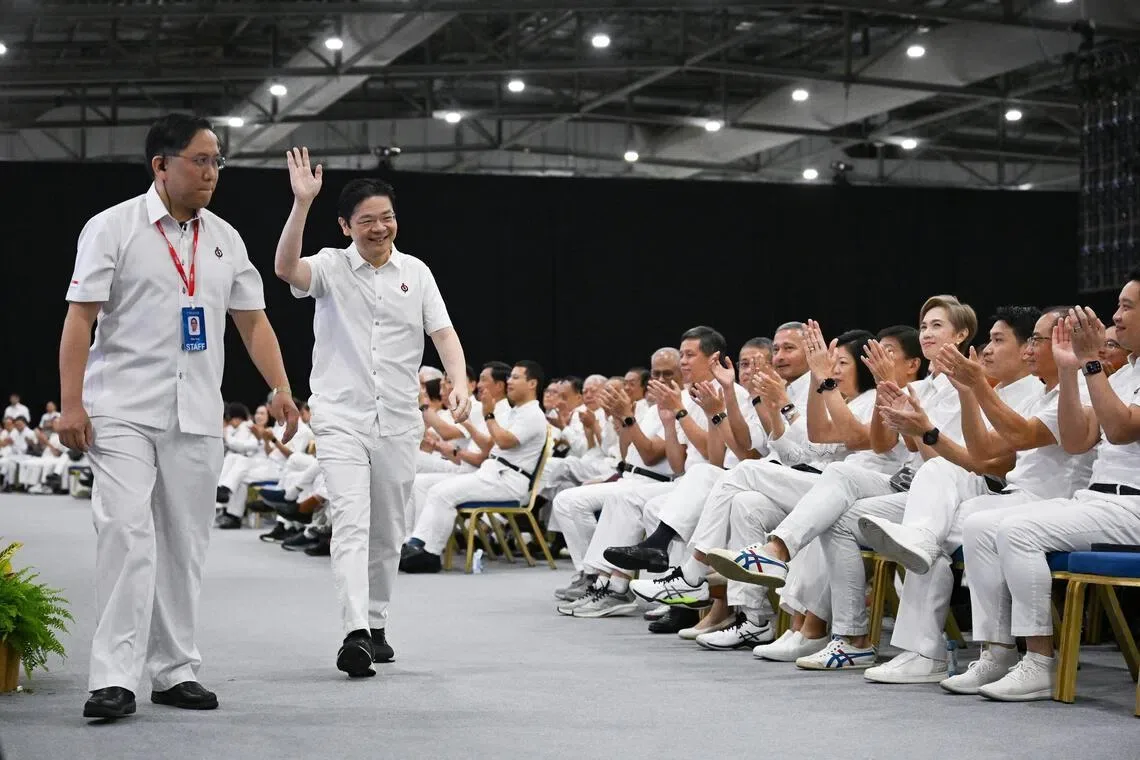
Singapore’s ruling People’s Action Party (PAP) marked one year since the May 3, 2025, general election by continuing efforts to manage a major energy crisis triggered by conflict in the Middle East and global market volatility [1]. Prime Minister Lawrence Wong and his Cabinet have shifted focus from earlier plans to restructure the economy and improve social policies like education, toward stabilizing costs and the country’s energy supply [1].
Following the election, which saw Wong’s team returned to power, several new Cabinet members were appointed to buttress the government’s response to these challenges. Acting Transport Minister Jeffrey Siow was among those brought in to address the crisis’s impacts [1]. Deputy Prime Minister Gan Kim Yong ran strongly in Punggol Group Representation Constituency against the Workers’ Party during the election, reflecting strategic political moves within the ruling party [1].
In April 2026, the government announced a support package worth close to $1 billion to ease the burden of rising prices on Singaporeans caused by the ongoing energy shock [1]. Prime Minister Wong said, "The storm will be here for some time, because the world has changed. For how long? We don’t know. But one thing is certain, this storm will test us, and if we are not careful, we could lose everything that we have worked so hard to build here in Singapore." [1]
Former MP Inderjit Singh noted public expectations amid the turmoil, saying, "With the turmoil in the world, I feel that the public is looking to the Government keeping their lives stable and comfortable." [1]
The support package is designed to cushion the impact on households and businesses as Singapore navigates uncertain global energy markets and price pressures. The government has prioritized reducing the cost-of-living strain while maintaining economic stability.
The PAP’s next key test lies in managing the ongoing effects of the global crisis throughout 2026, with the election marking a clear political mandate to address these urgent challenges [1].