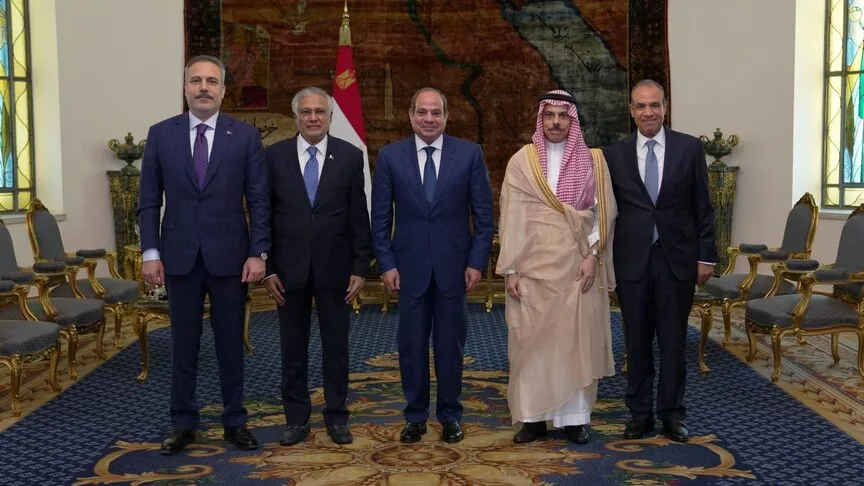
Foreign ministers from Pakistan, Saudi Arabia, Turkey, and Egypt convened in Cairo on June 21 to discuss regional developments and issues related to the US-Iran conflict and regional stability [1, 2, 3]. The meeting location was initially announced as El Alamein, Egypt, but was later changed to Cairo [1, 2].
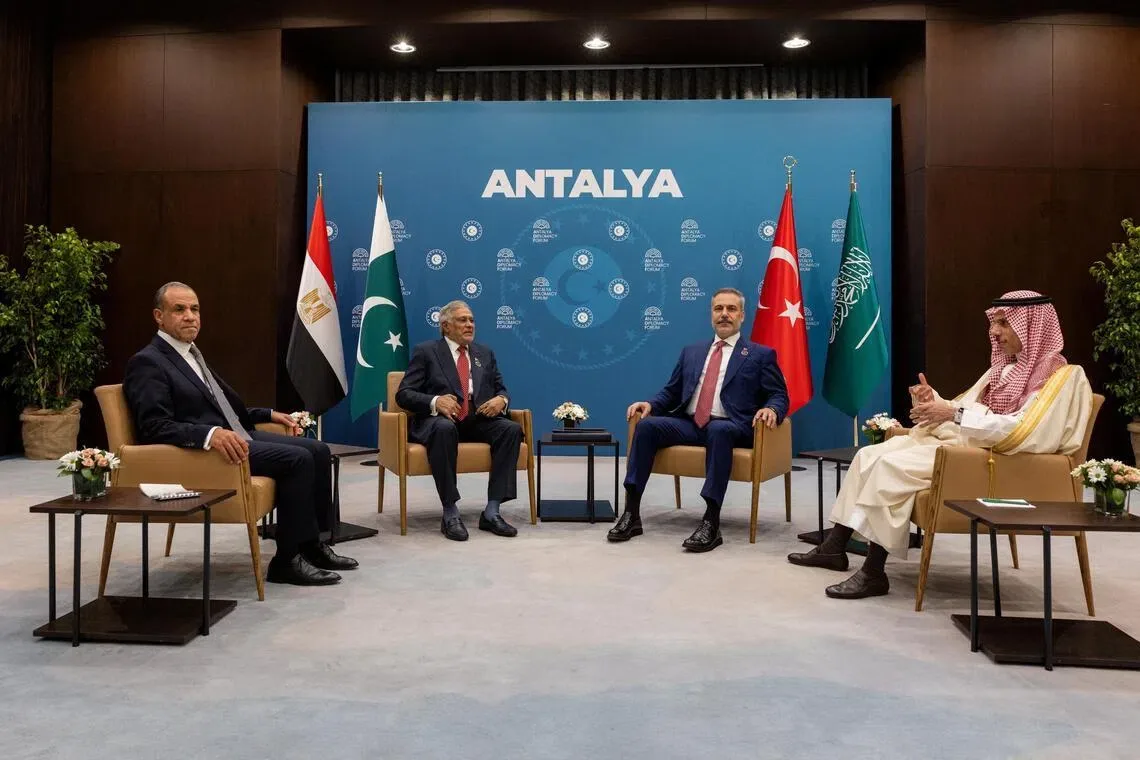
The ministers had previously met in April in Antalya, Turkey, during a diplomatic forum where they began talks on the conflict [1, 2]. The June 21 meeting is set to be followed by expanded talks and a joint news conference, signaling ongoing diplomatic efforts [1, 2]. Egyptian President Abdel Fattah al-Sisi also received Turkish Foreign Minister Hakan Fidan on the day of the meeting [3].
The discussions come after scheduled US-Iran follow-up talks in Switzerland on June 19 were postponed, causing delays in the negotiation process [1, 2]. The US Vice President J.D. Vance's planned trip to Switzerland for the talks was cancelled as well [1, 2]. Pakistani Deputy Prime Minister and Foreign Minister Bilawal Bhutto Zardari said, "the negotiations between Iran and the US will resume after the month of Muharram; Pakistan had recalled its team from the Swiss talks due to postponement but will participate if invited" [2]. The postponement was partly attributed to the Islamic month of Muharram and ongoing Israeli attacks in southern Lebanon [2].
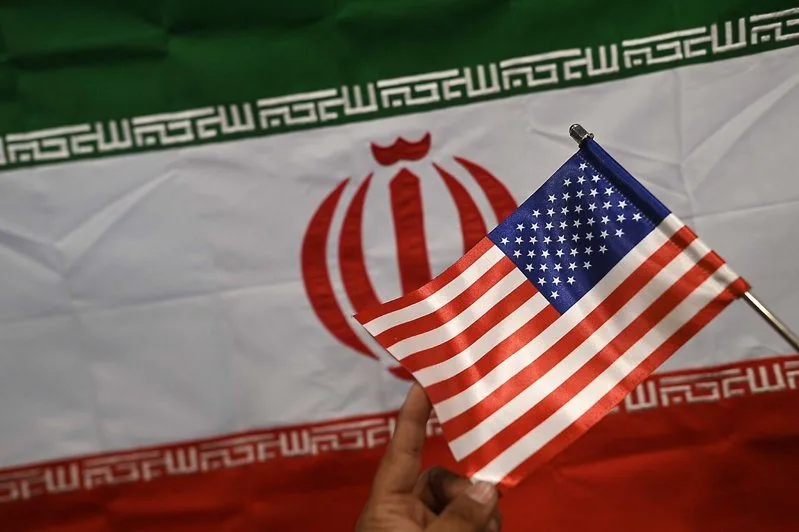
The broader US-Iran agreement, which aims to end the conflict triggered by US-Israeli strikes on Iran on February 28, involves reopening the Strait of Hormuz and starting a 60-day negotiation period on broader issues including Iran’s nuclear program [1]. However, there continue to be clashes between Israeli forces and Iran-backed Hezbollah in Lebanon despite the deal’s goal to halt fighting there [1].
The four foreign ministers focused on exchanging views related to peace, security, and stability in the region amid these ongoing tensions and delays in direct US-Iran talks [1]. The diplomatic process is set to continue with expanded talks and a joint news conference as the next concrete step [1, 2].