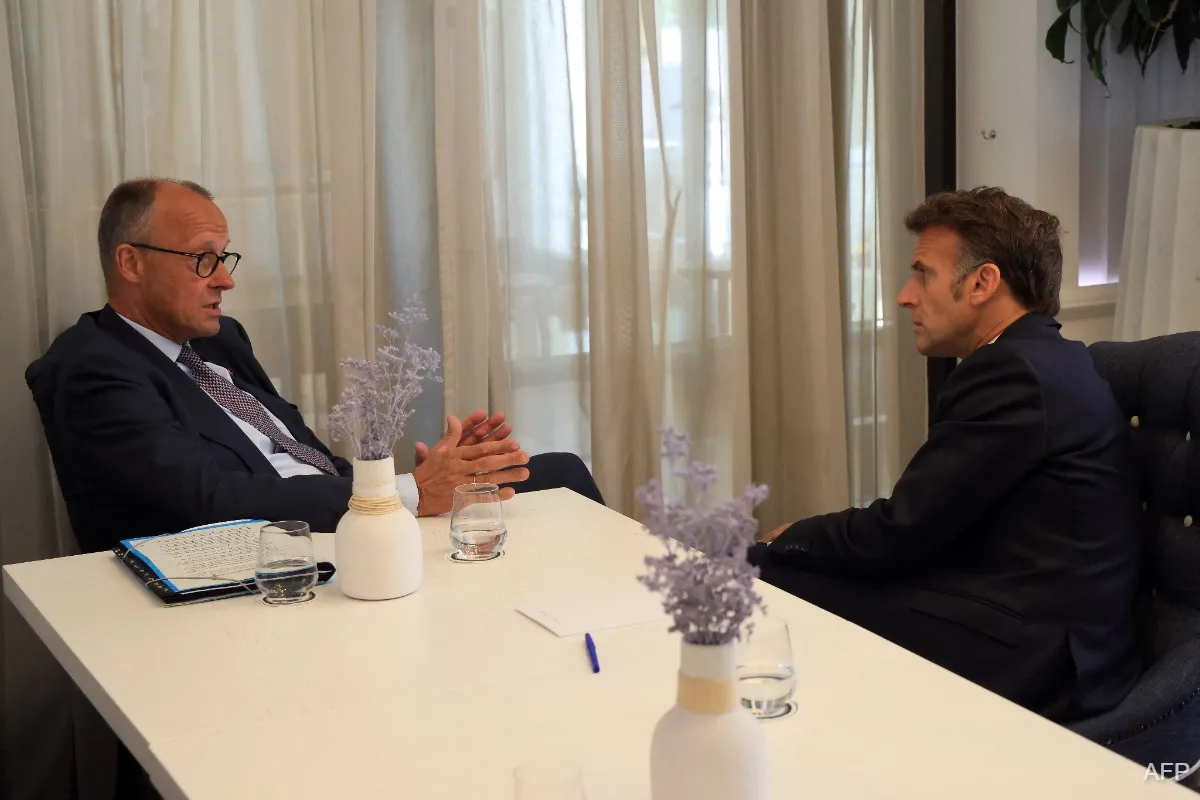
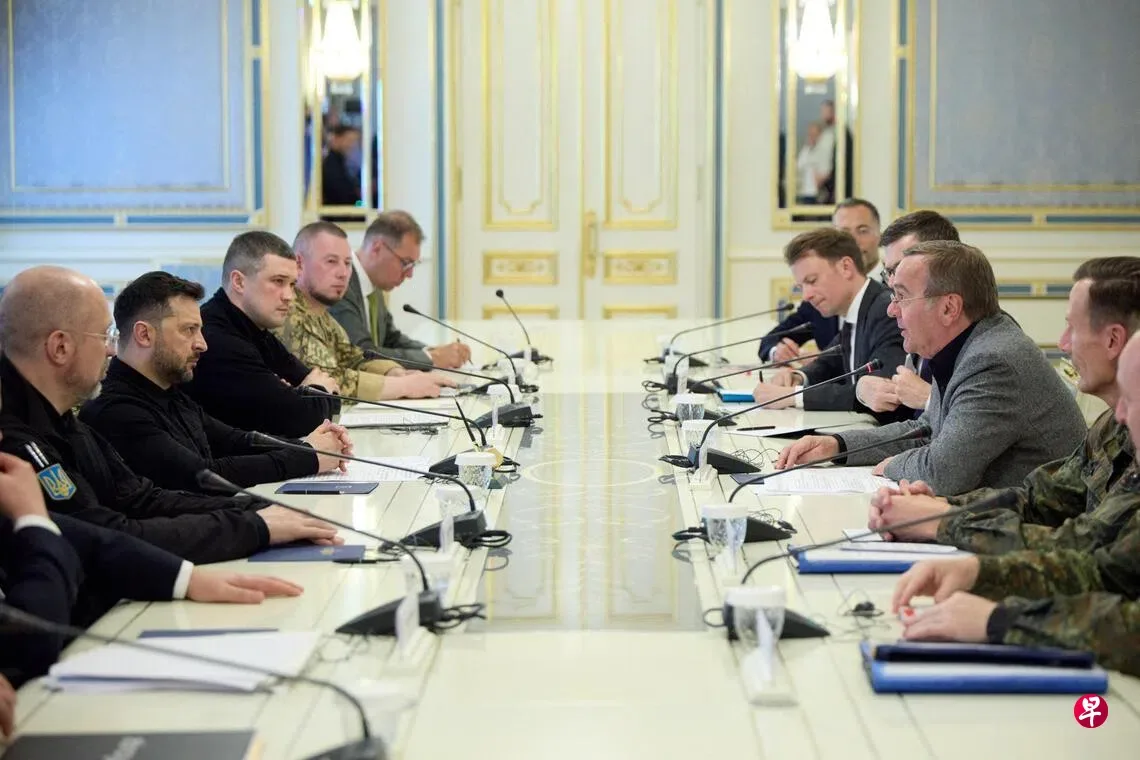
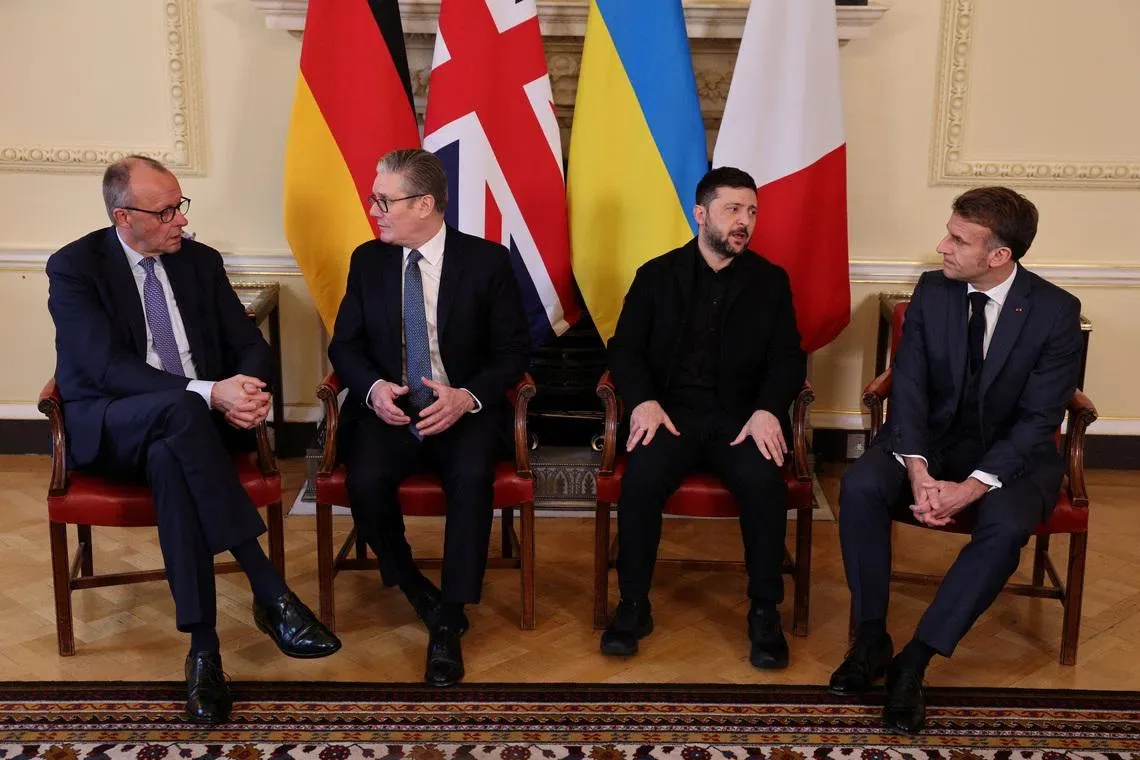
French President Emmanuel Macron, British Prime Minister Keir Starmer, and German Chancellor Friedrich Merz will meet Ukrainian President Volodymyr Zelenskiy in London on Sunday, June 7, 2026, to discuss support for Ukraine and ways to increase pressure on Russia’s military efforts. The meeting is scheduled to start at 17:30 GMT at Downing Street [1, 2, 3, 4].
Zelenskiy recently sent an open letter to Russian President Vladimir Putin proposing face-to-face talks and a full ceasefire. Macron said, "We have always advocated for direct negotiations between Ukraine and the Kremlin... It is the Europeans who can help with this" [1, 2, 3]. However, Putin has rejected Zelenskiy’s peace proposal. He denied that the Russian economy has collapsed and stated Russia is growing at levels similar to the Eurozone, saying they "have descended to the same level at which Eurozone countries have been experiencing growth for the past few years" [2, 3].
Despite Putin’s remarks, economic difficulties persist in Russia. The invasion has led to rising prices, higher taxes, borrowing costs at two-decade highs, business closures, and labor shortages [2]. These problems contrast with Putin's claims.
Ukraine continues to push back against Russian forces. According to data from the Institute for the Study of War, Ukraine recaptured more territory than it lost to Russian forces in May 2026 for the second month in a row [2]. On June 6, Ukraine launched a major drone attack on St Petersburg, showing increased capability to strike deep inside Russian territory [4]. Meanwhile, in Ukraine’s Dnipropetrovsk region, Russian drone and artillery strikes struck nearly 30 times overnight into June 6, killing one person and wounding three [4].
The UK, France, and Germany seek to coordinate closely in supporting Ukraine and increasing pressure on Russia’s military efforts [1, 2, 4]. European leaders see momentum due to Ukraine’s recent successes and want to push renewed peace negotiations led by Europe [3]. Yet diplomatic differences remain. Some EU countries oppose appointing an EU envoy to negotiate with Putin and caution a European-led approach could play into Russian tactics. Estonia’s Kaja Kallas warned in Chinese, "This is a trap set by Russia to make us argue over who should talk to them... we must not fall into this trap." Czech Prime Minister Andrej Babis said, "Within the EU, someone must take leadership; Trump is busy with the Strait of Hormuz. Europe must take responsibility for ending this war" [3].
The talks in London come after more than four years of ongoing war in Ukraine [1, 3]. Leaders will aim to clarify plans to increase support and coordinate diplomatic efforts in a rapidly evolving conflict. The meeting will be the latest high-level summit focused on the Ukraine crisis on June 7, 2026 [1, 2, 3, 4].