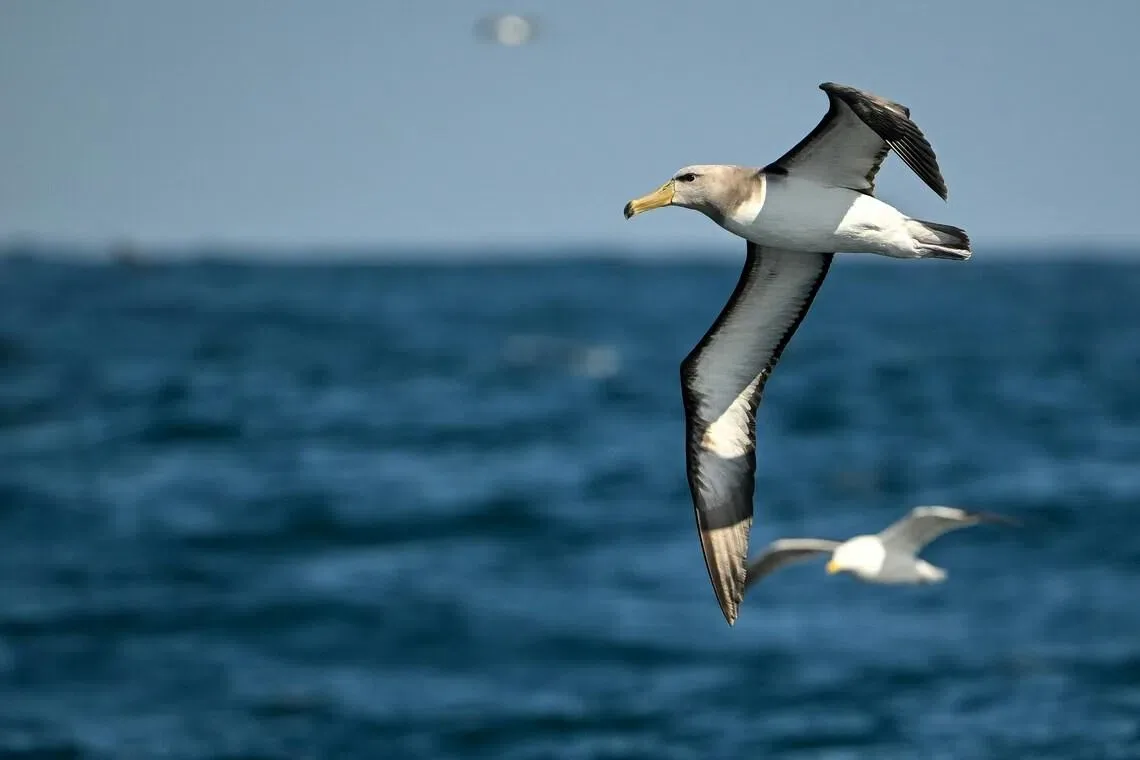
A recent study shows climate change is causing seabird habitats to contract and forcing many species to fly farther to survive. Warmer oceans are driving geographic range loss for seabirds like albatrosses, shearwaters, and petrels, researchers found [1, 2].
The study, published in Nature Climate Change in May 2023, used statistical models analyzing millions of years of climate data to forecast future seabird habitat changes [1]. It predicts that under worst-case warming scenarios, 70% of seabird species’ habitat ranges will shrink by the year 2100 [1, 2].
Seabirds with limited flight abilities face the highest extinction risks because they will struggle to reach increasingly distant suitable habitats [1, 2]. Species identified as most vulnerable include the Galapagos petrel, Jouanin petrel, Newell’s shearwater, and white-vented storm petrel [1, 2].
Dr. Jorge Avaria-Llautureo, the lead researcher, said, "Every time, when the climate changed faster... the range of distribution (of seabirds) started to decrease, to contract, to be smaller" [1].
The warming oceans and rising global temperatures are driven by fossil fuel emissions, which disrupt marine ecosystems and reduce available food sources for seabirds [1, 2]. The continued loss of habitat threatens to accelerate extinctions among vulnerable seabird populations.
The research underscores the urgency of emission reductions to preserve marine biodiversity. The key benchmark year is 2100, when the projected 70% reduction in seabird habitat range will intensify species extinction risks [1, 2].