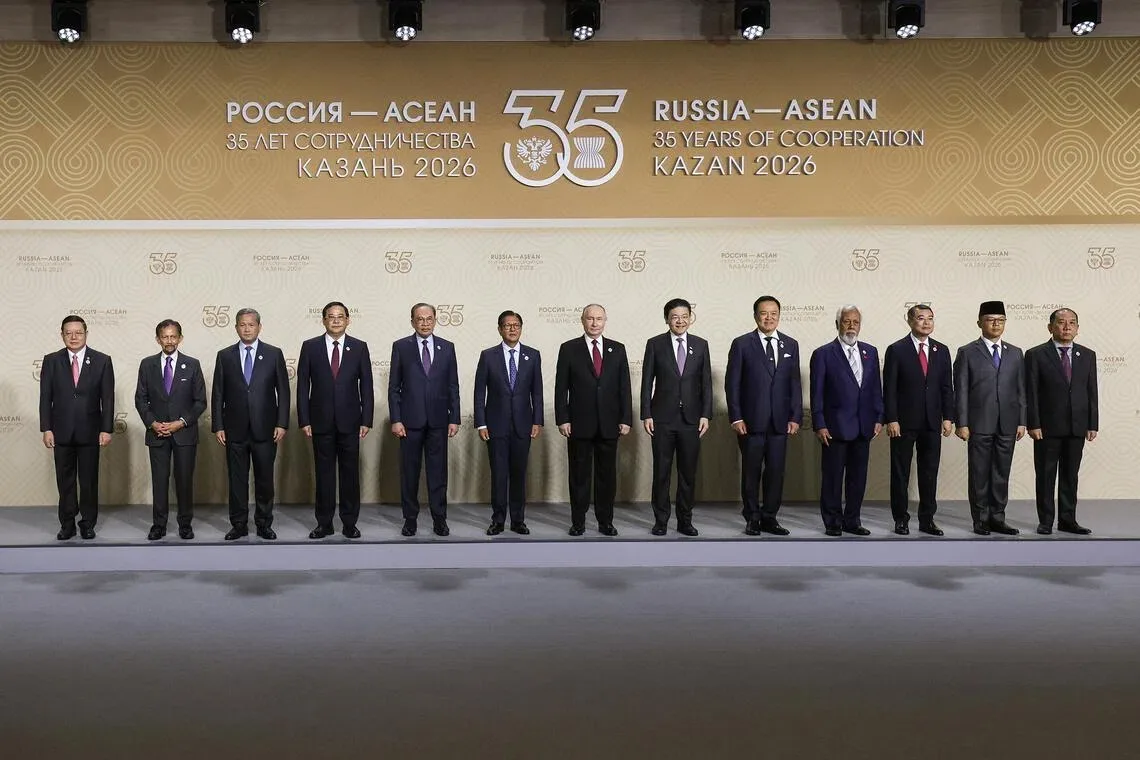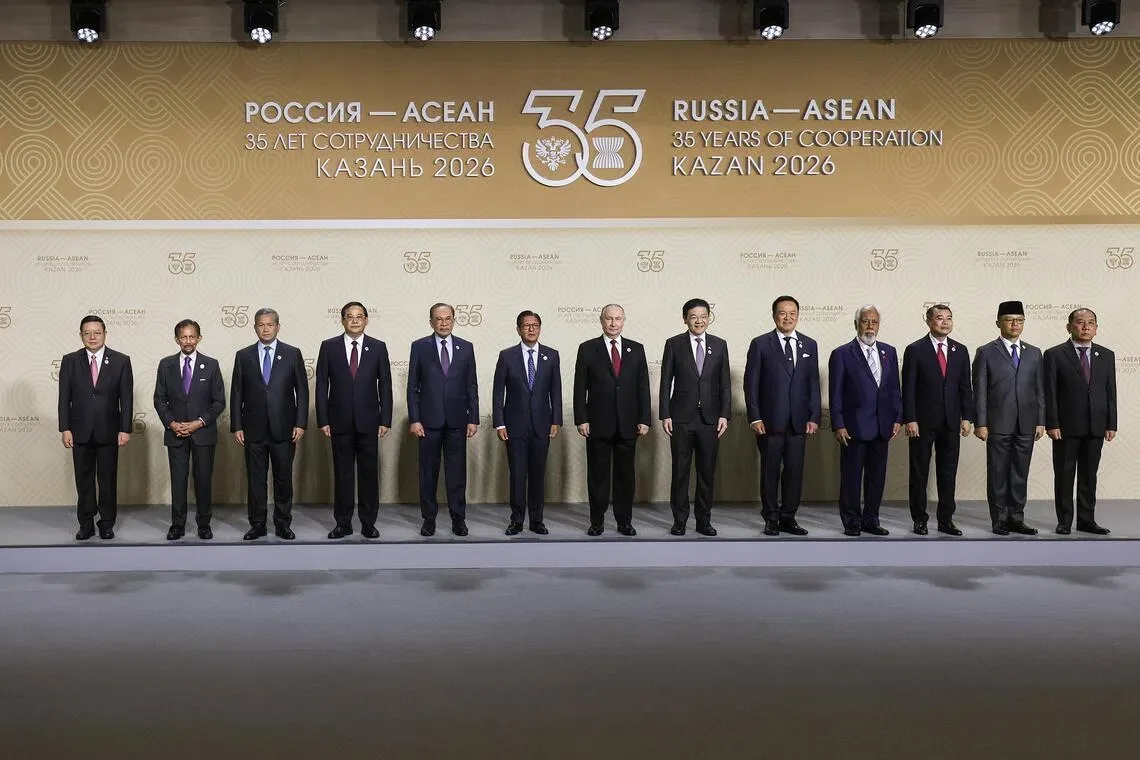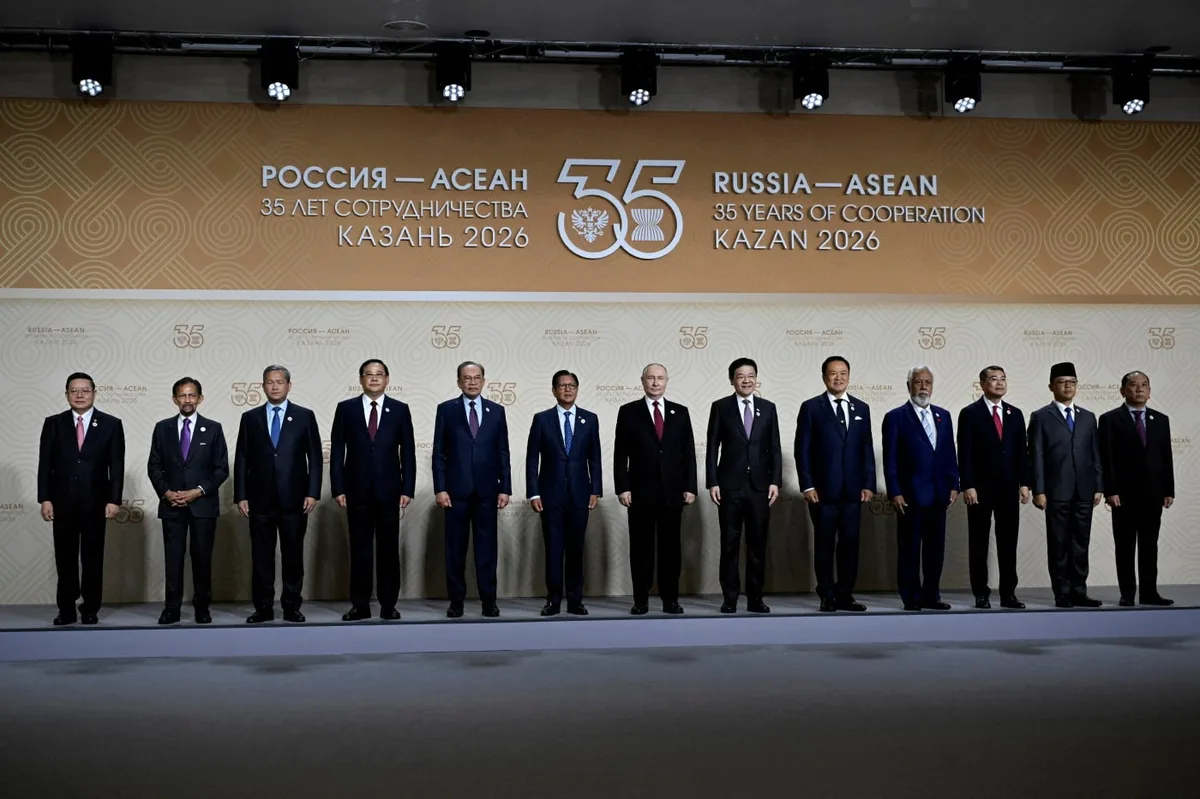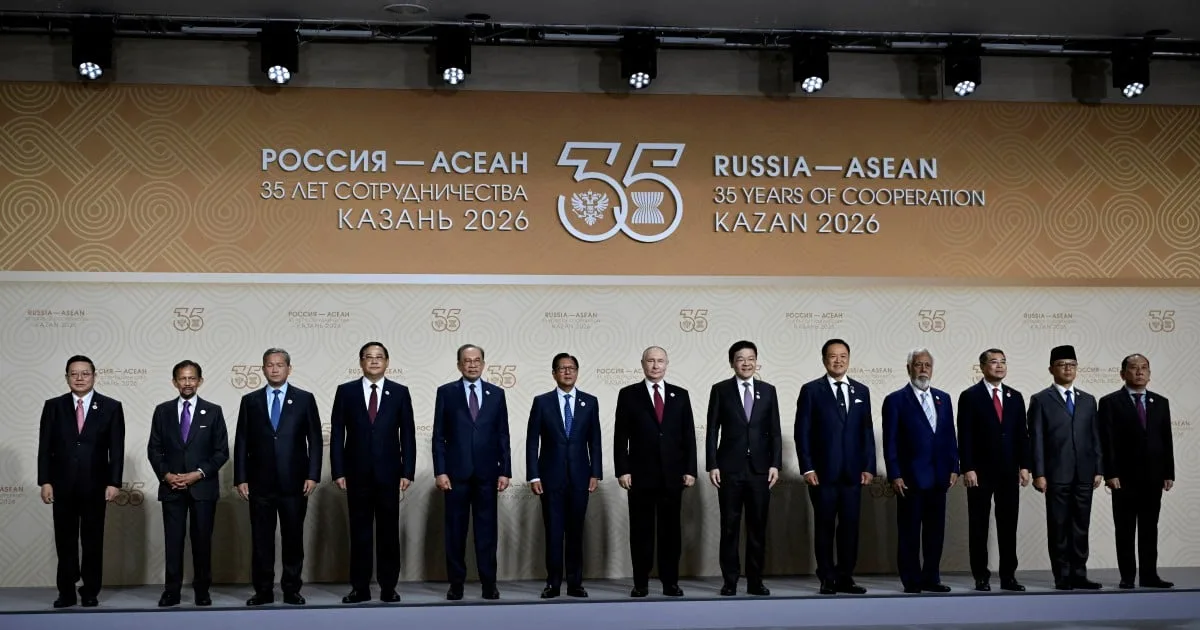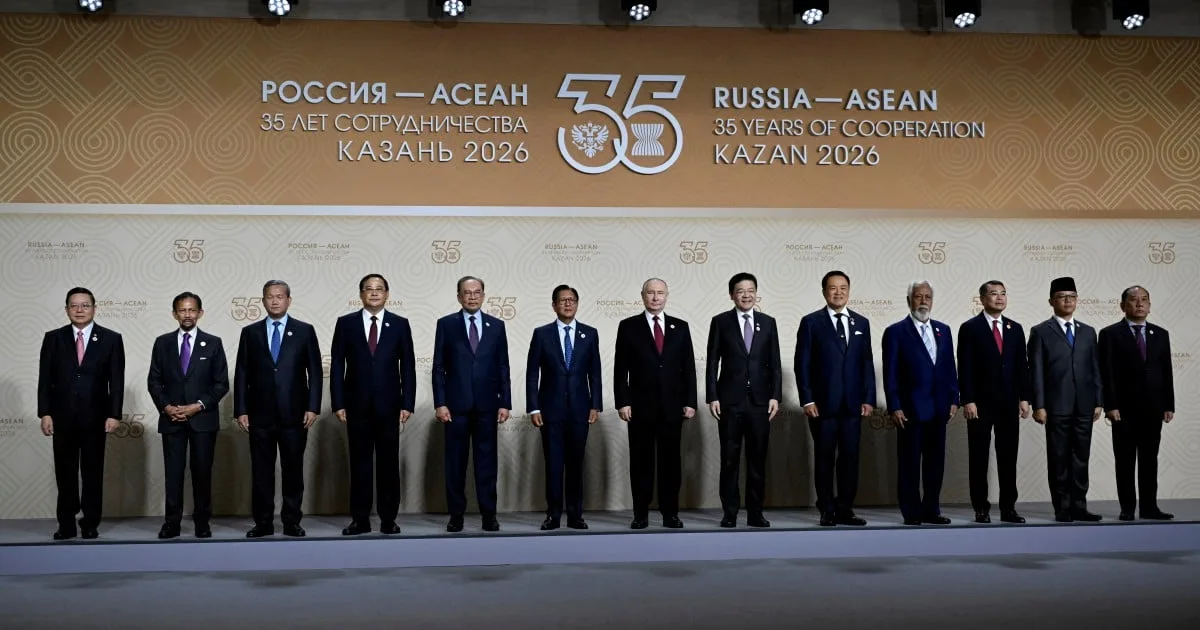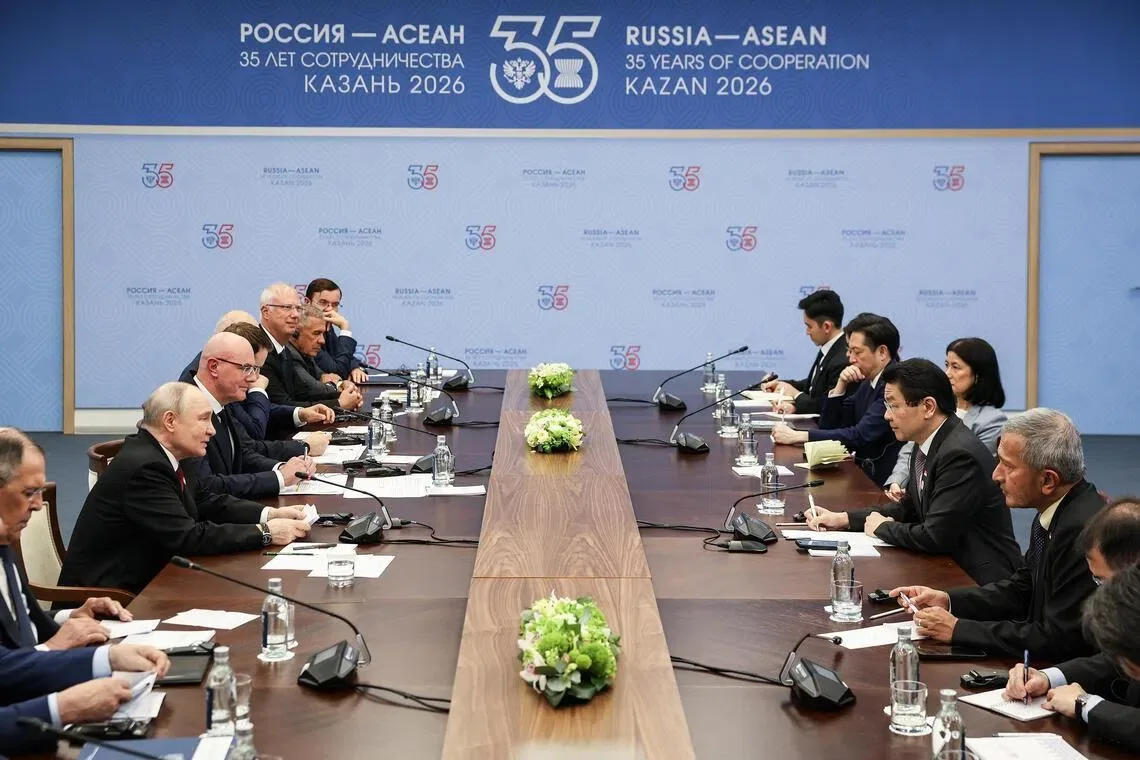
The ASEAN-Russia Commemorative Summit took place in Kazan, Russia, on June 17 and 18, 2026. The event marked the 35th anniversary of ASEAN-Russia relations and the 30th anniversary of their Dialogue Partnership [1, 2, 3, 4, 5, 6].
Several agreements were adopted at the summit, including the Kazan Declaration, the Joint Statement on Cultural Cooperation, and the ASEAN-Russia Comprehensive Plan of Action covering 2026 to 2030 [1, 2, 3, 4, 5, 6]. The Kazan Declaration reviewed 35 years of cooperation and outlined future plans in maritime security, trade and investment, energy, connectivity, security, education, and cultural exchanges [1, 2, 3, 4, 5, 6].
The Joint Statement on Cultural Cooperation emphasized deepening people-to-people ties and enhancing cultural exchanges between ASEAN and Russia [1, 2, 3, 4, 5, 6]. Meanwhile, the Comprehensive Plan of Action sets practical cooperation goals for the next five years [1, 2, 3, 4, 5, 6].
Russian President Vladimir Putin hosted the summit and highlighted the partnership as a key stabilizing factor in the Asia-Pacific region. He noted that discussions focused on growing economic ties and expanding mutual trade and investment [1, 7, 5]. Putin said, "Many constructive ideas and useful practical proposals were put forward regarding the intensification of partnership in the economic sphere. Participants expressed support for both qualitative and quantitative growth in mutual trade, improvements in its structure, and the expansion of reciprocal investment." [5]
Singapore Prime Minister Lawrence Wong urged ASEAN and Russia to collaborate on shared priorities including dialogue, peace, and stability. He welcomed Russia's support for ASEAN Centrality and signaled Russia's participation in ASEAN-led forums like the ASEAN Regional Forum (ARF) and East Asia Summit (EAS) scheduled for later in 2026 and 2027. "Singapore looks forward to Russia’s participation at the EAS and ARF in the Philippines later this year and to Russia’s continued support of ASEAN when Singapore assumes the rotational chair and holds these meetings next year," Wong said [1, 2, 3, 4, 6].
Philippine President Ferdinand Marcos Jr, who co-chairs the summit and leads ASEAN in 2026, outlined three key strategic priorities: peace and stability, economic partnership, and stronger people-to-people ties. He noted, "In an era of deepening geopolitical uncertainty, the value of steady political and security engagement between ASEAN and Russia cannot be underestimated." [7, 5]
The summit highlighted cooperation across areas such as maritime security, disaster management, countering drug trafficking, energy, digitalisation, cybersecurity, and cultural exchanges [1, 2, 3, 4, 5, 6]. Trade and investment ties have grown but have yet to reach their full potential, prompting calls for improved trade facilitation and stronger business community links [7, 5].
The ASEAN-Russia Comprehensive Plan of Action will guide cooperation through 2030 as both sides seek to deepen strategic partnership following the Kazan summit [1, 2, 3, 4, 5, 6].