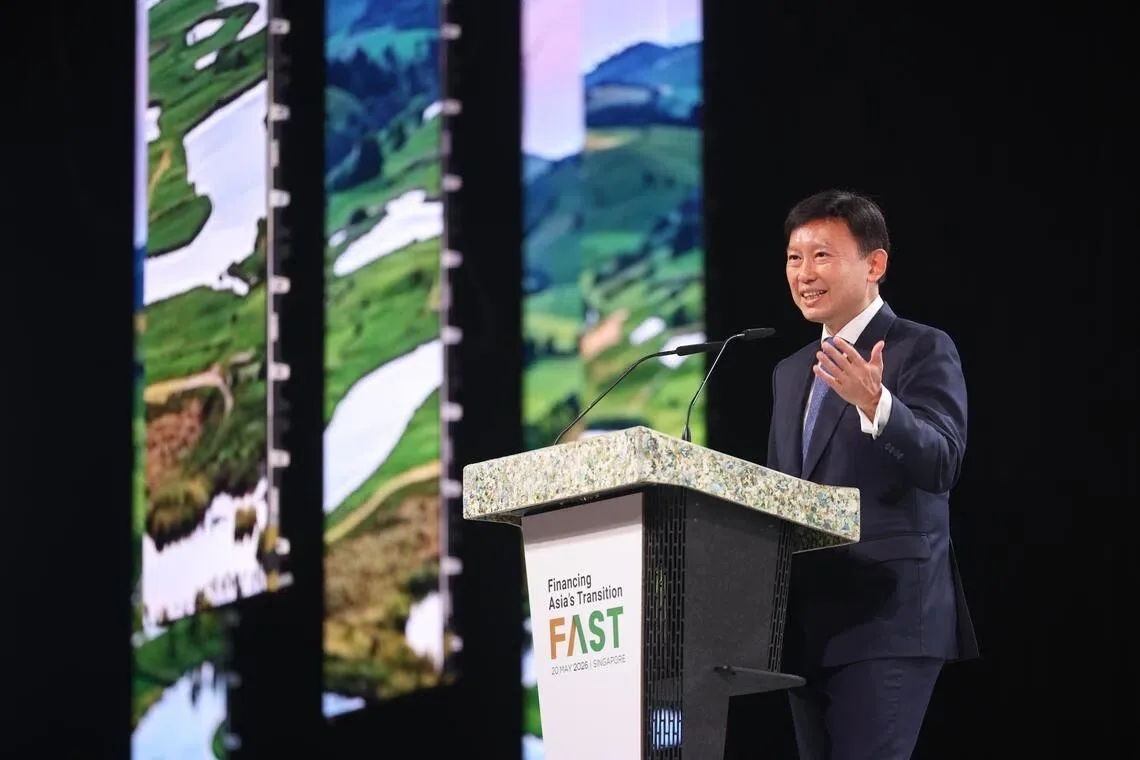
Singapore’s Financing Asia’s Transition Partnership (FAST-P) reached a second close on May 20, 2026, boosting total funding to US$800 million to support green projects in Asia [1, 2, 3]. The second close added US$290 million to the initial US$510 million raised in late 2025 [1, 2, 3].
National Development Minister Chee Hong Tat, also deputy chairman of the Monetary Authority of Singapore, announced the funding at the Financing Asia’s Transition Conference held at the Marina Bay Sands Expo and Convention Centre in Singapore [1, 2, 3]. He said, "Investments in unbankable Asian green projects are set to increase as Singapore’s climate finance initiative has secured another round of funding" [1].
FAST-P’s green investments pillar formed in 2023 to address financing gaps for Asian green projects that are typically unbankable and lack private sector support [1, 2, 3]. The initiative aims to mobilize up to US$5 billion in public, private, and philanthropic capital to back Asia’s decarbonization efforts [1, 2, 3].
In 2024, the Singapore government pledged up to US$500 million in concessional funding, including grants and favorable loans, to FAST-P [1, 2, 3]. A quarter of the initial US$510 million raised was committed to four sustainable infrastructure projects in Southeast Asia, though details on these projects were not disclosed [1, 2, 3].
Funded projects span solar energy, battery storage, electric vehicles, schemes converting agricultural waste into electricity, and bio-energy projects replacing fossil fuels with cleaner alternatives in Southeast and South Asia [1, 2, 3]. The World Economic Forum has noted financing shortfalls especially during project development and construction phases, due to investor unfamiliarity and risks tied to early-stage renewable and electric vehicle charging infrastructure projects [1, 2, 3].
FAST-P uses blended finance, combining concessional funding with private capital to make projects viable and attractive to investors [1, 2, 3].
Since its 2023 formation, FAST-P has steadily increased funding to address Asia’s green infrastructure financing gap. The initiative is expected to continue raising funds toward its US$5 billion target in the near future [1, 2, 3].