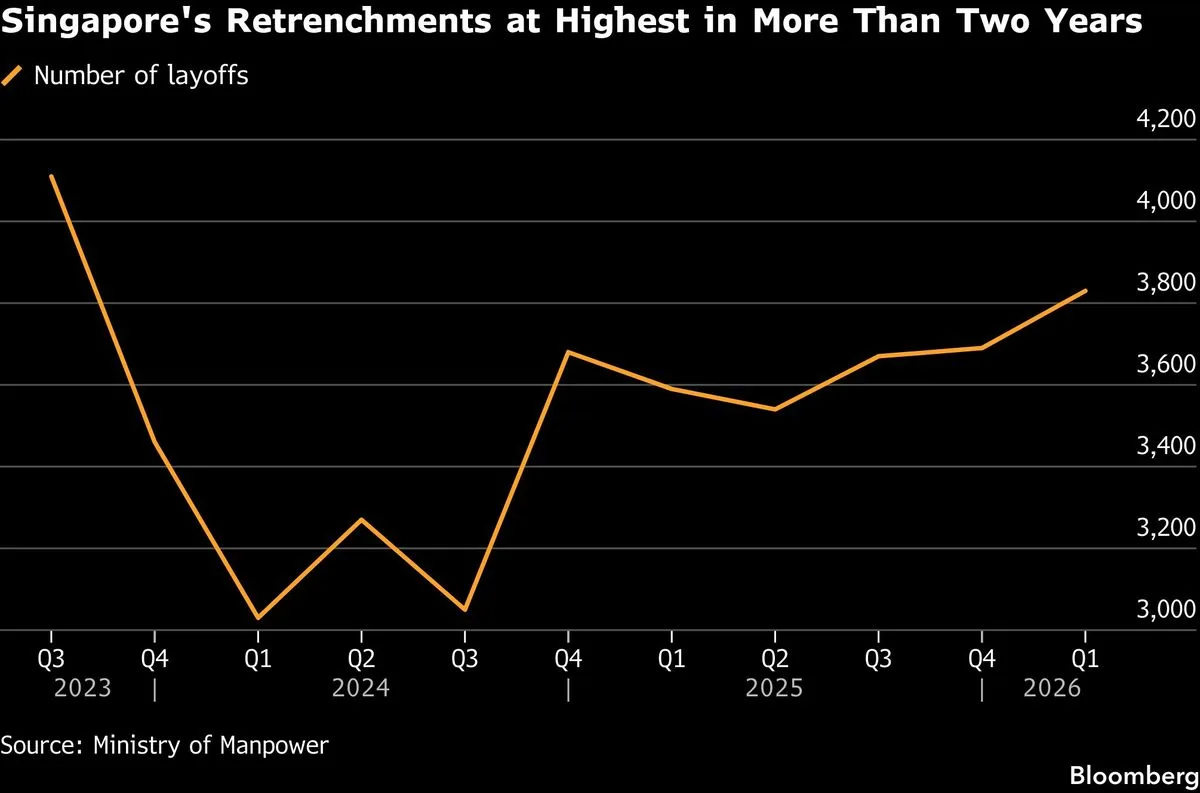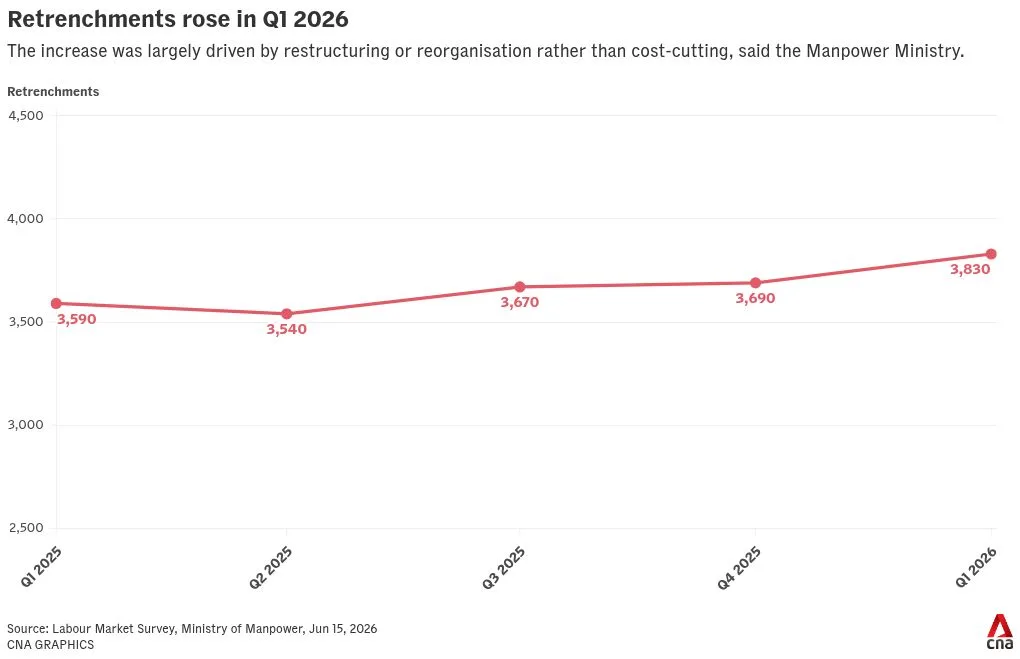
Singapore experienced 3,830 retrenchments in the first quarter of 2026, marking the highest quarterly figure since Q3 2023 when 4,110 workers were let go [1, 2, 3, 4]. The increase from 3,690 retrenchments in Q4 2025 was mainly due to restructuring and reorganisation activities rather than direct cost-cutting measures, the Manpower Ministry said [1, 3, 4].
Job cuts surged particularly in manufacturing, financial services, insurance, and professional services sectors [1, 3, 4]. The ministry noted a "notable shift in retrenchment incidence among higher-educated workers," with retrenchments among degree holders rising sharply from 2.6 to 3.1 per 1,000 resident employees in Q1 2026 [1]. Older workers aged 50 to 59 also saw an increase from 2.8 to 3.1 per 1,000 [1]. Meanwhile, retrenchment incidence fell for workers with secondary education or lower and diploma holders to 0.7 and 1.1 per 1,000 respectively [1].
Among occupational groups, professionals, managers, executives, and technicians faced the highest retrenchment incidence at 2.6 per 1,000 employees [1]. "The overall incidence of retrenchment remains within non-recessionary norms," the ministry added, signalling that while layoffs rose, the labour market is not entering a downturn [1].
Despite the uptick in retrenchments, Singapore's broader labour market remained resilient. The official unemployment rate held steady at 2% in Q1 2026 [3]. The share of retrenched residents who secured new jobs within six months rose to 60.7% from 57.4% in the previous quarter [1, 3]. Job vacancies also remained abundant, with 73,300 openings available at the end of March, exceeding the number of unemployed residents [3].
However, employers expressed growing caution amid economic uncertainties. An industry survey in April showed that over half of companies were concerned about rising labour costs [3, 4]. Several large tech firms, including Sea Ltd’s Shopee and Meta Platforms, recently announced workforce reductions [3].
The government and job agencies are expected to continue monitoring employment conditions and support retrenched workers as the economic outlook evolves.