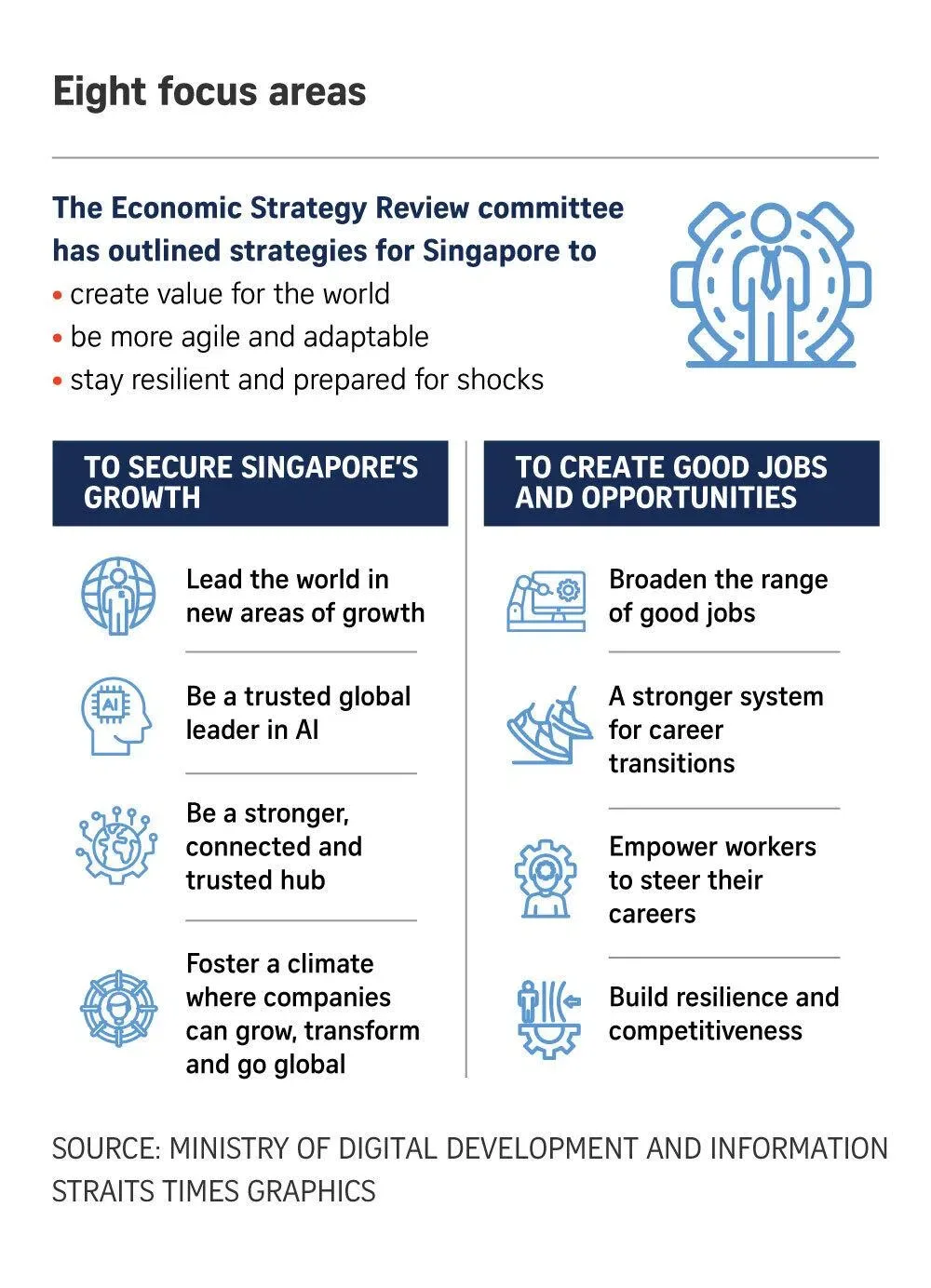
Singapore’s Economic Strategy Review committees released 32 final recommendations on May 13 after consultations with more than 7,700 stakeholders, including businesses, unions, workers, trade associations and chambers. [1, 2]
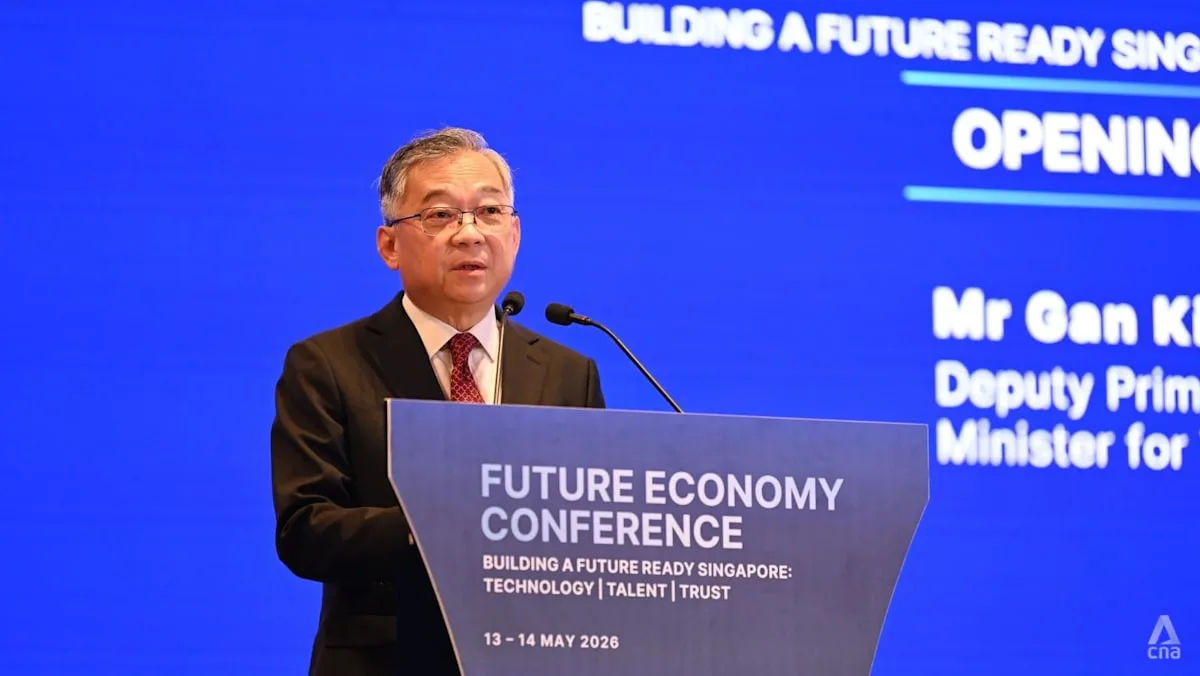
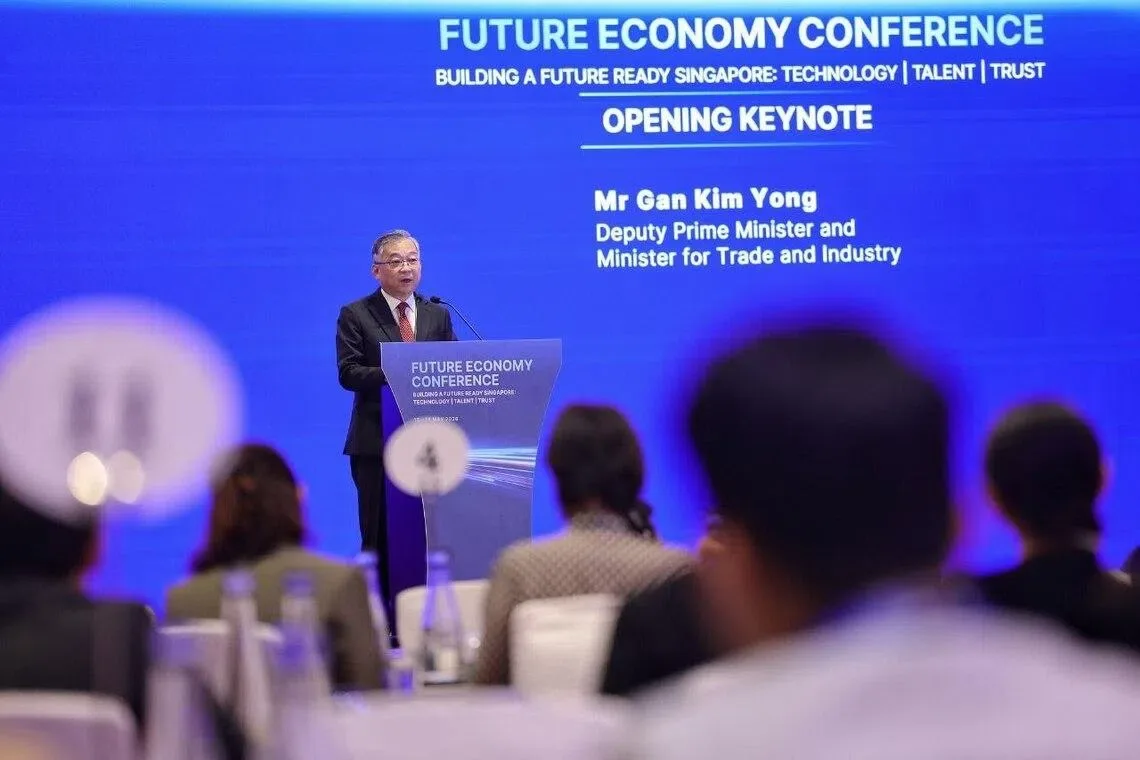
Deputy Prime Minister Gan Kim Yong said Singapore must stay competitive, create good jobs and remain relevant in a “more fragmented, contested and fast-changing world.” He said, “It is about how Singapore positions itself for the longer term to stay competitive, create good jobs, and remain relevant in a more fragmented, contested and fast-changing world.” [1]
The proposals are framed around three broad thrusts to guide Singapore’s response to geopolitical tensions, rapid advances in technology and other pressures. About a third of the recommendations are tied to jobs, and 12 of them focus directly on employment issues. [1, 2]
The recommendations include “career bridges” for workers exposed to AI, automation and changing cost structures so they can move into more resilient occupations. They also call for training, career guidance and job-matching support for workers in transition. Gan said, “Some workers will need to move into adjacent occupations. Others may require deeper reskilling. Some PMEs may face longer periods of adjustment.” [3, 2]
The ESR also calls for earlier and more proactive retrenchment support. That includes access to counselling, career guidance, skills assessments and job-matching before or soon after job loss. Gan said, “We must strengthen support for workers in transition. Our support systems must become more integrated and more anticipatory.” [3, 2]
The five ESR committees first convened in August 2024 and completed their work with the final release on May 13. [1]