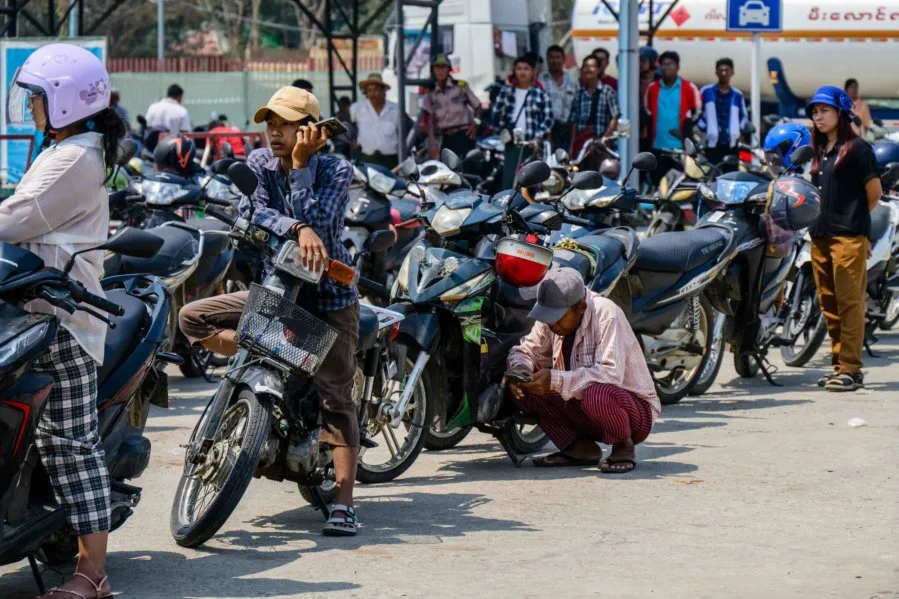
Myanmar experienced a sharp inflation increase to 24.6% year-on-year in April 2026, largely due to fuel price spikes caused by the US-Iran conflict and closure of the Strait of Hormuz, the World Bank said [1, 2, 3]. The country imports 90% of its fuel oil, leaving it vulnerable to disruptions in this key shipping route, where 80% of oil transiting the Strait is bound for Asia [1, 2, 3].
Inflation for the 12 months ending March 2026 was recorded at 21.1% [1, 2, 3]. The economic growth forecast for Myanmar’s fiscal year 2026-2027 has been cut from 3% to 2% due to the less favorable external environment caused by the crisis [1, 2, 3].
Kemoh Mansaray, senior economist at the World Bank, said, "The fuel shock has reignited inflation pressures. What this means is household purchasing power has gone down, and these households were already facing very thin buffers with high poverty levels" [1]. He highlighted how the inflation surge worsened hardship amid Myanmar’s prolonged instability since the 2021 military coup, which triggered civil war and widespread poverty [1, 2, 3]. Myanmar’s poverty rate stood at 29.9% in 2025, still far above pre-coup levels [1, 2, 3].
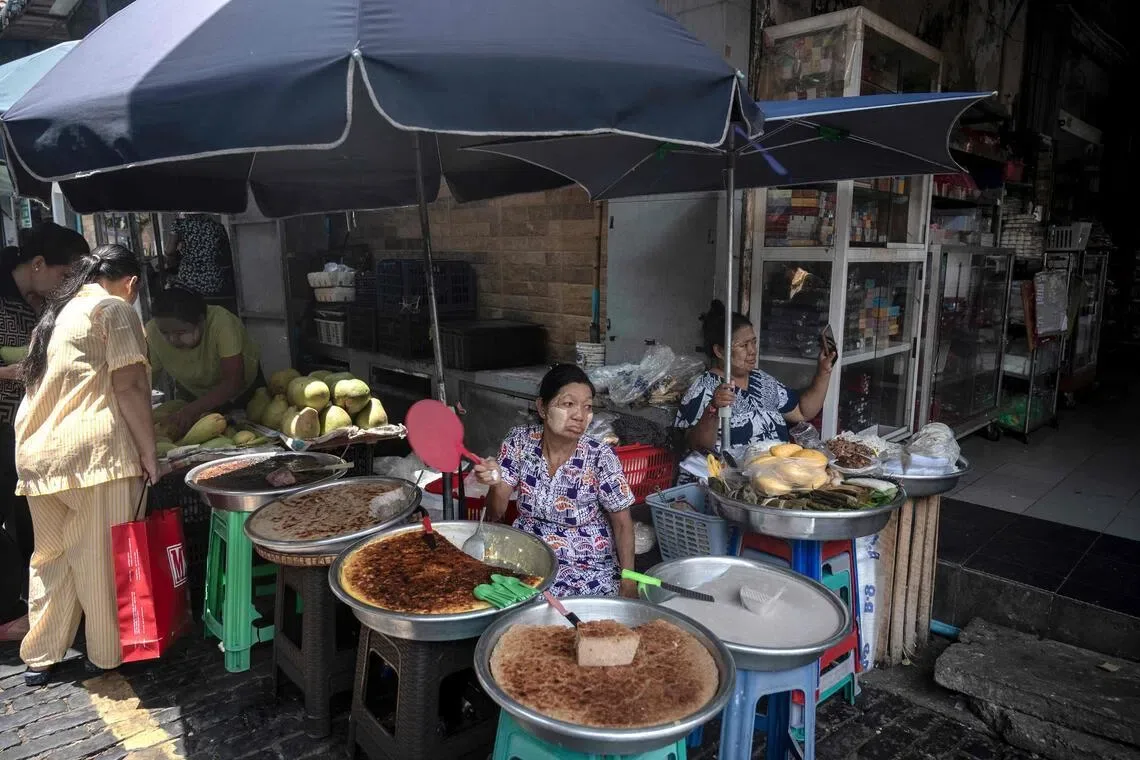
Households in Myanmar are struggling to afford basic needs and schooling for children. An anonymous 28-year-old father in Yangon said, "Because we’re struggling just to afford food, there are children we can’t send to school" [1]. A 45-year-old shopkeeper added, "Our income and expenses don’t match. We just manage day by day. Prices only go up, they never go down. Now no matter how much we earn, it’s still not enough" [1].
The conflict began on February 28, 2026, when tensions between the US and Iran led to the closure of the Strait of Hormuz, severely affecting oil transit to Asia [1, 2, 3]. On June 15, 2026, the US president announced that ships are sailing again through the Strait after a deal ended the conflict [1].