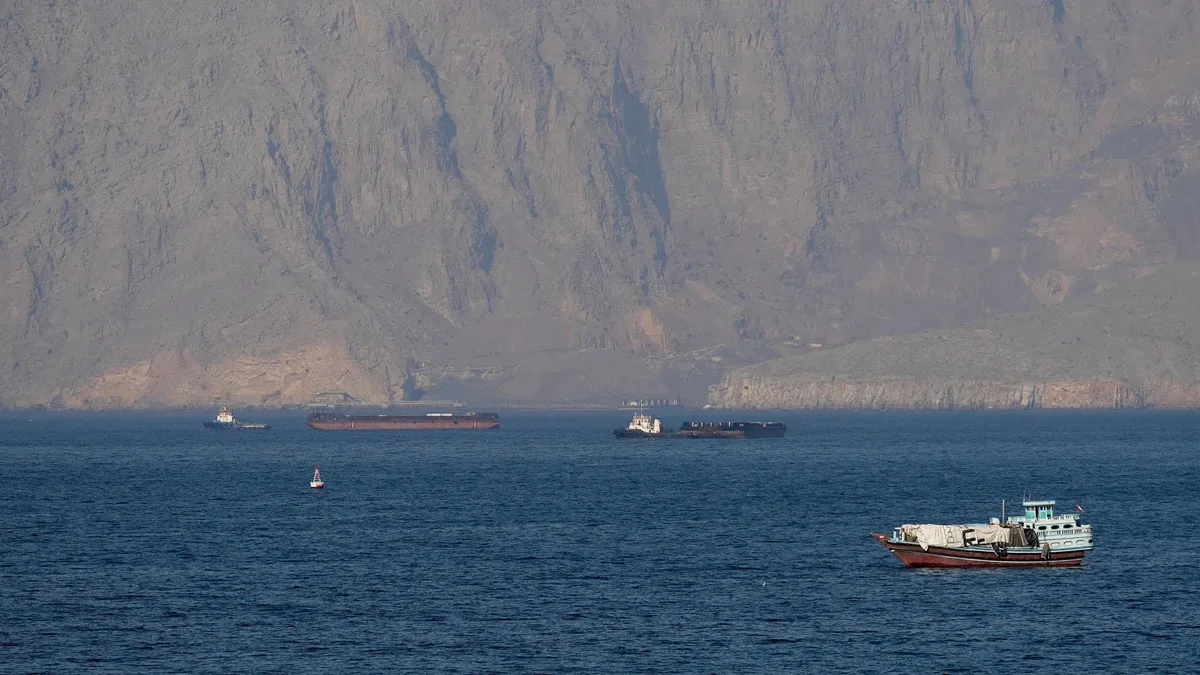
Iran’s military issued a warning on May 4, 2026, cautioning US forces not to enter the Strait of Hormuz and threatening a harsh response to any perceived threat there [1]. Ali Abdollahi, head of Iran’s unified armed forces command, said, "We have repeatedly said the security of the Strait of Hormuz is in our hands and that the safe passage of vessels needs to be coordinated with the armed forces. We warn that any foreign armed forces, especially the aggressive US army, will be attacked if they intend to approach and enter the Strait of Hormuz." [1]
Following the warning, US President Donald Trump announced plans for the United States to assist ships stranded in the Gulf due to the blockade. Trump said, "We have told these Countries that we will guide their Ships safely out of these restricted Waterways, so that they can freely and ably get on with their business." [1]
The US Central Command committed 15,000 military personnel, along with more than 100 aircraft, warships, and drones to the effort to free these vessels [1]. Admiral Brad Cooper, US Centcom commander, called the mission "essential to regional security and the global economy as we also maintain the naval blockade." [1]
According to the International Maritime Organization, up to 20,000 seafarers aboard hundreds of ships have been unable to transit the Strait of Hormuz amid the conflict [1]. The Strait is a crucial chokepoint for global oil shipments and trade.
Shortly after Trump’s announcement on May 4, a tanker near Fujairah reported being hit by unidentified projectiles. No casualties were reported among the crew [1].
Iran’s unified command emphasized that all vessels must coordinate passage with Iran’s armed forces to ensure security in the Strait [1].
The US military’s support operations to assist stranded ships have begun as the situation in the Gulf intensifies.