The Iran war has squeezed global jet fuel supplies and is threatening summer travel plans as shipping through the Strait of Hormuz is disrupted and refineries outside the Gulf cut output. [1, 2]
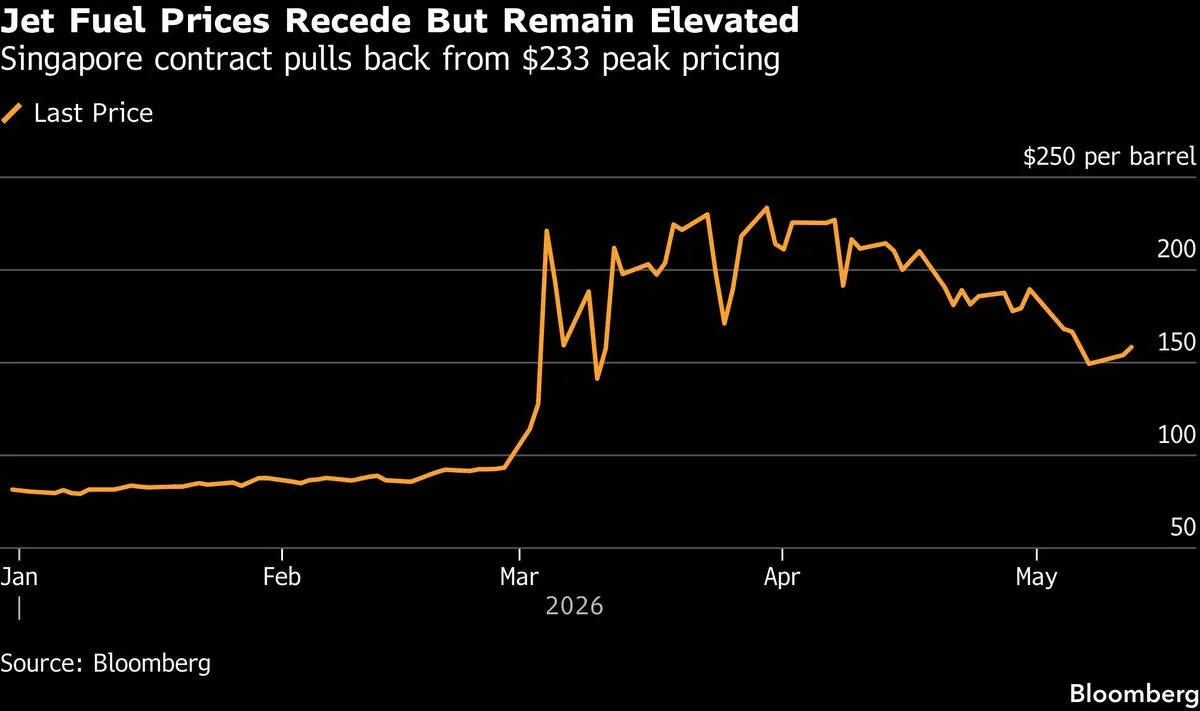
Middle East refiners, which typically produce more than 10% of the world's jet fuel and kerosene, have struggled to deliver cargoes to buyers outside the region. Jet fuel prices have jumped to record highs and topped US$200 a barrel in Europe, while airlines have cut flights, grounded older, less-efficient aircraft and raised airfares. [1, 2]
The squeeze has reached Asia as well. Asian refineries' output of jet fuel and kerosene fell to 2.9 million barrels a day in April, more than 500,000 barrels a day below February levels, according to the data cited in the reports. The International Energy Agency warned European jet fuel inventories could hit critical levels in June if more than half of lost Middle East supply cannot be replaced. [1]
Airport industry body ACI said the bigger threat to travel is higher fuel and ticket prices, not a lack of fuel. Stefano Baronci said, "The pipe is not the problem; the price is the real concern for airports as this will have an impact on the price of tickets," and added, "There is a buffer" and "We don’t see the emergency." [3]
ACI said most airports in Asia and the Middle East had a comfortable 10 to 20 days of jet fuel, based on a survey of 28 members running 88 airports. It warned that sourcing and supply of kerosene began tightening in mid-April among 60% of its surveyed members. [3]
The trade body also said major Middle Eastern airports lost about US$1 billion in revenue in March and April, while freight flown fell 52% and air traffic over the past nine weeks ran at 53% of the usual schedule. [3]
Jet fuel prices eased in May to around US$150 a barrel after spending much of April above US$200, but the reports said summer travel remains exposed to further supply stress if Middle East exports stay disrupted. [1, 3]