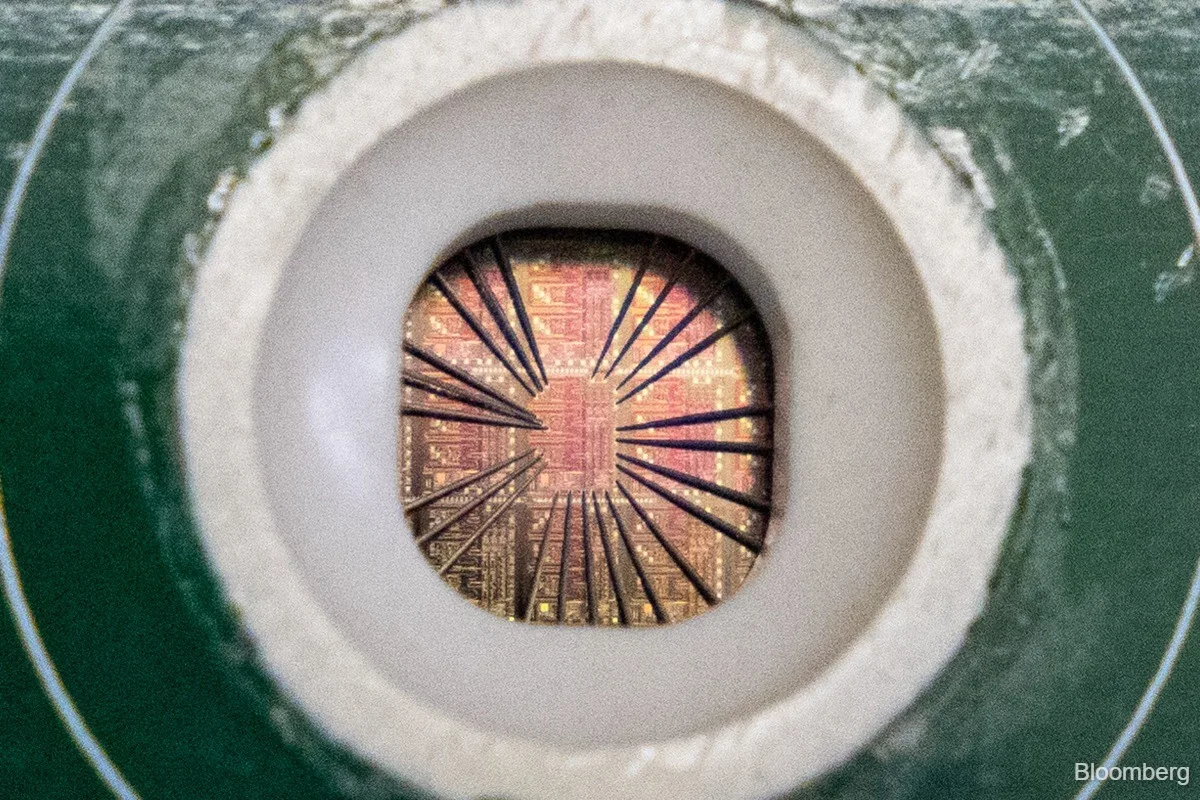
The UK government announced a £1.1 billion (approximately $1.3 to $1.47 billion) investment to build a national AI supercomputer and support local AI chip design and manufacturing on June 8, 2026, at London Tech Week [1, 2, 3, 4, 5]. The £750 million supercomputer will combine proven and next-generation processors and is expected to be deployed by 2030 [2, 3, 4, 5].
Of the supercomputer budget, £400 million will be allocated to next-generation chips, including £150 million dedicated this summer to purchasing inference chips from British companies such as Olix and Fractile [2, 3, 4, 5]. Alongside this, a £120 million AI hardware innovation programme will fund UK firms to design and test novel chips [2, 4].
The government is increasing skills funding for the AI hardware sector to £80 million, with £45 million of new support to train workers and build expertise [2, 4]. A new fund led by US venture capital firm Playground Global, backed by up to £150 million from the British Business Bank, will invest in UK AI hardware startups. This marks the largest single investment the bank has made in the sector [2, 4].
Technology Secretary Liz Kendall said, “We must, and we are, securing our own sovereign AI capability. This is far too important a technology to depend entirely on other countries especially in areas like defence, financial services and healthcare.” She added the goal is to reduce overdependence and increase resilience amid geopolitical shifts [1, 3].
The UK's efforts come after recent foreign acquisitions of UK tech firms, including Qualcomm’s $2.4 billion purchase of Alphawave IP in 2025 and SoftBank’s 2024 acquisition of Graphcore. Arm Holdings, the British chip designer, is mostly owned by SoftBank and listed in New York since 2023 [1].
These investments support the UK’s broader AI strategy, which includes AI growth zones created in November 2025 to ease data center construction and a $675 million SovAI venture fund launched in April 2026 to back AI startups [3, 5]. The government aims to deploy the national AI supercomputer by 2030 [2, 3, 4, 5].