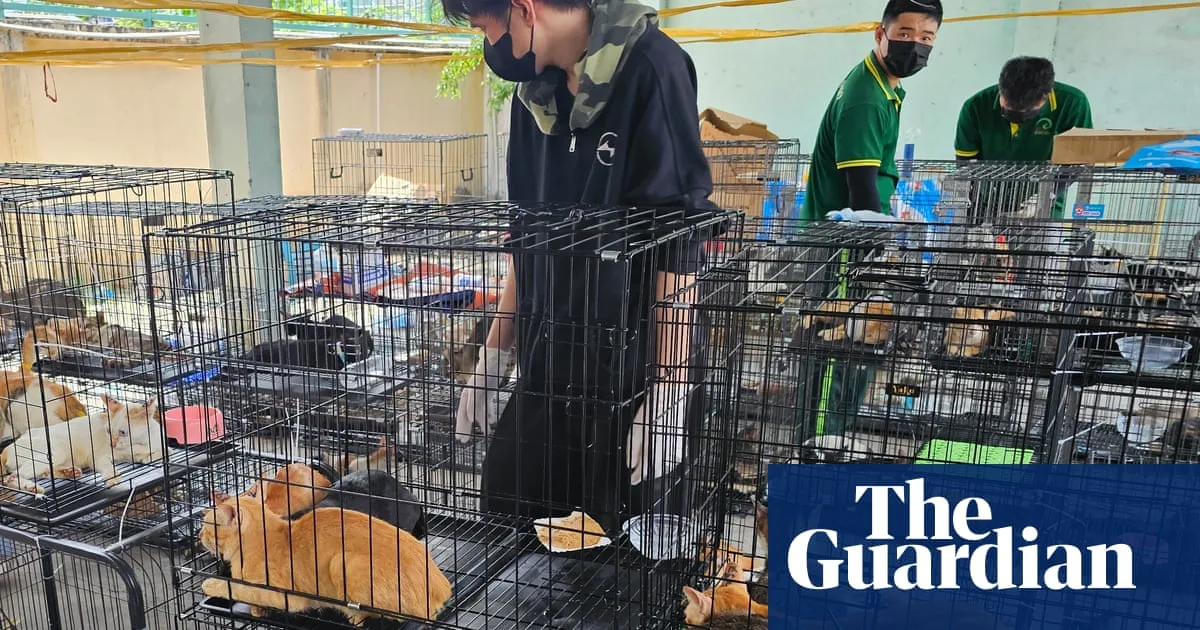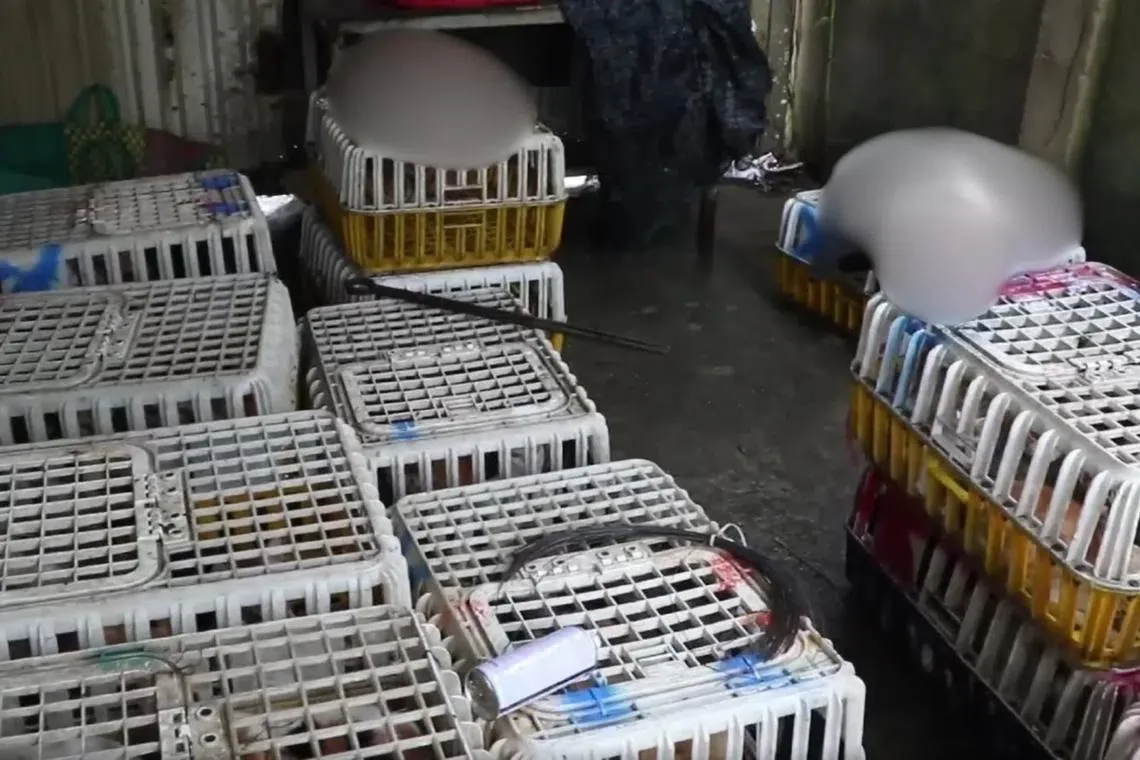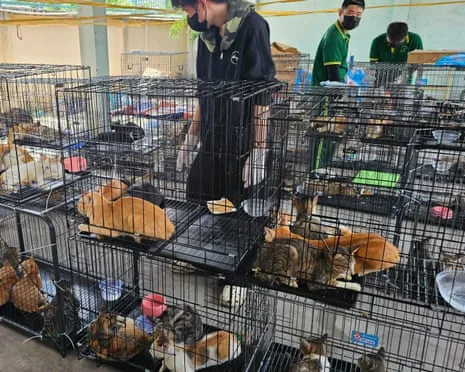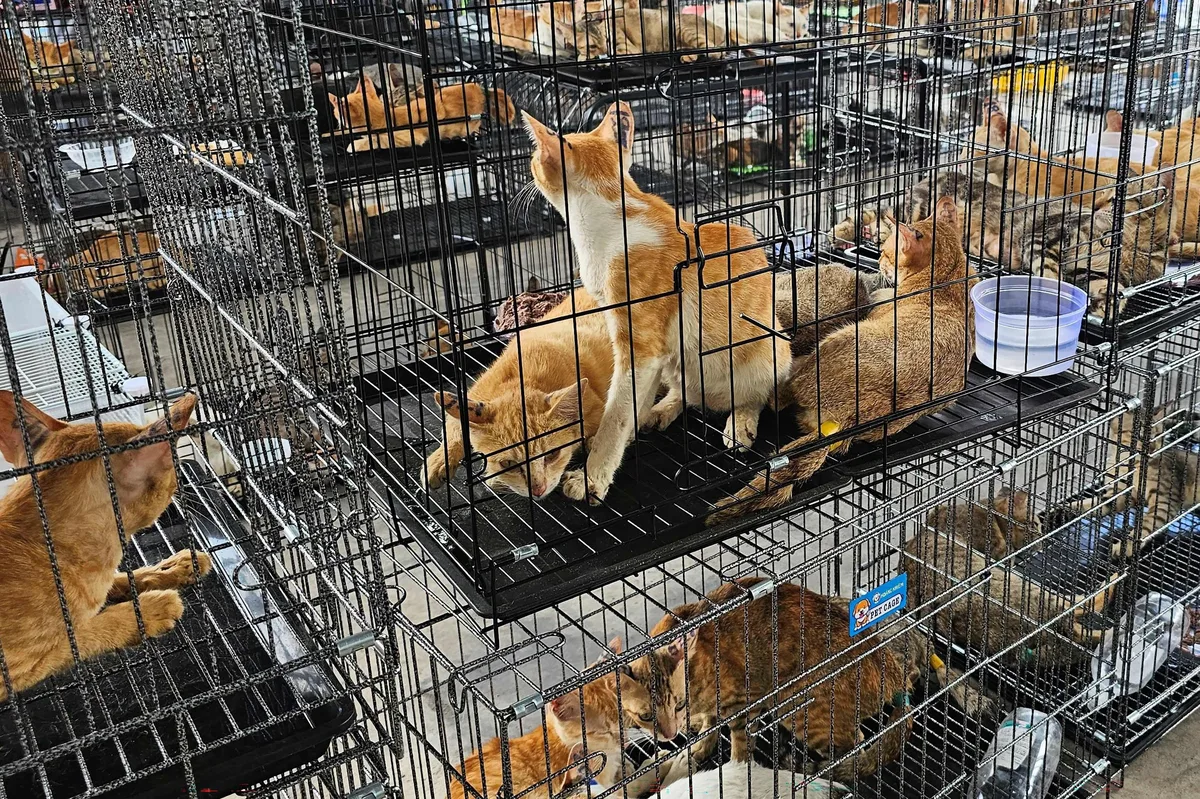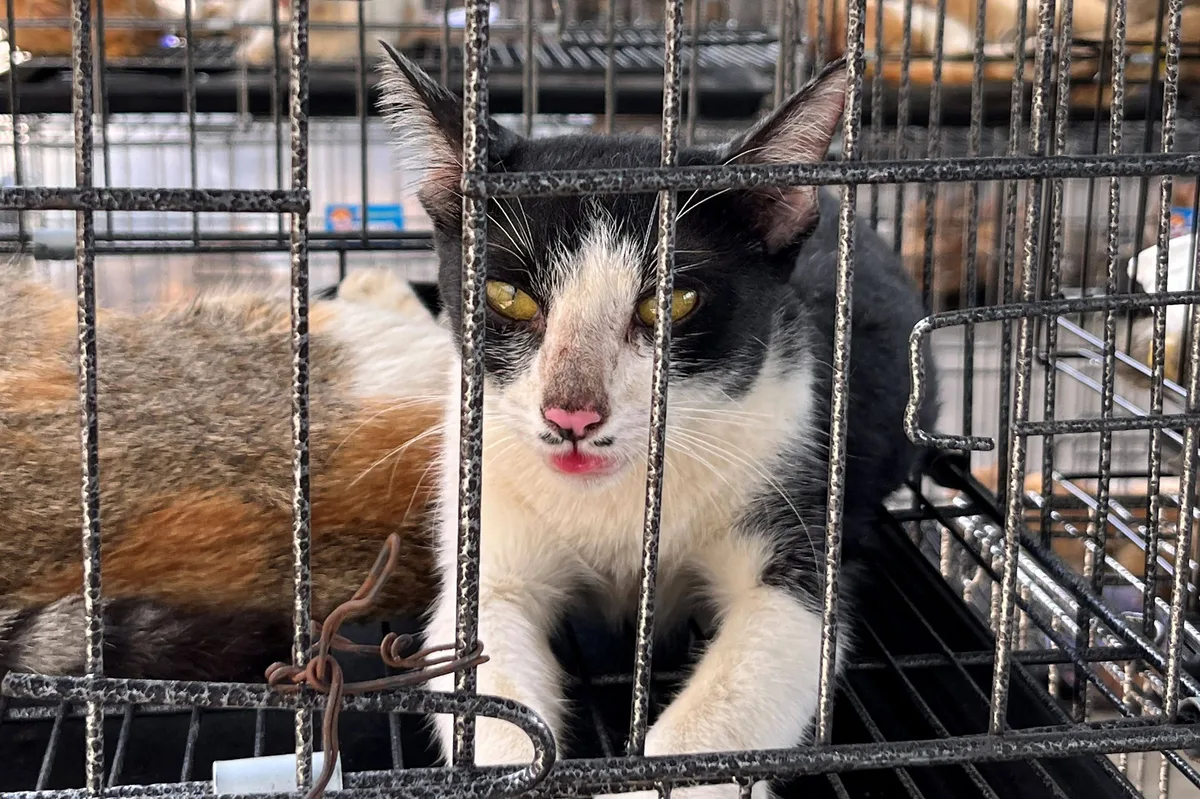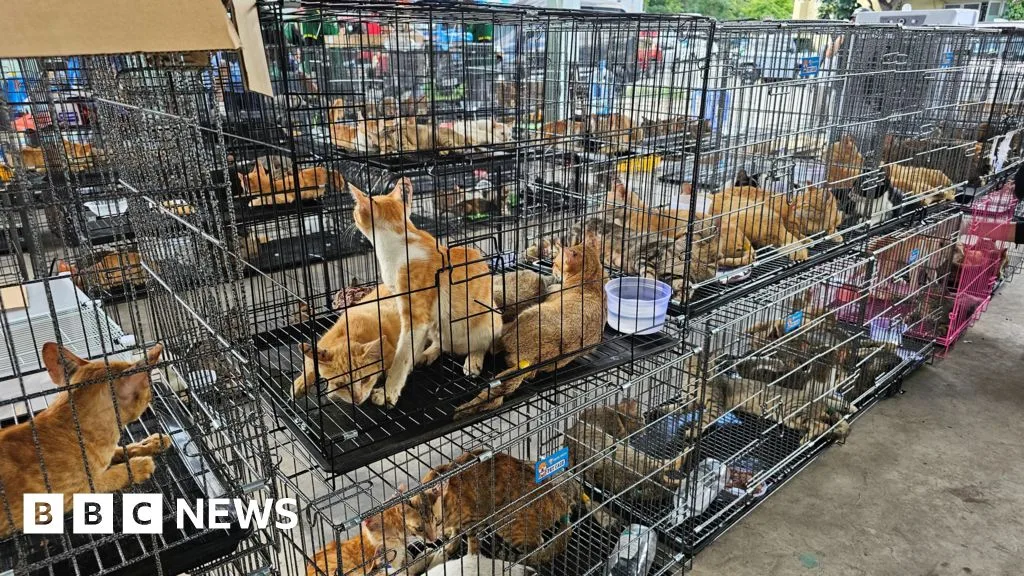
Vietnamese police arrested nine people linked to a criminal group that illegally trapped and collected cats across southern Vietnam over three years, recovering over 500 cats in total, including more than 400 alive and around 80 dead preserved on ice. The raids took place from June 11 at facilities in Tay Ninh Province, Ho Chi Minh City, and other locations [1, 2, 3, 4, 5, 6, 7].
The suspects confessed to capturing cats using spring-loaded snares and other methods. The stolen cats were held temporarily before being sold every two to three days to traders or restaurants involved in the local cat meat trade, which is legal but requires vendors to have permits showing the animals’ origin [1, 8, 7].
Authorities seized an additional 21 live cats at a separate site. Over 40 of the rescued cats were returned to their owners following the bust. Police urged people who lost pets to come forward and identify their cats to assist the investigation. Nguyen The Bao, a police official, stated, "People who lost their cats can come to the police station to identify their pets and help police with the investigation" [9, 5, 10, 11].
Animal welfare groups estimate that each year some 5 million dogs and 1 million cats are captured, stolen, trafficked, and slaughtered in Vietnam for meat consumption. Cats are often trapped from family homes, with tactics including poisonous bait and traps [1, 8, 6].
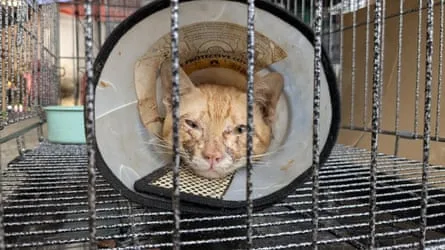
Charities like Humane World for Animals and Vietnam Cat Welfare are providing food, veterinary care, and support to the cats held as evidence. Karanvir Kukreja of Humane World for Animals called the bust "a sobering reminder of the enormous scale of Vietnam’s cat meat trade" and noted ongoing efforts for the cats remaining in custody. He said, "While efforts are continuing to reunite stolen cats with their families, our main concern is for the cats who remain at the police station as evidence during the prosecution" [2, 3].
Chris Gindelhumer of Vietnam Cat Welfare said it was "really beautiful to see how many Vietnamese families are coming, looking for their cats. But it’s also heartbreaking because many families were looking for their cats and didn’t find them" [3]. Around 100 cats later died due to harsh conditions endured while trafficked [2, 5, 10, 8, 11, 7]. Some rescued cats were pregnant and gave birth during police custody [3, 7].
Public reaction included cat owners reconsidering their consumption habits. An Pham, a cat owner, said, "This case shocked many people and made more people rethink the issue of eating cat meat. Many are now considering stopping eating cat meat" [11]. Some cities such as Hoi An are cooperating with international welfare groups to reduce dog and cat meat consumption [3, 4, 11, 7].
The police investigation is ongoing. Authorities continue to hold the cats as evidence and work to prevent further trafficking in the region.