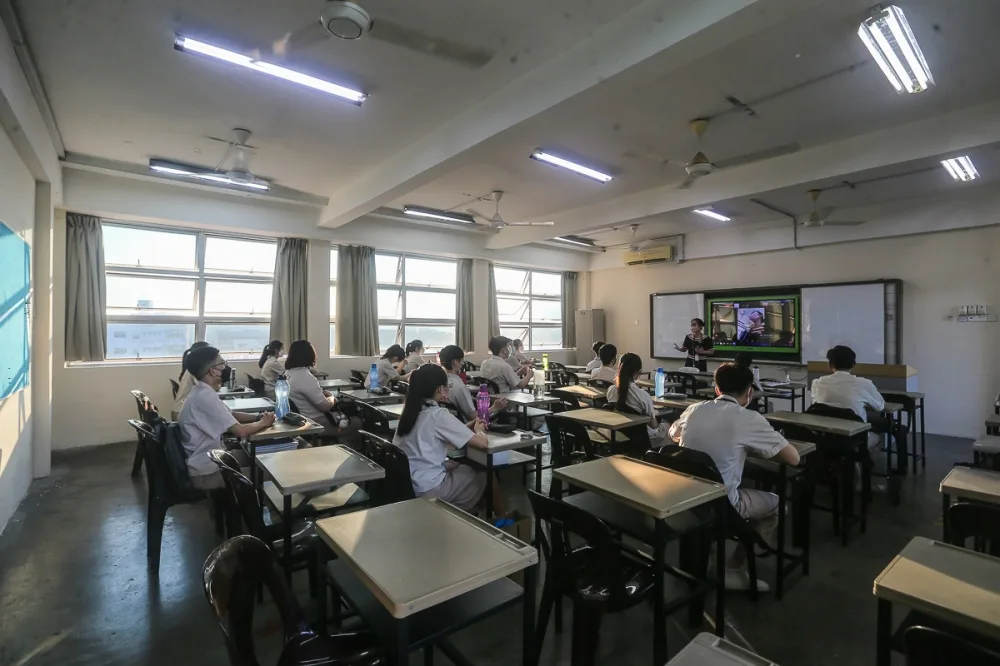
Malaysia’s education landscape includes national schools, vernacular schools, tahfiz institutions, Chinese independent schools, international campuses, and alternative learning systems, reflecting the country’s multicultural roots. The largest stream is the government school system under the Ministry of Education, which includes Sekolah Kebangsaan (SK) and Sekolah Menengah Kebangsaan (SMK) using Bahasa Malaysia and following the national syllabus. Vernacular schools teach in mother tongues such as Mandarin (SJKC) and Tamil (SJKT) while operating as government-aided schools within the national framework. National schools enroll all Malaysians, but some elite boarding and science schools impose academic and Bumiputera eligibility criteria [1].
Since early 2026, an increasing number of Malaysian families able to afford it are adopting world schooling. This lifestyle involves travel and real-world experiential learning replacing formal classroom education. Families using world schooling often employ flexible curricula like the Cambridge international program tailored to their current country and circumstances [2].
Adilah Rosli and her husband began full-time world schooling with their four children, ages 9, 6, 4, and 1, in 2026. Since then, they have traveled to Vietnam, Indonesia, Bosnia, Türkiye, Italy, and Spain. Adilah explained that before world schooling, their eldest attended private preschool and an international school, and their second child completed over a year of preschool before starting world schooling in February 2025. In Vietnam, Bosnia, and Italy, they combined formal learning through books and worksheets with informal visits to museums, parks, and historical sites. In Istanbul, their learning was entirely experience-based [2].
World schooling is said to foster children’s independence, social skills, and critical thinking through exposure to diverse cultures and real-world experiences [2].
Adilah and her husband initially formed ideas about world schooling during their studies in the UK from 2010 to 2014. Their family’s international travel and education approach exemplifies the growing trend among Malaysian families to pursue alternative education paths beyond the traditional school system [2].
On May 19, 2026, Malay Mail published an article introducing the world schooling concept in Malaysia, followed by a detailed May 21 report on the coexistence of Malaysia’s diverse education systems [1, 2].