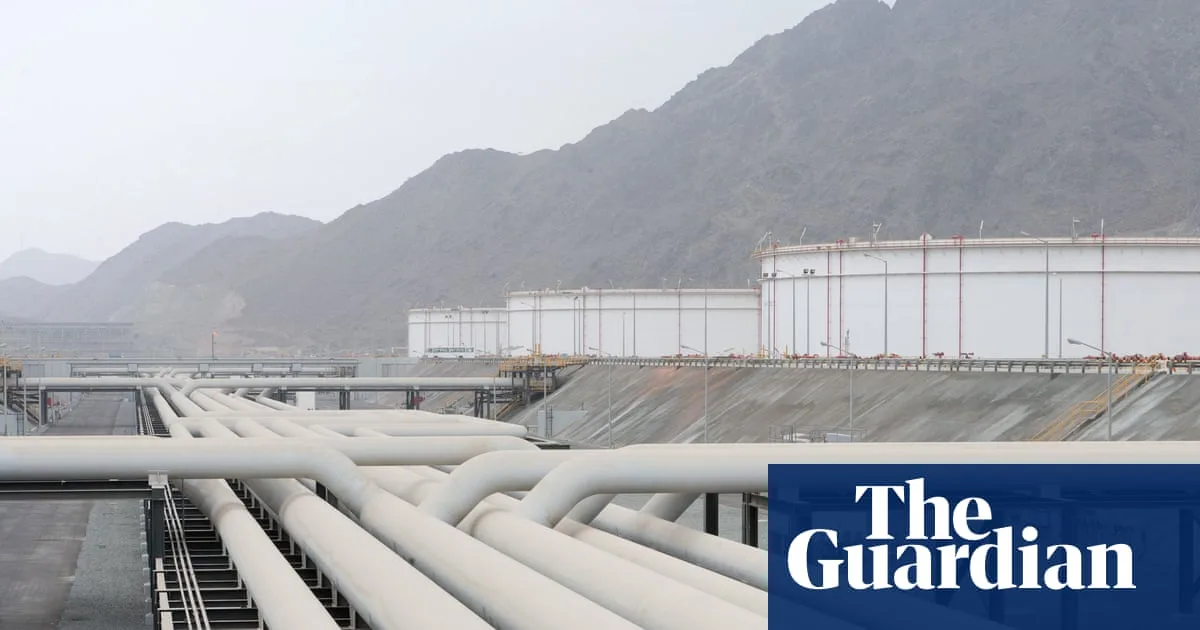
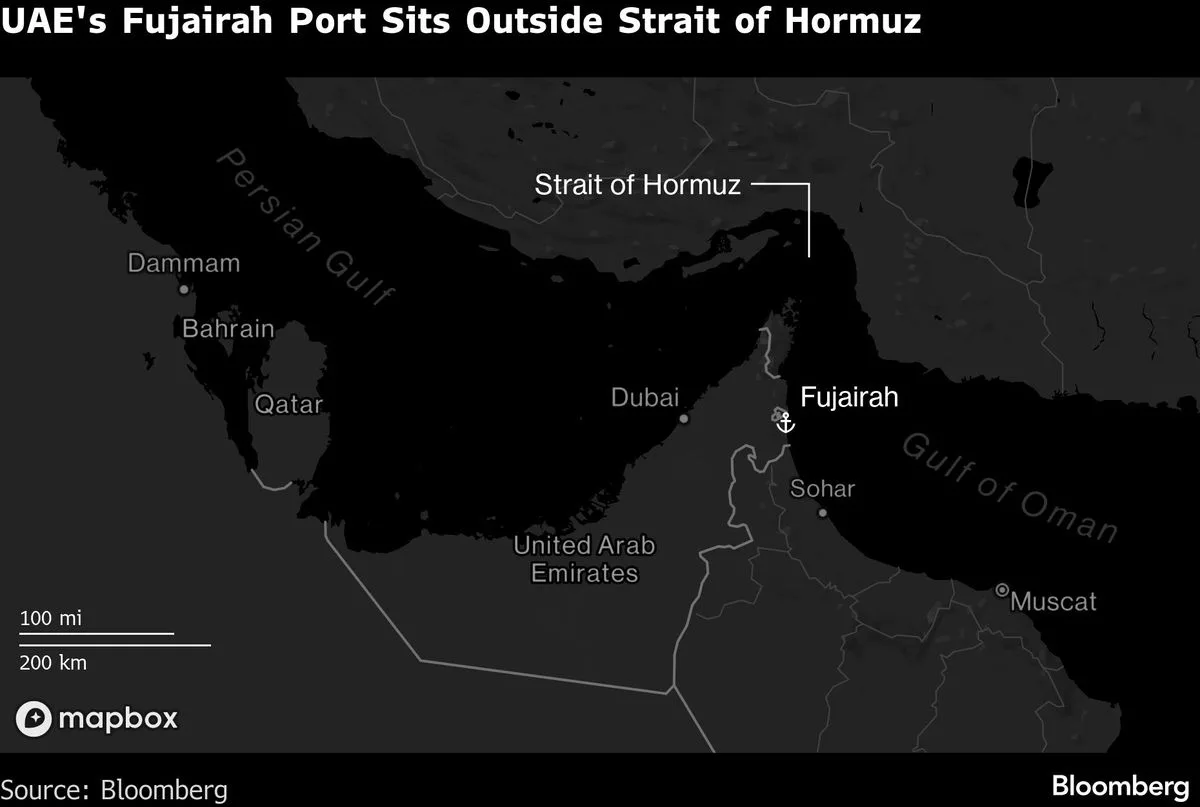
The United Arab Emirates announced on May 15 it will fast-track the construction of a second oil pipeline called the West-East Pipeline to bypass the Strait of Hormuz and double export capacity through Fujairah by 2027 [1, 2, 3, 4, 5, 6]. The current Habshan-Fujairah pipeline, also known as ADCOP, currently exports about 1.5 to 1.8 million barrels per day of crude oil from the UAE to the Gulf of Oman [1, 2, 3, 4, 5, 6]. The new pipeline is expected to roughly double that capacity to around 3.6 million barrels per day, though exact figures vary by source [2, 4, 6]. Abu Dhabi Crown Prince Sheikh Khaled bin Mohamed bin Zayed Al Nahyan said the pipeline "will double state oil giant ADNOC’s capacity through Fujairah port and is expected to become operational in 2027" [3]. He also directed ADNOC to accelerate delivery of the project to meet rising global energy demand [4].
The pipeline expansion is crucial amid ongoing regional risks. Iran effectively shut the Strait of Hormuz on February 28 after attacks by the US and Israel, disrupting about 20% of worldwide oil supplies and prompting the UAE to secure alternate export routes [1, 2, 5, 6]. The UAE has faced several attacks on oil facilities since, including a May 4 assault in Fujairah that wounded three Indian nationals [3]. While the Habshan-Fujairah pipeline itself has not been directly hit, supporting infrastructure has suffered damage [1, 3].
The UAE quit OPEC in early May after around 60 years of membership, freeing the country from production quotas and allowing plans to increase output [2, 3, 4, 5, 6]. Before the Iran war, UAE oil production was just over 3 million barrels per day but has dropped to between 1.8 and 2.1 million barrels per day due to the conflict [4]. ADNOC aims to raise production capacity to 5 million barrels per day by 2027, aligning with the pipeline expansion [3, 6].
The move mirrors Saudi Arabia’s strategy; the kingdom uses its own East-West pipeline to export about 7 million barrels per day outside the Strait of Hormuz. "Saudi Arabia’s East-West pipeline is a critical lifeline for the kingdom," said Aramco CEO Amin Nasser [2, 5, 6].
Sheikh Khaled emphasized ADNOC’s role as "a responsible and reliable global energy producer, with the operational flexibility to responsibly increase production to meet market needs when export constraints allow" [5].
The UAE plans for the West-East Pipeline to be operational by 2027, aiming to secure crude exports against ongoing regional instability and the effective blockade of the Strait of Hormuz since late February 2026 [1, 2, 3, 4, 5, 6].