Malaysia has secured a long-term agreement with Russia guaranteeing petrol, oil, and gas supplies for at least 20 years, ensuring stable energy access without relying on annual or seasonal contracts. The agreement draft is prepared, principles have been agreed upon, and official delegations are set to finalize the signing soon [1, 2, 3, 4, 5].
Prime Minister Datuk Seri Anwar Ibrahim announced Russia’s commitment during the ASEAN-Russia Commemorative Summit in Kazan on June 18. He noted that President Putin assured him that arrangements for continuous energy supply would be established [1, 2, 3, 4, 5]. On June 20, Anwar reiterated expectations to sign the deal covering at least two decades [5].
Malaysia’s Minister of Economy Akmal Nasrullah Mohd Nasir said the government must balance national interests, economic pragmatism, and strict adherence to international standards like UNSC resolutions and FATF regulations amid expanding energy cooperation with Russia and Turkmenistan [6, 3, 7]. Malaysia has also secured access to strategic gas blocks in Turkmenistan through Petronas [3]. Despite global market fluctuations, Malaysia’s domestic fuel supply remains stable with a slight diesel surplus [1, 2, 4].
Bilateral ties with Russia now extend beyond energy into trade, investment, finance, and the halal economy sectors [1, 4].
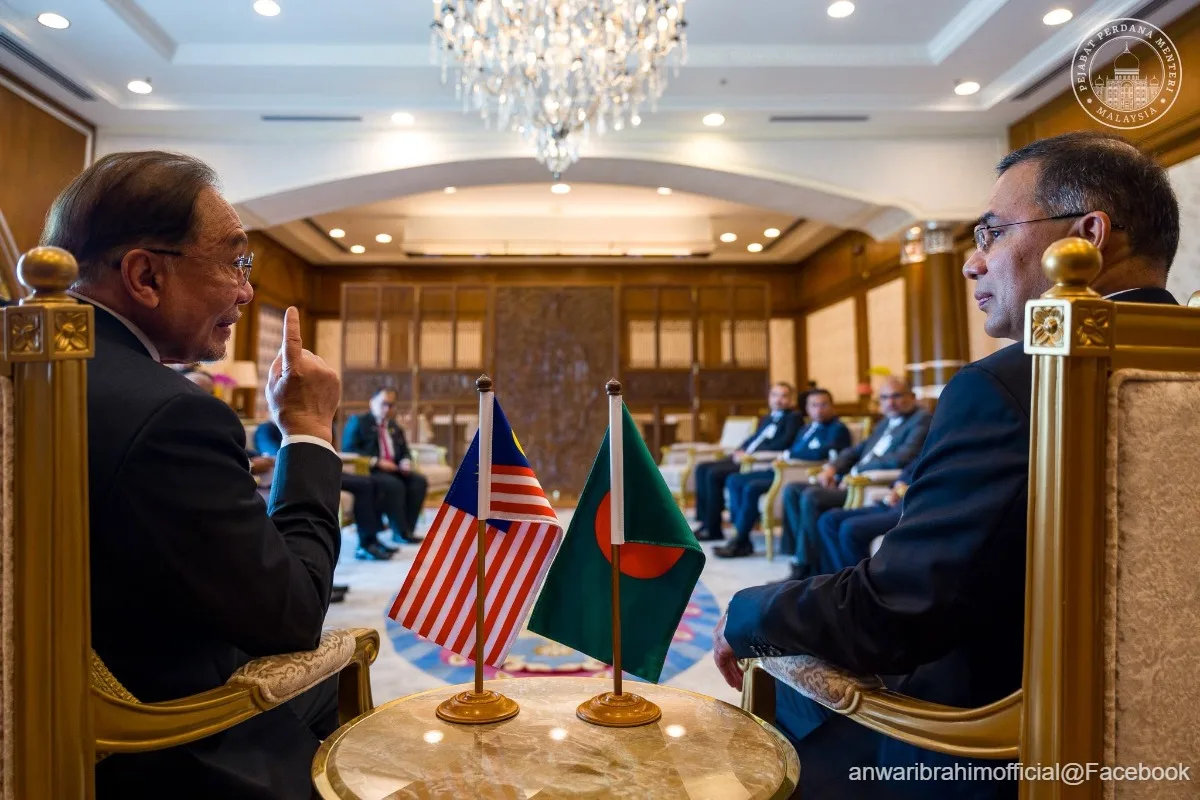
In labor cooperation, Malaysia and Bangladesh agreed to eliminate exploitation of migrant workers and improve recruitment transparency. Prime Ministers of both countries met in Putrajaya on June 22 to establish a Joint Working Group for safe and fair worker migration and plan updates to recruitment memorandums [8, 9, 10].
Anwar Ibrahim stressed the need to protect migrant workers’ welfare and remove exploitation for corporate gain, saying, "This continued use of workers being exploited, ill-treated, and purely for personal, company gains cannot be tolerated" [8, 11, 9]. Bangladesh Prime Minister Tarique Rahman called for speeding up the reopening of the Malaysian labor market and emphasized transparent, affordable recruitment with fewer intermediaries [8, 11, 9, 10].
Malaysia’s Human Resources Ministry pledged to strengthen governance and welfare of Bangladeshi workers [10].
The final signing of the Malaysia-Russia energy agreement is expected soon, while the Joint Working Group will begin work to revise labor recruitment frameworks and address worker protections.