MSCI announced it will remove six Indonesian companies from its Indonesia global standard index effective May 29 or June 1 after a quarterly review [1, 2, 3, 4]. The removed stocks are PT Barito Renewables Energy, PT Dian Swastatika Sentosa, PT Amman Mineral Internasional, PT Chandra Asri Pacific, PT Petrindo Jaya Kreasi, and PT Sumber Alfaria Trijaya [1, 2, 3, 4]. Several of these firms are linked to Indonesia’s richest families, including Prajogo Pangestu and the Sinar Mas Group [1, 2].
The decision followed concerns over concentrated ownership and low free float in these companies, factors that MSCI flagged in January when it warned Indonesia could be downgraded to frontier market status if reforms failed [1, 2, 4]. The Indonesia Stock Exchange identified companies with concentrated ownership earlier this year, triggering MSCI’s review [1].
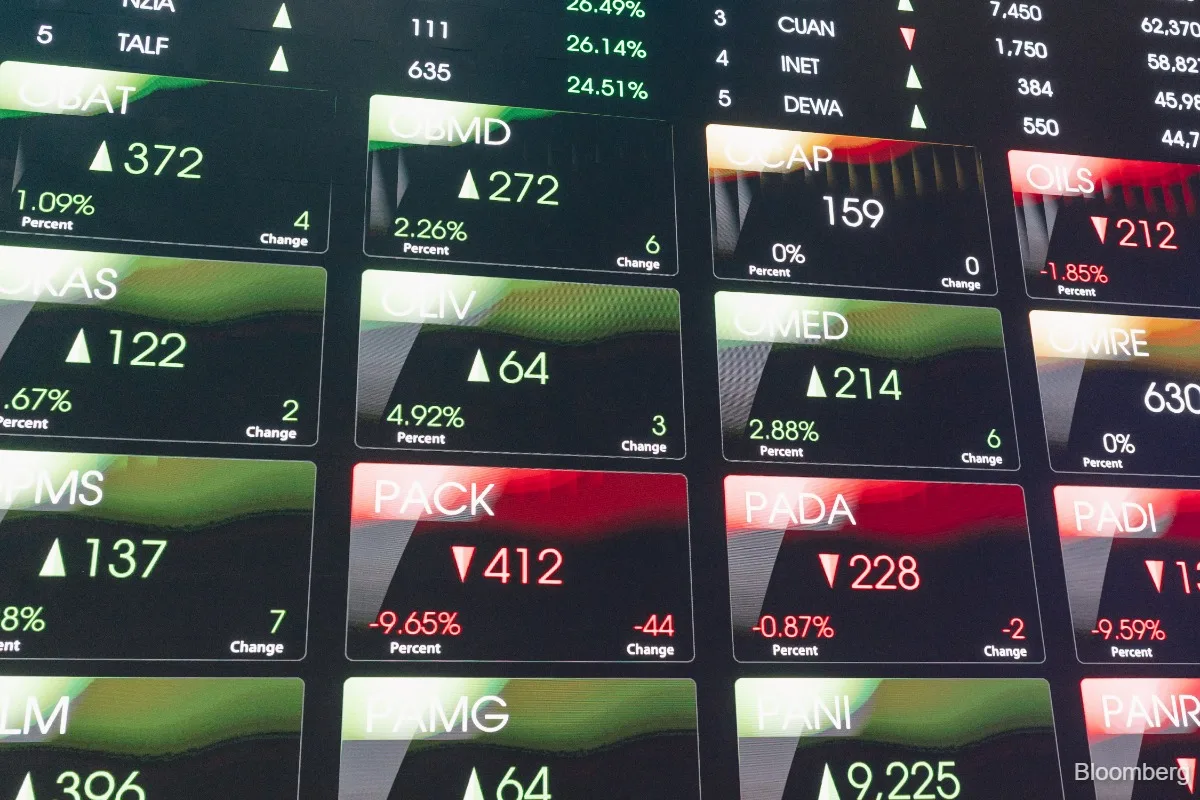
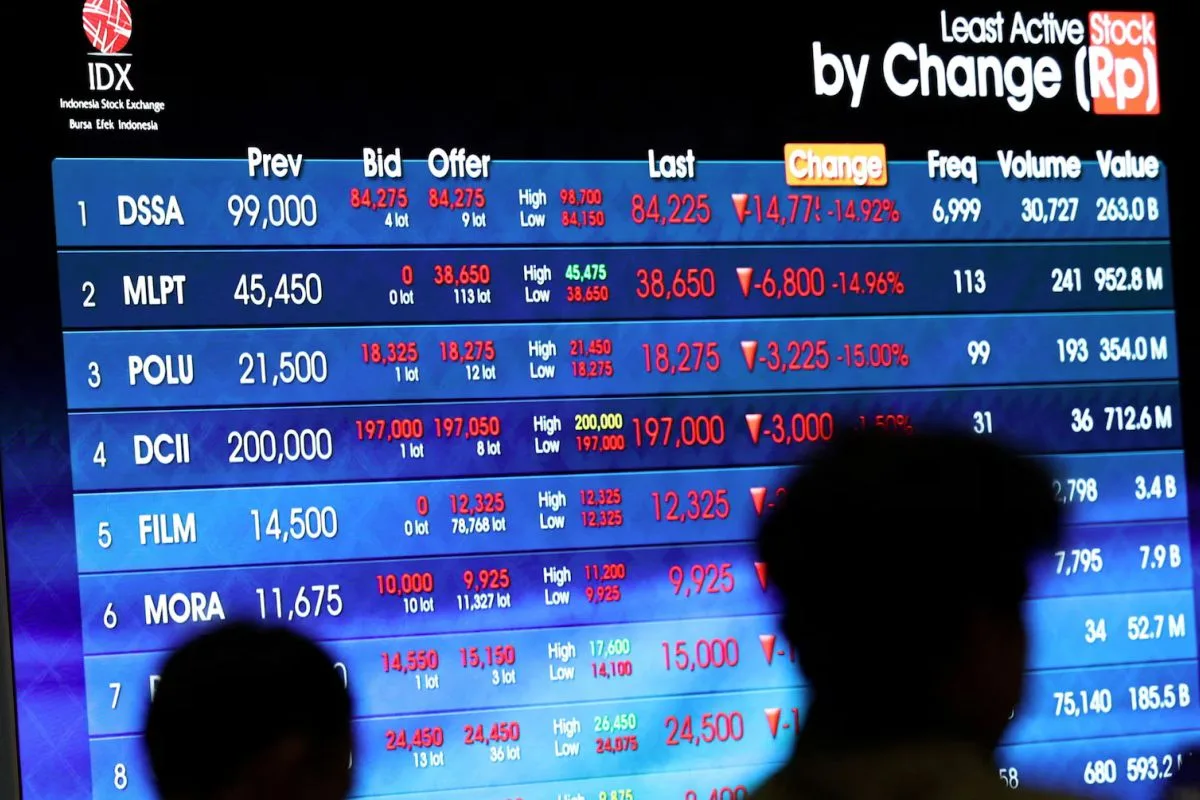
The announcement caused the Jakarta Composite Index to drop about 1.7%, closing near its lowest in over a year at 1,980 points [1, 2, 3, 4]. Shares of the removed stocks plunged sharply, with Barito Renewables and Dian Swastatika falling over 10% [1, 2, 3]. The Indonesian rupiah hit a record low of 17,535 per USD before slightly recovering [3, 4].
Foreign investors have sold more than US$2.2 billion of Indonesian stocks so far in 2026, and the removals could trigger further capital outflows estimated between US$1.7 billion and US$2.8 billion due to forced selling by passive index funds [1, 3, 4]. Harry Su from Samuel Sekuritas Indonesia said Indonesia’s MSCI Emerging Asia index weight would fall to 0.8% from 0.9%, causing US$1 billion to US$1.7 billion in capital outflows from index trackers [4]. Felix Darmawan of PT BCA Sekuritas warned that "there could be some passive outflows and rebalancing activity around the effective date, which may add short-term volatility" [1]. Gary Tan from Allspring Global Investments also expected "continued pressure into the May 29 rebalance and early June as passive funds adjust" [2].
The Financial Services Authority of Indonesia (OJK) stated the market response was "within normal range" with no panic selling seen. OJK chief Hasan Fawsi said, "The drop is considered within normal range and the volume and frequency of stock transactions suggested there was no panic selling" [2]. He added, "Not a single stock experienced a lower auto-rejection. Transaction frequency, volume, and value are also still normal. This short-term pain must be faced ... with the hope that the index adjustment will establish a new baseline that presents better quality listed shares" [4].
Looking ahead, MSCI has extended its review of Indonesia’s market classification to June to monitor reform progress [1, 2, 3]. Liza Camelia Suryanata from Kiwoom Securities Indonesia said, "For the medium-term, we target IDX (JKSE) to recover to ~7300, once this capital market reformation bears fruit" [3].