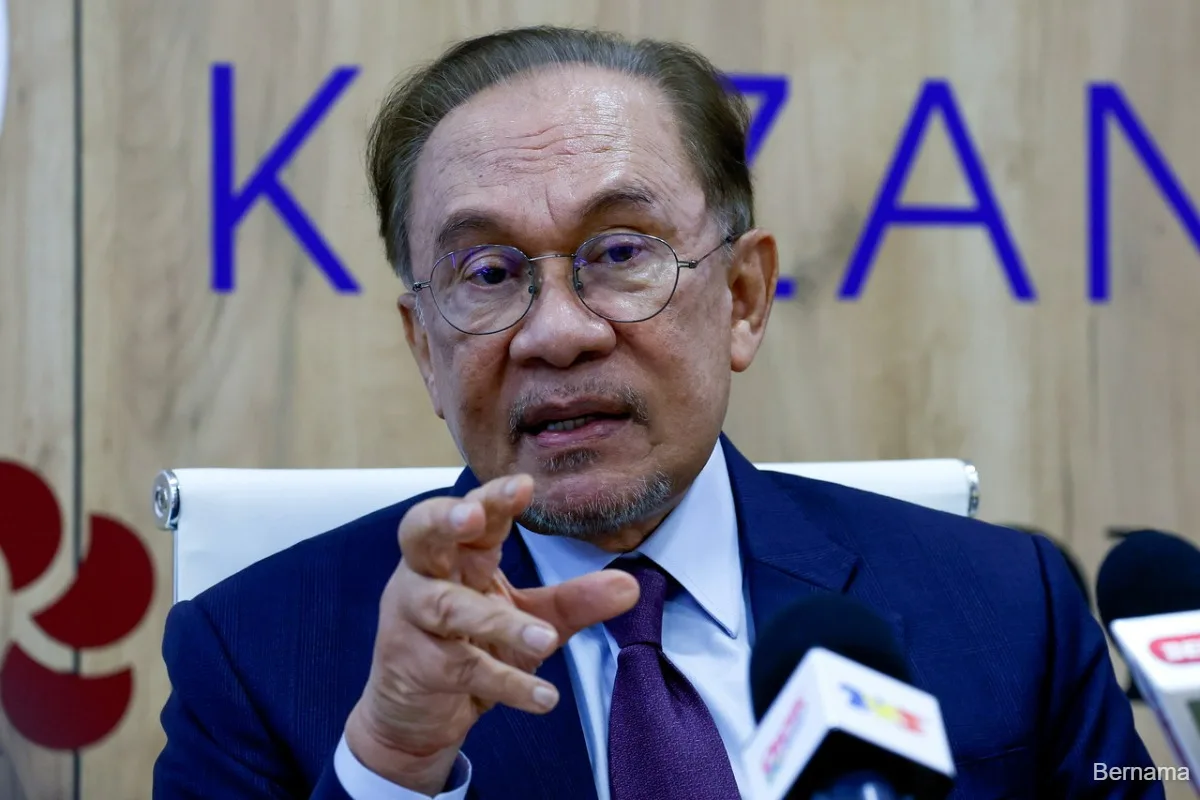
Malaysia announced it will seriously explore using local currencies with trading partners to reduce volatile foreign exchange risks, a key move announced by Prime Minister Anwar Ibrahim during a June 18 interview with RT [1]. He said, "In our negotiations bilaterally with many countries, we are now starting to explore this very seriously. And India has agreed, finally, to start either some form of barter, if not for the local currency, but the option is, of course, local currency." [1] The government plans to push this agenda forward with priority, reinforcing it during a June 19 discussion with Russian President Vladimir Putin in Kazan, where they discussed strengthening trade using the ringgit and ruble. [2]
Malaysia already has significant trade ties with China and Russia. The share of Malaysia-China bilateral trade settled in local currencies has expanded to about 22-23%, compared with roughly 16% some years ago. [1, 2] Malaysia and Russia also talked about using local currencies in bilateral trade to deepen economic ties during their Kazan talks. [1, 2] Malaysia depends on Russia for energy supplies and views this cooperation as critical for national interests because it imports more crude oil than it produces. Malaysia meets approximately half its oil needs domestically but exports liquefied natural gas to countries including China and South Korea. [1, 2]
Bank Negara Malaysia supports expanding cross-border trade settlements in local currencies through frameworks involving China, Indonesia, Thailand, and Russia. This reduces Malaysia’s reliance on the US dollar and helps minimize exchange rate risks. [1, 2]
Meanwhile, Indonesia announced new export oversight rules last May targeting strategic commodities like crude palm oil, enforced through the state-linked entity Danantara Sumberdaya Indonesia (DSI). [3] Indonesia and Malaysia export over 80% of the world’s palm oil combined. [3] However, Malaysian and Indonesian exporters have raised concerns over the details and implementation of Indonesia’s export monitoring, which remains unclear, according to analyst Ahmad Akmal Muhamad. [3] He noted, "Both Malaysian and Indonesian exporters raised concerns over the policy, largely because details of the implementation had yet to be announced." [3] Indonesia’s policy complements its revised regulation requiring a larger share of export proceeds to stay within Indonesia’s financial system, though authorities characterize the new framework as focused on monitoring rather than a full overhaul. [3]
On June 20, Malay Mail reported ongoing scrutiny by Malaysian traders and analysts on Indonesia’s export rules. [3]
Malaysia’s latest steps to use local currencies in trade build on growing bilateral trade settlements outside of US dollars. Follow-up discussions are expected as Malaysia and Russia continue talks on ringgit-ruble trade cooperation.