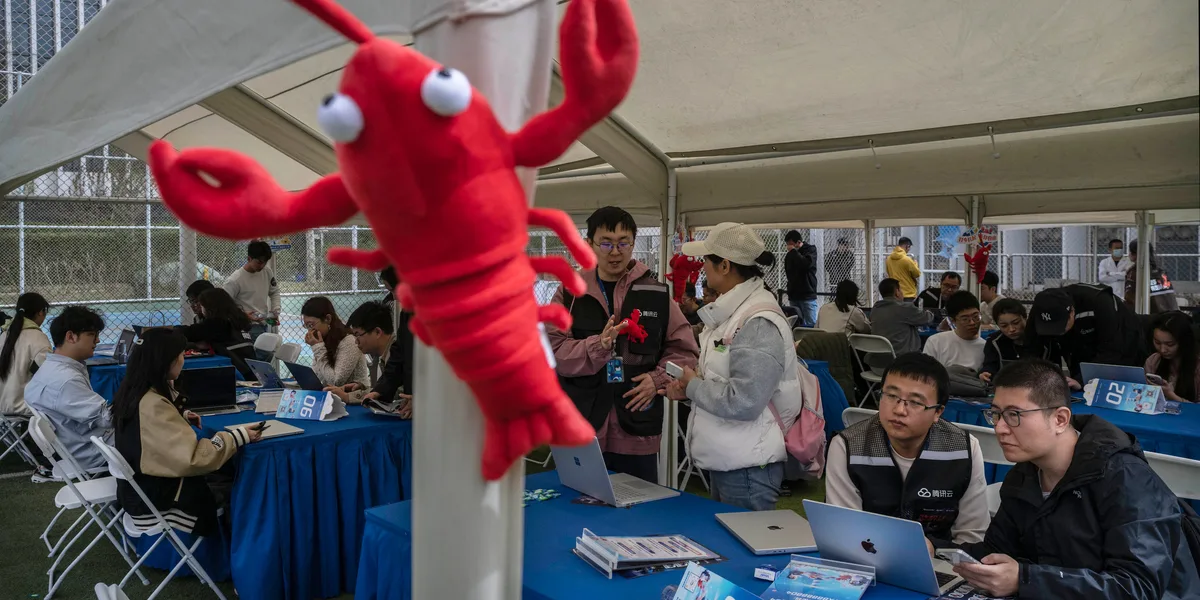
Generative AI has become part of everyday life across China, with more than 600 million people using AI tools by the end of 2025, a 141% increase from the previous year, according to official industry data reported by Sixth Tone [1]. Users span a wide range of backgrounds including students, farmers, doctors, and entrepreneurs [1].
The rapid adoption follows major milestones that shaped China’s AI strategy. In 2016, Google DeepMind’s AlphaGo defeated Lee Sedol, sparking China’s focus on AI as a national priority. The following year, the government included AI in its New Generation Artificial Intelligence Development Plan, elevating it to a strategic goal [1]. Over the past three years, local tech companies launched multiple generative AI platforms such as Baidu’s Ernie Bot and DeepSeek, widening public accessibility [1].
Alongside broad adoption, a viral social media phenomenon has emerged around OpenClaw, an AI agent software known by its crustacean-shaped mascot nicknamed the “crayfish.” Last month, a split-screen image circulated on Chinese social platforms showing people in Shenzhen wearing novelty OpenClaw hats contrasted with a historical qigong-era photo. The caption on the image said, “The hat has changed, but the people haven’t,” while screen text proclaimed, “In 2026, humanity is divided not by gender, but by creators and bystanders,” underscoring mixed feelings about AI [2].
The OpenClaw craze symbolizes both excitement about AI’s creative possibilities and anxiety about competition and job security. Some users embrace AI as a tool, while others feel pressure from the rapid shift in workplace demands. Sixth Tone describes this “crayfish craze” as reflecting everyday pressures in study, work, and social competition, not simply novelty or amusement [2].
The contrasting coverage illustrates the dual narrative around China’s AI growth: a broad surge in generative AI use nationwide with tens of millions engaging daily, alongside specific cultural moments capturing public sentiment and concern around AI’s effects on society [2, 1].
China’s experience highlights how AI is reshaping both technology adoption and social attitudes as the country enters a new phase of digital transformation [1].