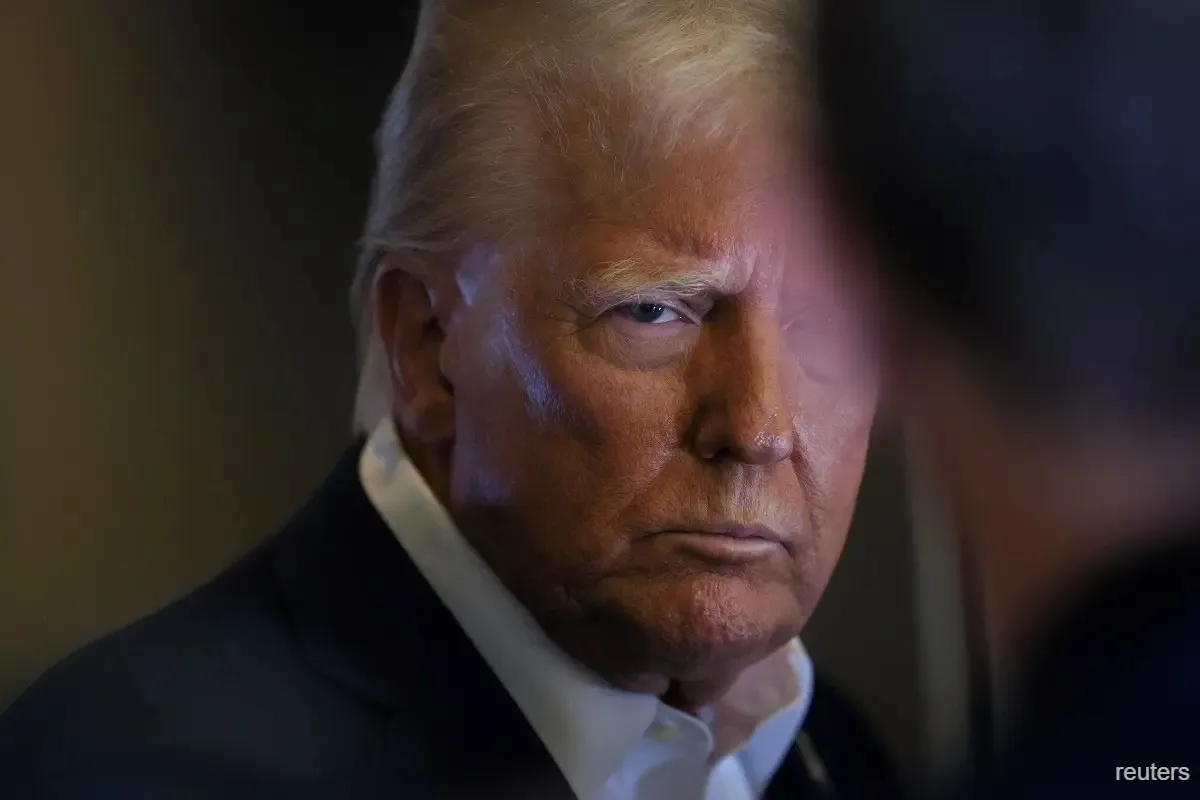
President Donald Trump said his team is exploring proposals for AI companies to give the American public a stake in their firms, describing it as a "partnership with the American public" [1, 2]. Trump said, "It’s like you make them [partners] in this revolution. It would be a beautiful thing... It would make 'em rich" [2]. He added, "We’ll look into that. We're talking about it, where the American people can benefit from the success of AI" [1].
Senior US officials have held preliminary talks with AI firms, including OpenAI, about the government acquiring voluntary equity stakes in these companies, a strategy that would allow dividends or earnings to benefit all American households [1, 3, 4, 5, 6]. OpenAI CEO Sam Altman has promoted the idea since early 2025, advocating for government equity ownership and a public sharing of AI’s economic gains [4, 7, 8]. Altman emphasized, "The U.S. should lead on AI by continuing to develop the very best models, making sure they're safe, and getting cyber tools into the hands of trusted defenders" [8].
The proposed model involves AI companies voluntarily providing some equity to the US government. The government would then distribute proceeds to the public, potentially creating broad economic benefits from AI advancements [4, 5, 6, 8]. However, legal and governance questions remain unsettled; officials acknowledge the mechanisms for equity transfer could be challenging [4, 5, 6]. Talks with OpenAI and other firms continue into early June 2026 as AI companies prepare for initial public offerings later this year [4, 6, 8].
Some disagreement exists over how much equity should be transferred. Senator Bernie Sanders has proposed a one-time 50% stock tax on major AI companies to fund a sovereign wealth fund for the public, a markedly more aggressive approach than the voluntary equity stakes favored by Trump’s team and Altman [7, 9, 2, 10]. David Sacks commented that Sanders' plan "would accelerate corporate-government fusion we’re already sliding toward" [7].
There is also debate on which companies are involved. Some reports include Anthropic in discussions, but Anthropic has denied engagement on government equity conversations [1, 3, 4, 5, 6].
The Trump administration signed a revised executive order this week requiring AI developers to submit their most advanced models for voluntary federal cybersecurity review before public release [1, 3, 8, 11]. This order followed heightened concerns over AI-related cybersecurity risks, spurred by new tools like Anthropic’s Mythos [1, 3].
The administration plans a meeting with AI executives as soon as next week to advance talks on government equity stakes and public benefit strategies [1, 3, 9, 12]. Trump’s office has previously acquired stakes in critical tech firms, including a 10% share in Intel, indicating a broader government role in key industries [1, 7, 8].
OpenAI’s valuation exceeds $850 billion, and a 2% government stake in a $3 trillion AI company could be worth $60 billion, illustrating the scale of potential government investments [8, 10]. As AI companies approach IPOs, the outcome of these discussions will affect future public and government ownership arrangements [4, 6, 8].