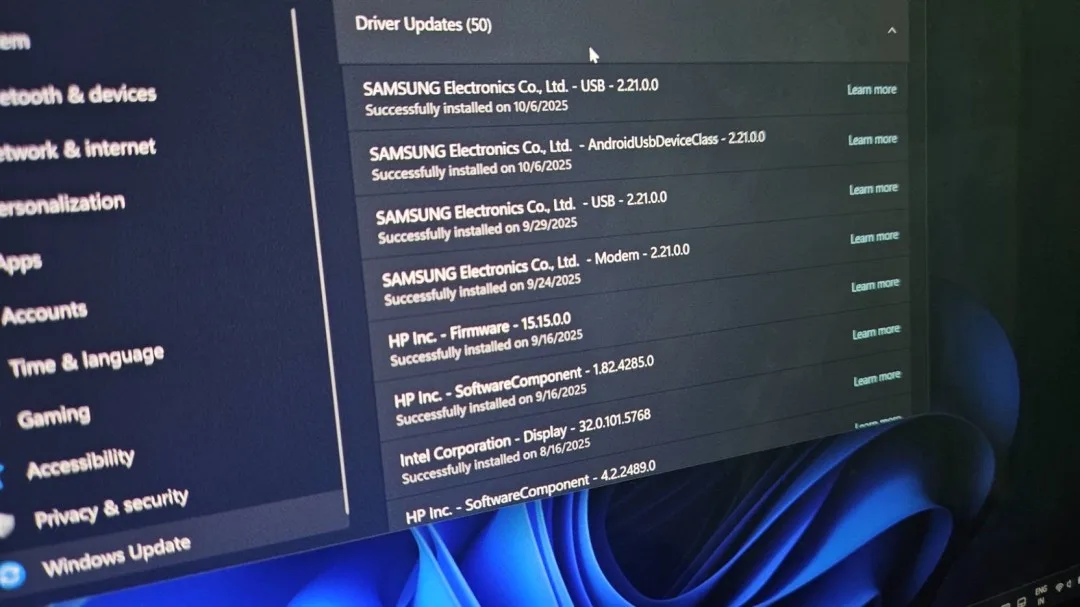
Since its 2021 release, Windows 11 has had a persistent issue where Windows Update automatically downgrades graphics drivers to older versions, leading to system performance problems for users [1, 2, 3].
Microsoft officially confirmed the problem in 2026 and started rolling out a partial fix to some Windows 11 PCs in April 2026 [1, 2]. The company plans to fully deploy the fix across all affected systems by the fourth quarter of 2026 [1, 2].
The root cause lies in how Windows Update prioritizes driver installations. It currently ranks drivers based on a four-segment hardware ID but does not differentiate by driver model or version. This means older drivers with a higher rank can overwrite newer ones, causing the downgrade [1, 2]. Garrettd from Microsoft’s Hardware Development Center described the issue, saying, "Windows Update randomly downgrading your graphics drivers seems to be a common enough occurrence that its supposed fix deserves its own feature announcement and blog post" [3].
To resolve this, Microsoft is introducing a new identification mechanism combining a two-part hardware ID (HWID) with a Computer Hardware ID (CHID). This system aims to more precisely match driver updates with specific device models and avoid forcing outdated drivers [1, 2, 3]. However, the new method only works with new devices and drivers moving forward. Existing older drivers in the Windows Update catalog may still be pushed to older systems [1, 2].
Microsoft also notes that brand-name OEM PCs are more prone to triggering the automatic downgrade bug compared to do-it-yourself built PCs [1].
The partial rollout started in April 2026 and full deployment is planned for Q4 2026, when all affected Windows 11 PCs should get the improved driver update system [2].