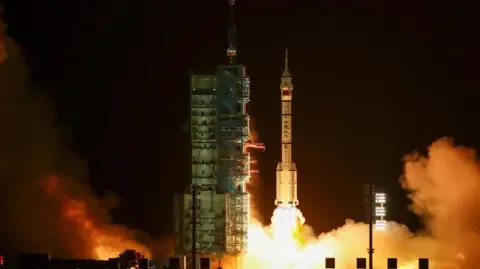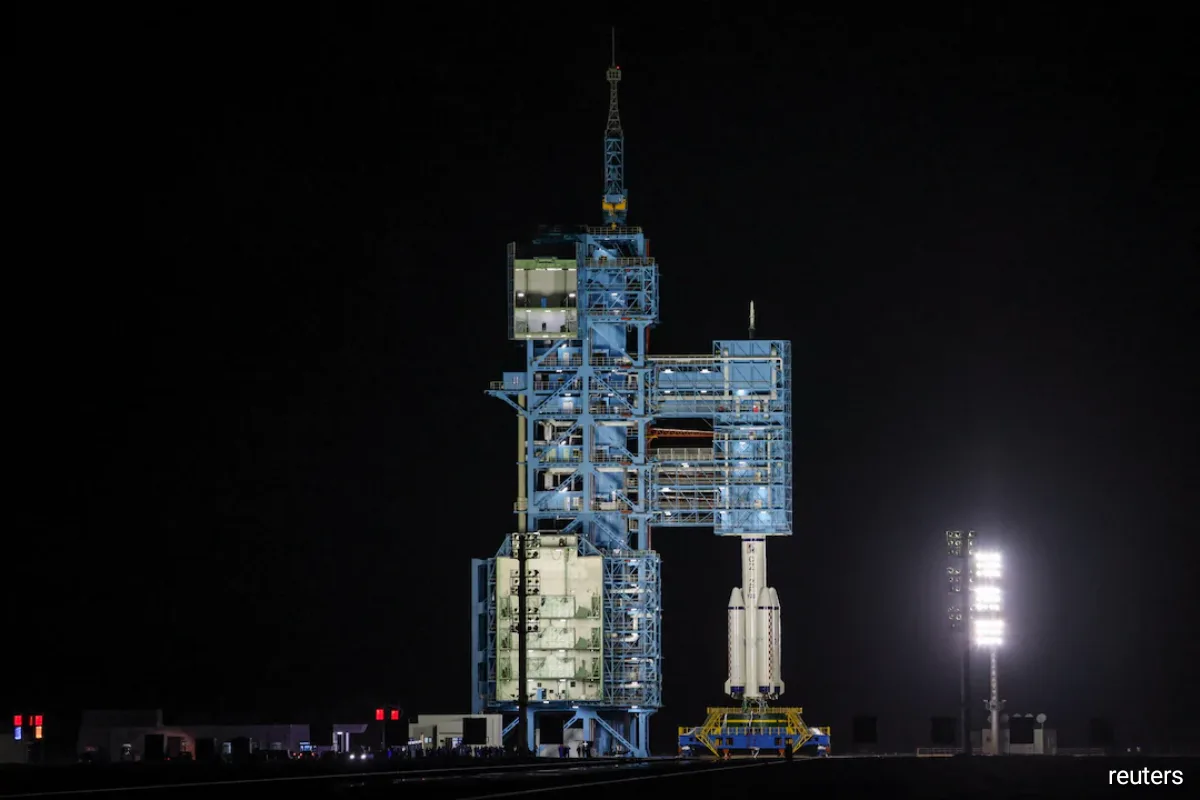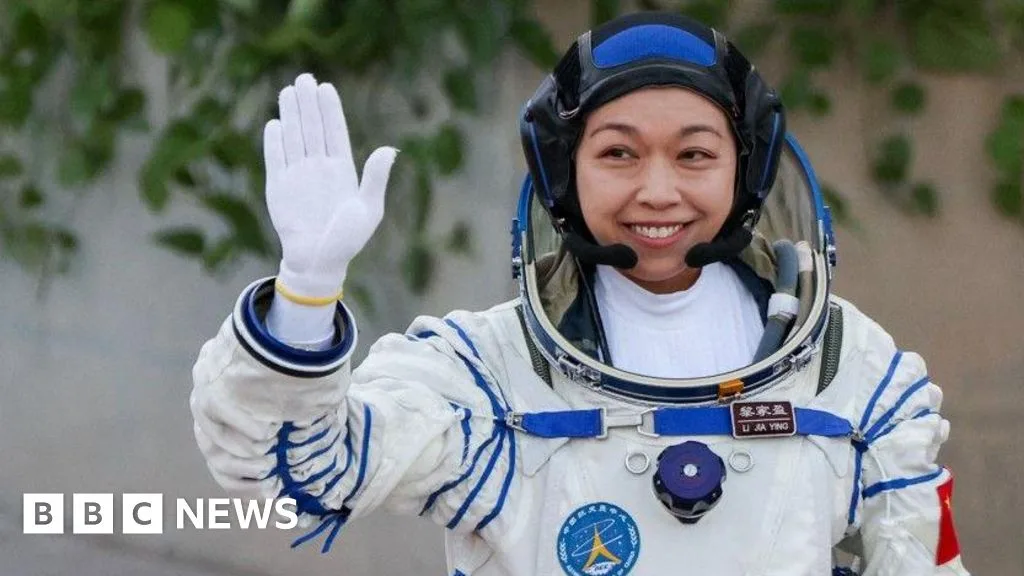
China launched the Shenzhou-23 spacecraft on May 24, 2026, from the Jiuquan Satellite Launch Center using a Long March 2-F rocket at 23:08 local time (15:08 GMT) carrying three astronauts to the Tiangong space station [1, 2, 3, 4, 5, 6, 7, 8, 9]. The crew includes Li Jiaying (also Lai Ka-ying), 43, the first astronaut from Hong Kong and a former police officer; Zhu Yangzhu, 39, a space engineer and mission commander; and Zhang Zhiyuan, 39, a former air force pilot [1, 10, 2, 3, 4, 5, 6, 7, 8]. Large crowds waved Chinese flags in the Gobi Desert during the launch [1].
The spacecraft docked successfully with the Tiangong space station in the early hours of May 25 [1, 6, 9]. Zhu Yangzhu, returning from Shenzhou-16, leads the mission and told reporters he focused on ensuring thorough preparations and a flawless team performance: "As mission commander, what I have thought about most is how to make thorough preparations in every aspect and how to lead the team in successfully completing the flight mission with zero mistakes and zero errors." [2]
One astronaut will remain aboard the station for a full year to study the effects of long-duration spaceflight on human physiology, microgravity impacts, and health support systems necessary for future lunar and Mars missions [1, 2, 3, 5, 6, 7, 8, 9]. CMSA spokesperson Zhang Jingbo said the crew member who will stay the full year has not yet been determined [2]. The year-long mission marks a new operational phase for China’s space program, which had previously conducted six-month missions to Tiangong since 2021 [1, 2, 3, 5, 6, 8]. Scientist Richard de Grijs commented, "A year in orbit pushes both hardware and humans into a different operational regime compared with the shorter Shenzhou missions of the programme's earlier phases" [1].
Li Jiaying was selected in 2024 from China’s fourth batch of astronauts that included candidates from Hong Kong and Macau [10]. She said, "This is a rare chance. Why not try?" [1]. Hong Kong Chief Executive John Lee described Li’s participation as a "historic" moment [1].
The mission will conduct scientific experiments in life sciences, materials science, fluid physics, and medicine [1, 2, 5, 6, 8]. Challenges include managing bone density loss, muscle wasting, increased radiation exposure, sleep and psychological fatigue, and ensuring reliable life support and medical systems for emergency [5, 6, 8].
The Shenzhou-23 mission supports China’s goal to develop the expertise needed for a crewed lunar landing by 2030 and broader deep-space exploration [1, 2, 3, 5, 6, 7, 8, 9]. It comes amid competition from the US, which aims for a crewed moon landing by 2028 and recently conducted Artemis II and SpaceX Starship tests [3, 7].
The Shenzhou-23 crew will remain aboard Tiangong to complete their year-long mission and carry out their extensive research projects.