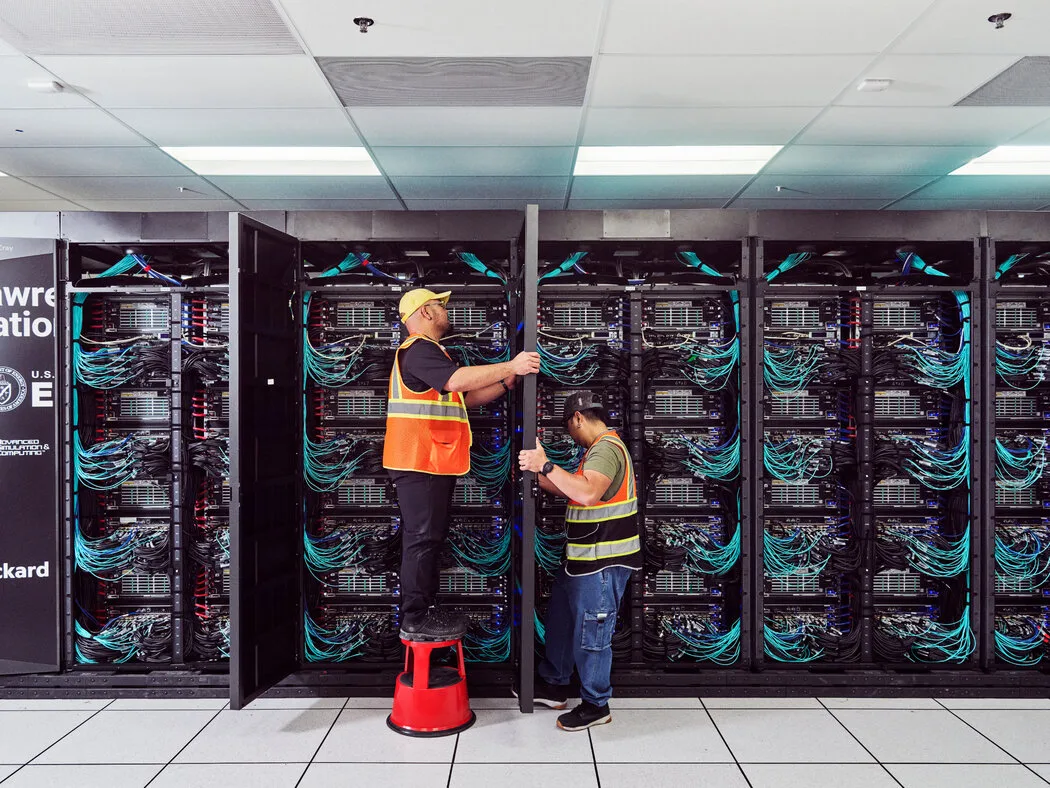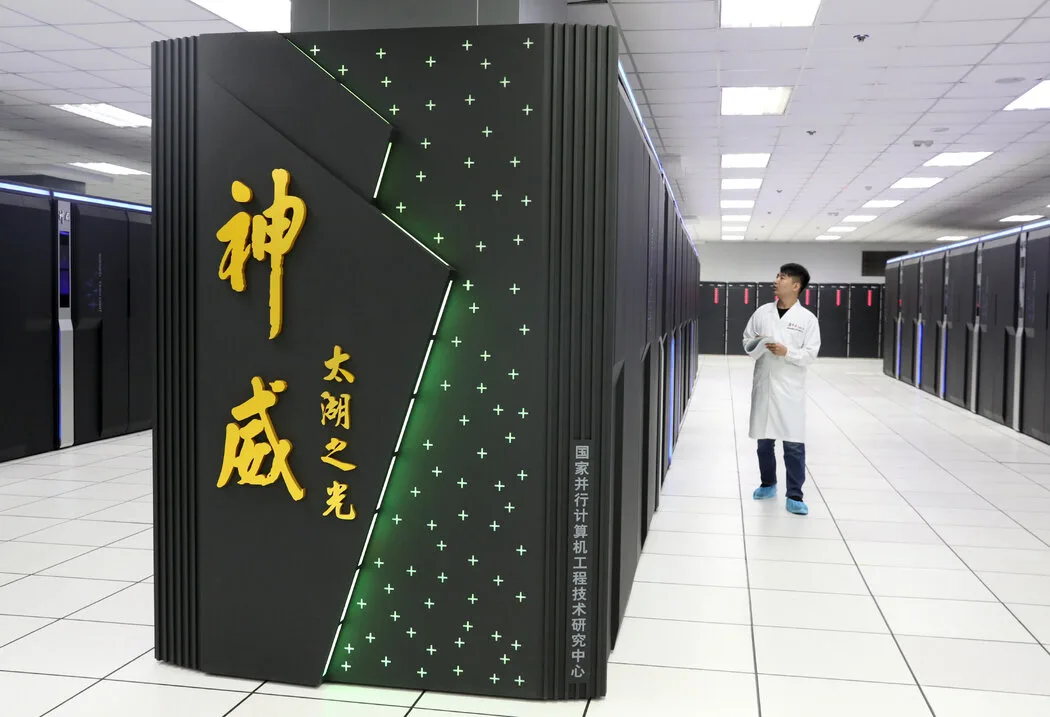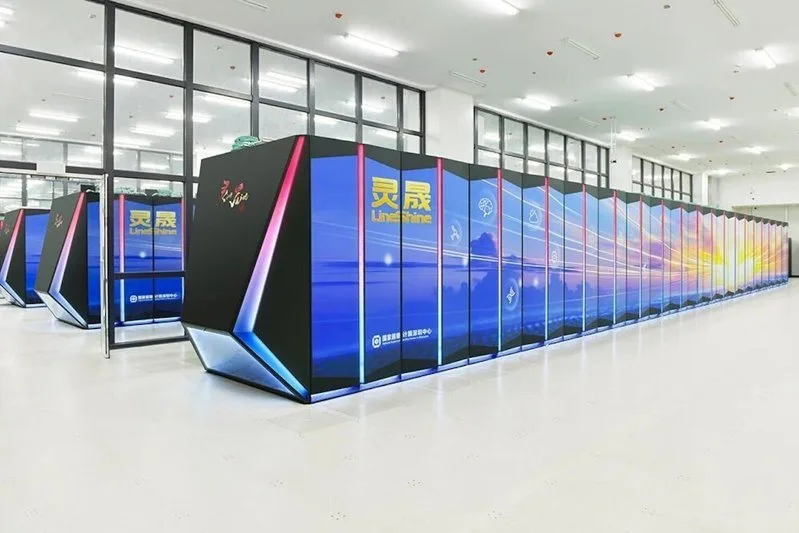
China's "LineShine" supercomputer, developed at the Shenzhen National Supercomputing Center, was ranked the world's fastest in the June 23, 2026 TOP500 list announced at the ISC 2026 conference in Hamburg [1, 2]. It achieved a sustained double-precision floating point performance of about 2.19 exaflops, surpassing the previous leader, the US Department of Energy's "El Capitan," by more than 20% [3, 1, 4]. This marks the first time since 2017 that a Chinese system has topped the global supercomputing rankings [3, 4, 5].
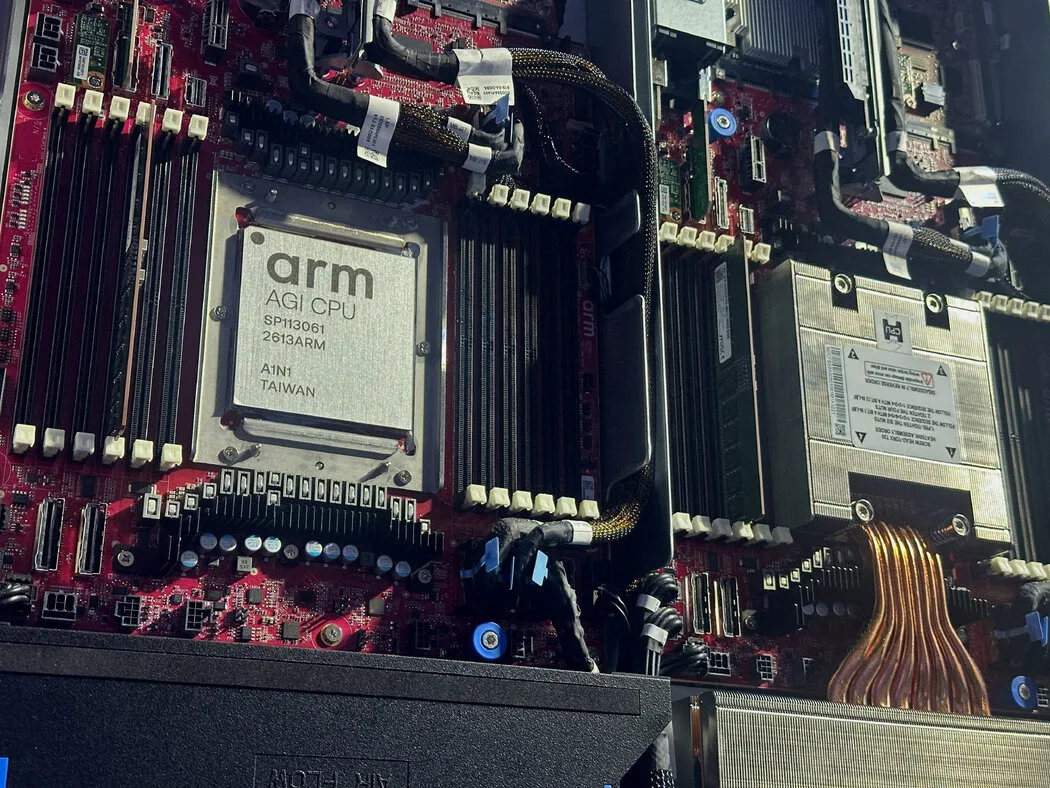
"LineShine" distinguishes itself by using only standard CPUs, avoiding reliance on GPUs common in other top systems. Instead, it integrates GPU-style acceleration circuits within its processor design to speed up matrix and vector computations [3, 4, 5]. The system includes nearly 14 million computing cores housed across 90 hardware cabinets [3, 4]. Its CPUs utilize an original design based on the Arm instruction set licensed from Arm Holdings, though details on chip maker and fabrication remain undisclosed [3].
Due to ongoing US export restrictions on GPUs and advanced semiconductor manufacturing equipment, China invested heavily in developing its own architecture and technologies to build exascale systems on par with US machines [3, 4]. "LineShine" features a proprietary high-bandwidth memory integrated chip that increases memory bandwidth tenfold compared to traditional CPUs [2]. The supercomputer consumes about 42.2 megawatts of power [5].
Applications of "LineShine" cover diverse fields such as climate modeling, brain simulation, scientific AI, large-scale language model inference, and advanced engineering simulations [4, 2]. It achieved an average parallel scaling efficiency of roughly 84.4% while operating at over 10 million cores [2].
Jack Dongarra, co-founder of the TOP500 list, visited the Shenzhen facility and praised the system as "an impressive system that surpasses us by developing one not reliant on GPUs" (translated) [3, 4]. Meanwhile, some US experts argue that Washington should tighten CPU export controls targeting China, citing a loophole that allowed China to build such an advanced machine without GPUs [3].
Lu Yutong, the chief designer of "LineShine," said the greatest breakthrough is not just topping global computing power but also establishing an autonomous advanced computing ecosystem that transforms supercomputing capabilities into vital productivity for scientific innovation and economic development [2].
The TOP500 list announced at ISC 2026 follows nearly four years of US dominance after "El Capitan" had held the top spot since November 2024 [3, 4]. Globally, only five exascale supercomputers are publicly verified; China and the US currently dominate the field [5].